


Reza Pahlavi, the exiled son of Iran’s last shah, brought a packed conservative conference hall to its feet multiple times Saturday, casting the ongoing U.S.-Israeli military campaign against Tehran as a historic opportunity, and positioning himself as the man to lead Iran after the Islamic Republic falls.
Speaking at the Conservative Political Action Conference (CPAC) in the Dallas suburbs, Pahlavi delivered what amounted to a campaign speech for a country in the midst of a revolution. “Can you imagine Iran going from ‘Death to America’ to ‘God Bless America?'” he asked, drawing one of several standing ovations from the crowd.
The United States and Israel launched a sweeping air campaign against Iran on February 28, killing Supreme Leader Ali Khamenei and many senior officials and targeting the country’s military infrastructure. Iran has responded with missile and drone attacks across the region, disrupting global energy markets and raising fears of a wider war.
Pahlavi urged Washington to hold the line. “Stay the course,” he told the audience, arguing that only the complete collapse of the Islamic Republic could bring lasting stability. “This regime in its entirety must go.”
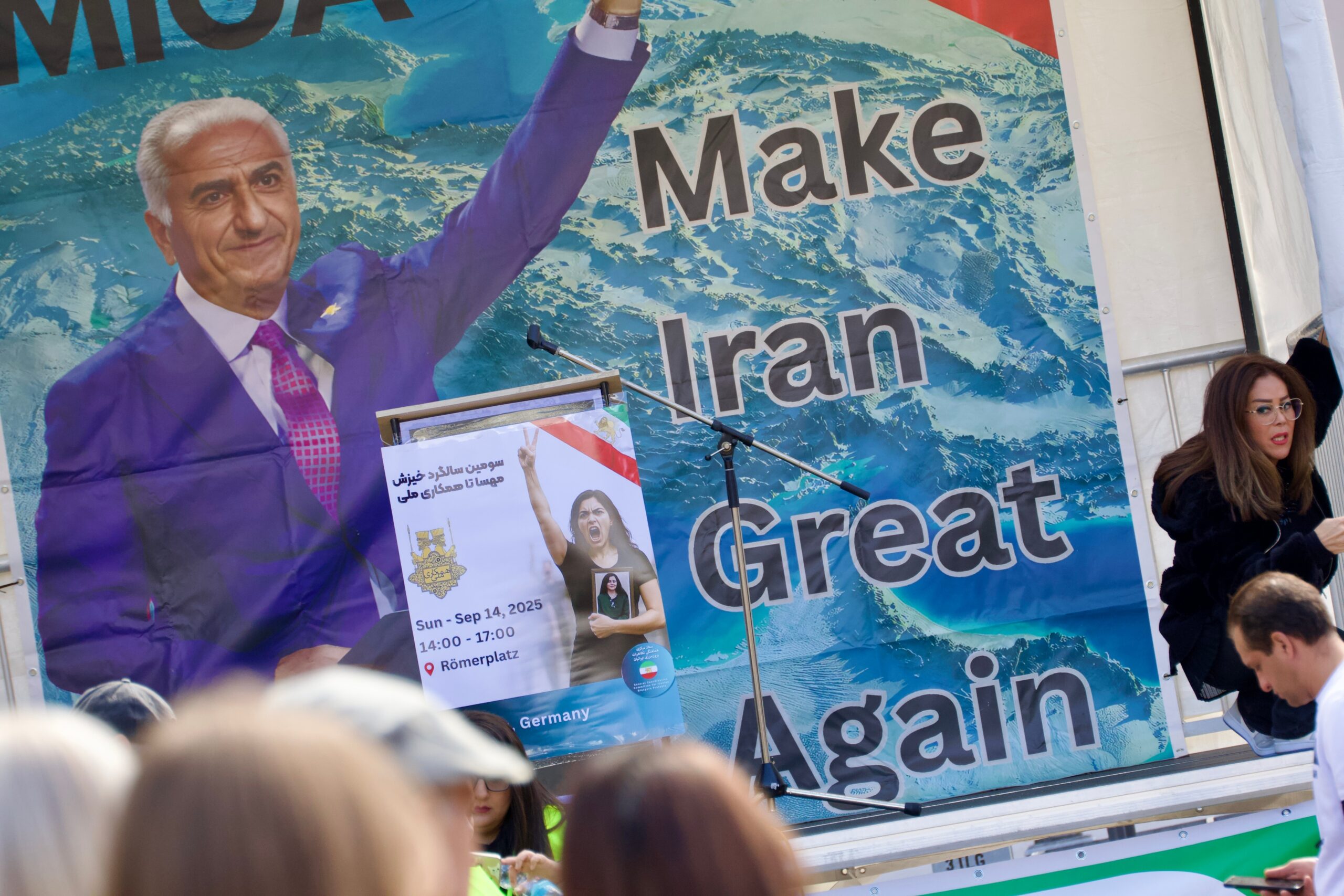
The 65-year-old drew an explicit parallel with the current U.S. president. “President Trump is making America great again,” he said. “I intend to make Iran great again.” The comparison landed with the crowd and underscored Pahlavi’s strategic positioning. presenting himself not merely as a regime-change candidate but as a civilizational restorer in the Trump mold.
President Trump is making America great again. Prince Reza Pahlavi intends to make Iran great again.
— CPAC (@CPAC) March 28, 2026
A packed house gathered for Crown Prince of Iran Reza Pahlavi's remarks at CPAC USA 2026! pic.twitter.com/3XfFaTXGpv
Inside Iran, that pitch has real traction. During the January crackdown, when Iranian security forces gunned down thousands of anti-regime protesters across the country, demonstrators were photographed hoisting Pahlavi’s image and chanting “long live the shah.” No other figure in the fragmented Iranian exile opposition commands comparable name recognition inside the country. Should the Islamic Republic collapse under the combined pressure of military strikes and internal uprising, Pahlavi is the most plausible figure around whom a transitional leadership could form.
Pahlavi also outlined what he calls a “Cyrus Accord”, a future strategic alliance between a restored Iran and Israel, invoking the legacy of Cyrus the Great, the Persian king who freed the Jewish people from Babylonian captivity and financed the rebuilding of the Temple in Jerusalem. For those who know their Hebrew Bible, the reference carries extraordinary weight. Cyrus is the only non-Jewish figure in all of Scripture to be called Mashiach — anointed one — by name. The prophet Isaiah wrote of him centuries before his birth, describing him as God’s chosen instrument for the restoration of Israel: “I will give you the treasures of darkness, riches hidden in secret places, so that you may know that I am the Lord, the God of Israel, who summons you by name” (Isaiah 45:3). Pahlavi’s invocation of that legacy frames a future Iran not as Israel’s adversary but as its ancient partner, a reversal that would redraw the map of the entire Middle East.
Pahlavi related details on what the current war looks like on the ground. Regime forces, he said, entered hospitals and killed wounded protesters where they lay. Medical staff who tried to help were tortured. Families searching for missing children found rows of unidentified bodies. “There is a sea of blood between the people and the regime,” he told the hall.
“Iran’s story is not yet finished,” Pahlavi said. “Great civilizations outlast even the most vicious occupiers.”
Trump himself skipped CPAC, typically held in Washington, for the first time in a decade, with officials citing his schedule amid the Iran campaign. His absence did not diminish the energy in the room. For the pro-Israel, conservative Americans in that hall, Pahlavi’s speech was the outline of an ancient alliance being reassembled, a Persian leader standing before the nations and declaring that his people are ready to turn from enmity toward partnership with both America and Israel.
