

Two British nationals arrested in connection with the Golders Green ambulance firebombing have been released on bail — but the investigation into an attack that destroyed four Jewish charity vehicles and shook one of Britain’s most prominent Jewish communities is far from over.
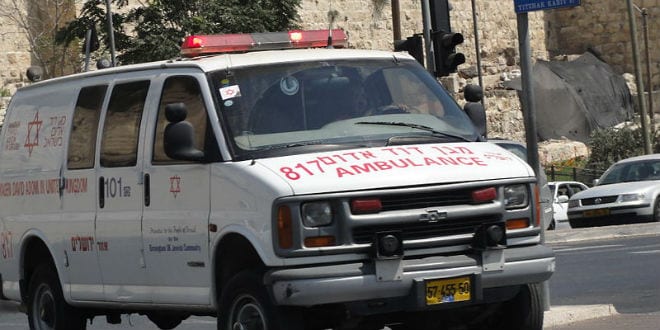
At 1:40 a.m. last Monday, three hooded figures crept through the darkened streets of Golders Green and poured gasoline over four volunteer ambulances parked outside the Machzike Hadath Synagogue — Machzike Hadath meaning “Strengtheners of the Faith.” They lit the vehicles ablaze and fled. Residents were jolted awake by explosions as oxygen cylinders detonated, shattering windows in a nearby apartment block and forcing the evacuation of surrounding homes. The London Fire Brigade dispatched six engines and 40 firefighters. By 3:06 a.m., the fire was under control. The ambulances were gone.
On Wednesday, Metropolitan Police arrested two British nationals — aged 45 and 47 — on suspicion of arson with intent to endanger life, an offense carrying a maximum sentence of life imprisonment. By Thursday, both men had been released under strict bail conditions. Commander Helen Flanagan, head of Counter Terrorism Policing London, which is leading the investigation, said: “Although the two men have been released from police custody, there are strict bail conditions in place while we continue to investigate their suspected involvement in this incident. We continue to work to try and identify all of those involved in this appalling attack and the investigation team is working around the clock to do this.”
The arrests were described as a significant breakthrough, but police acknowledged that CCTV footage shows three individuals at the scene — meaning at least one suspect remains at large.
The vehicles belonged to Hatzola, a not-for-profit volunteer emergency service founded in 1979 that provides free medical transportation to Jewish and non-Jewish residents of north London alike. The ambulances were parked at the Machzike Hadath Synagogue in Golders Green when they were destroyed. The Metropolitan Police confirmed the attack “is being treated as an antisemitic hate crime,” with counter-terrorism officers leading the investigation even as police have stopped short of formally designating it a terrorist act.
Taking credit for the attack on Telegram was the Harakat Ashab al-Yamin al-Islamiya — or HAYI — which translates as “The Islamic Movement of the People of the Right Hand.” The SITE Intelligence Group, which monitors extremist networks, identified the group as Iran-aligned. HAYI has claimed responsibility for similar arson attacks this month targeting Jewish sites in Belgium, the Netherlands, and Greece. Israel’s Diaspora Affairs and Combating Antisemitism Ministry flagged the group as a threat last week. Detective Chief Superintendent Luke Williams, who spoke at the scene, said: “Establishing the authenticity and accuracy of this claim will be a priority for the investigation team.”
The Bible does not speak lightly about those who prey upon the vulnerable or seek to terrorize the innocent. The prophet Isaiah warned: “Woe unto them that call evil good, and good evil; that put darkness for light, and light for darkness” (Isaiah 5:20). Men who burn ambulances — vehicles whose sole purpose is to save lives — have not merely committed arson. They have declared war on the most basic human decency.
Chief Rabbi Ephraim Mirvis did not equivocate: “We’re not going to be intimidated by terrorists, and this was a terrorist attack.” The Israeli Embassy in London was equally direct, stating that years of “hate-filled marches” and incitement against Jews in Britain have created the climate that makes such attacks inevitable. “Enough is enough,” the embassy said. “Silence and inaction are no longer an option.”
Prime Minister Keir Starmer called it “a deeply shocking antisemitic arson attack” and hosted Jewish community leaders at 10 Downing Street. UK Health Minister Wes Streeting visited Golders Green and pledged four replacement ambulances by Tuesday morning, with permanent government-funded replacements to follow. The community’s own response was extraordinary: within hours, two fundraising campaigns had raised over half a million pounds, including a £200,000 contribution from the Ronson Foundation alone.
But on the streets of Golders Green, no government pledge addressed what residents were actually saying. “We are scared, terrified,” said local mother Yael Gluck. “Antisemitism is too large now. When it is not happening in London or Manchester, it is in Sweden or Austria. We are not safe anywhere in the world.” She said she was considering moving to Israel.
The numbers tell the same story. Britain’s Community Security Trust recorded 3,700 antisemitic incidents in 2025 — more than double the 1,662 recorded in 2022. On October 2, 2025, during Yom Kippur — the holiest day of the Jewish year — an attacker drove into a crowd gathered outside a Manchester synagogue and stabbed one person to death; another died after being inadvertently shot by police. In February, two men were jailed for life after police foiled an Islamic State-inspired plot to carry out a mass gun attack on the Jewish community. Just last week, two Iranian nationals appeared in a London court charged with spying on Jewish community sites — including one containing an elementary school — on behalf of Tehran.
London’s Jews are not facing a wave of isolated hate crimes. They are being targeted by an Iranian-backed terror network operating across Europe — burning, bombing, and terrorizing Jewish communities from Amsterdam to Athens to Golders Green — while governments debate what to call it. The Jewish community already knows exactly what it is.
