




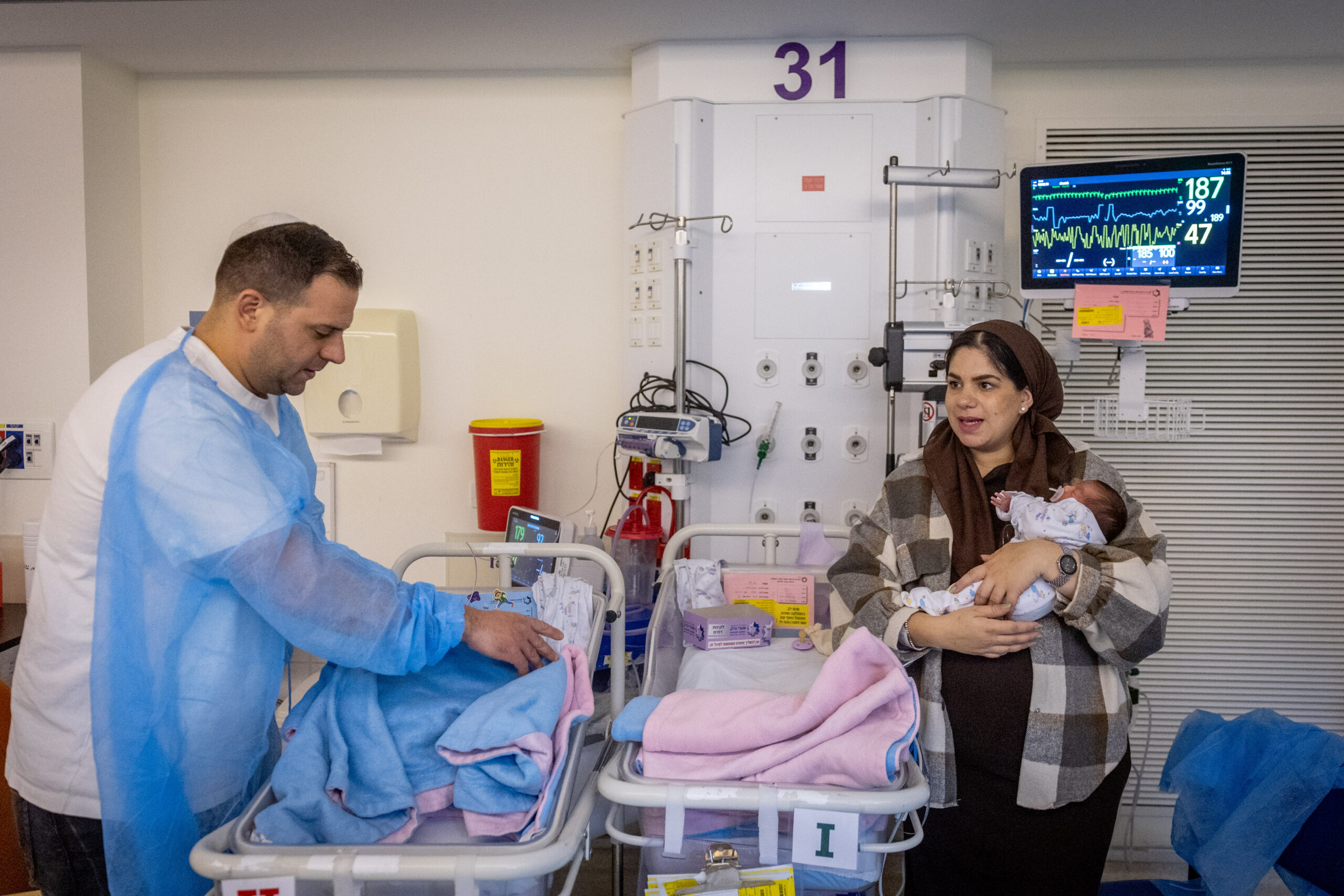
For decades, Israel’s enemies and even some of its friends warned that time was running out, that a surging Arab birth rate would eventually make Jews a minority in their own land, forcing a choice between democracy and Jewish sovereignty. Politicians built careers around that warning. Academics published papers on it. Diplomats used it to pressure Israel into territorial concessions. The demographic time bomb, they said, was ticking.
What none of them counted on was that the God of Israel had already written the ending, and it looks nothing like their projections. According to the February 2026 Monthly Bulletin of Israel’s Central Bureau of Statistics (ICBS), Jewish births in Israel surged 74% between 1995 and 2025, rising from 80,400 to 139,676, while Arab births grew by only 21% over the same period, from 36,500 to 44,029. Jewish births now account for 76% of all births in Israel, up from 69% in 1995. The bomb was a dud.
The numbers tell a decisive story. In 2024, the Jewish fertility rate stood at 3.09 births per woman, higher than the Muslim fertility rate of 2.51, and higher than the fertility rates in every Muslim country in the world except Iraq, Yemen, and sub-Saharan Muslim nations. To put that in historical context: in 1969, the Arab fertility rate in Israel and Judea and Samaria was six births per woman higher than the Jewish rate. In 2015, the two rates converged at 3.13. Since then, the Jewish rate has pulled ahead and kept climbing.
Even the death data reveals the shift. In 2025, Israeli Jewish deaths totaled 44,127, just a 40% increase from 31,575 in 1996, even as the Jewish population nearly doubled. That reflects a younger, growing population. Arab deaths, by contrast, rose 120% in the same period, from 3,089 to 6,784, the statistical signature of an aging society. One population is getting younger. The other is getting older.
Ambassador (ret.) Yoram Ettinger, who has tracked Israeli demographic data for decades, points to what he believes are the driving forces behind Jewish fertility: optimism, patriotism, attachment to Jewish roots, a frontier mentality, communal solidarity, and a strong commitment to raising children. Abortions have declined 34% since 1990, despite Israel’s liberal abortion policy. Israel is also the only Western democracy with a fertility rate nearly double the OECD average of 1.7, a reality that extends far beyond demography, strengthening military recruitment and driving economic and technological growth.
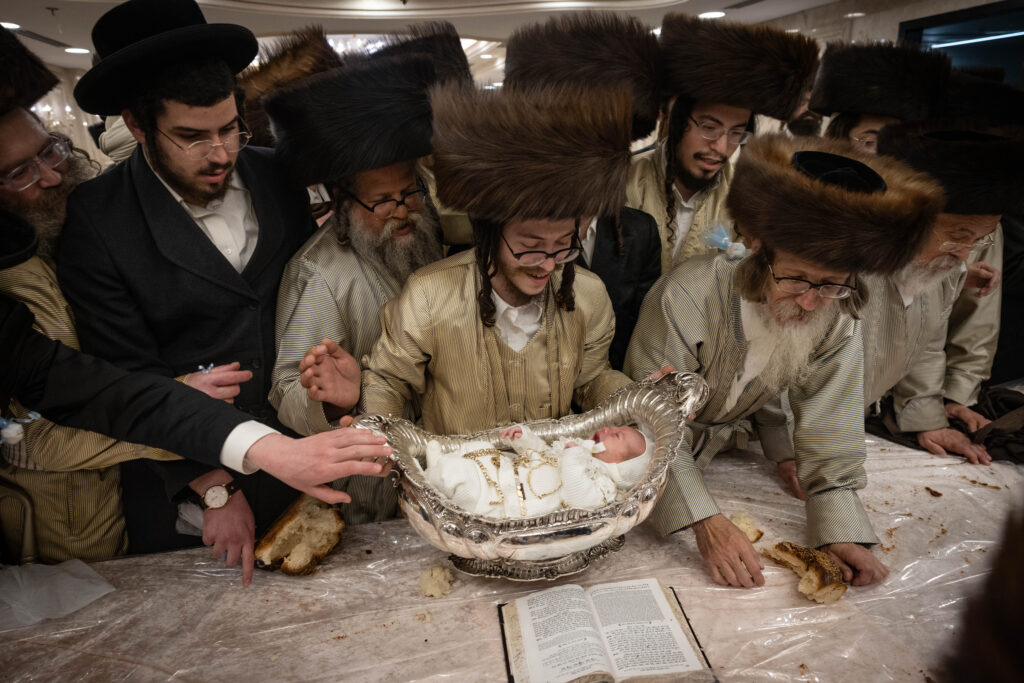
The Palestinian Numbers Don’t Add Up
The state of Palestinian demographic data itself bears additional scrutiny. The Western policy establishment repeats official Palestinian Authority population figures without auditing them, and those figures, according to Ettinger, carry a 110% artificial inflation.
The Palestinian Authority’s population count for Judea and Samaria includes 500,000 overseas residents who have been living abroad for over a year, a direct violation of standard international census procedures. It double-counts 380,000 East Jerusalem Arabs who already hold Israeli ID cards. It double-counts another 200,000 Arabs from Judea and Samaria who married Israeli Arabs and received Israeli residency. And it ignores consistent net-emigration: in 2025 alone, 18,847 Arabs left Judea and Samaria on net, according to Israel’s Immigration and Population Authority, which tracks every exit and entry through all of Israel’s border crossings.
A 2006 World Bank audit documented a 32% artificial inflation of Palestinian births. Ettinger states the finding plainly: “While the Palestinian Authority claimed an 8% increase in the number of births, the World Bank detected a 24% decrease.”
The bottom line, according to Ettinger: “The Arab population of Judea and Samaria is 1.5 million and not 3.25 million claimed by the Palestinian Authority.” Taking that corrected figure into account, the Jewish majority across pre-1967 Israel and Judea and Samaria combined, 8 million Jews versus approximately 3.5 million Arabs, stands at 69%. That majority is not shrinking. It has a “robust demographic tailwind of fertility rate and net-immigration,” Ettinger concludes.
What the Data Actually Means
Benjamin Netanyahu called the demographic situation a time bomb in 2003. Michael Oren listed it among seven existential threats to Israel in 2009. They were wrong, and the reasons they were wrong are instructive. The Arab fertility rate across the Muslim world has been collapsing for decades. In Israel generally, and in Judea and Samaria specifically, Muslim fertility dropped from nine births per woman in the 1960s to 2.51 today. What drove that shift was Westernization: urbanization, higher education for women, later marriage age (from 15 years old to an average of 24 in Judea and Samaria and 27 in pre-1967 Israel), shorter reproductive windows, and widespread use of contraceptives (used by 70% of Arab women in Judea and Samaria).
The median age of Arabs in Judea and Samaria is now 22, up from 18 in 2005. That is the age profile of a maturing society whose demographic peak is already behind it.
Meanwhile, Israel’s Jewish fertility surge has come primarily from unexpected quarters. The secular sector has driven the rise, while the ultra-orthodox sector, which has the highest fertility rate, has seen a moderate decline as it gradually integrates into the workforce and academia. Israeli Jewish women are, statistically speaking, unique: they are the only population in the developed world where rising education, income, and urbanization correlate directly with rising fertility. Everywhere else, those factors suppress birth rates. In Israel, they don’t.
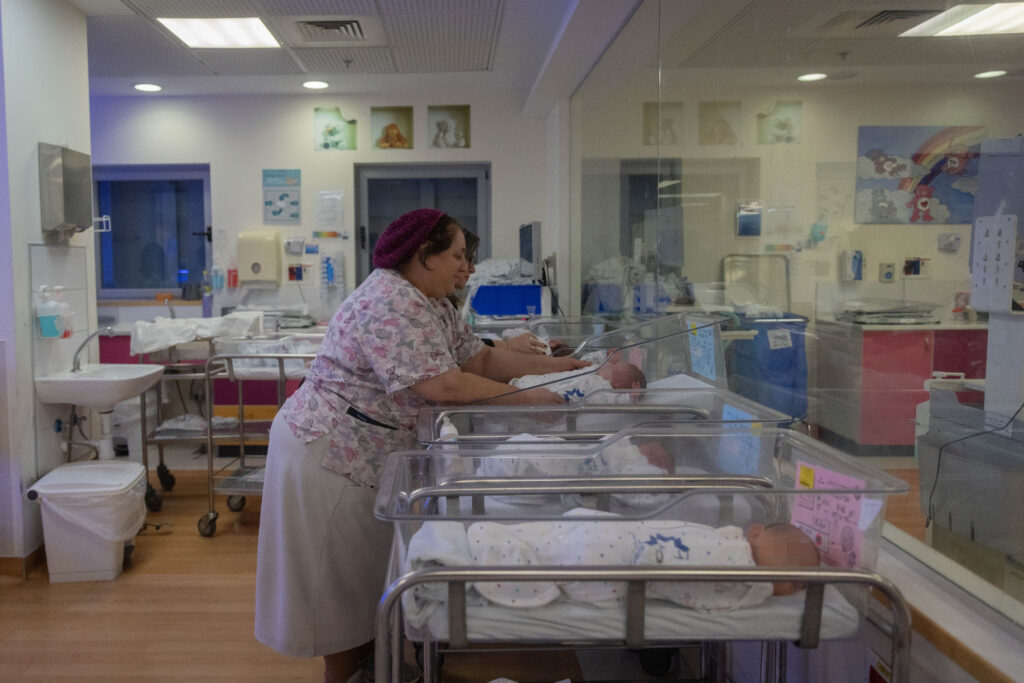
The Copper Mirrors of Egypt
There is a teaching about this in the Bible that predates Ettinger’s data by three thousand years.
Rabbi Elie Mischel, writing in the Israel Bible, frames these numbers inside the oldest Jewish story there is. And the frame fits. “For decades,” he writes, “the most powerful argument against Israel’s future was demographic. The claim went like this: between the Israeli Arabs who are full citizens of the state and the Arabs of Judea and Samaria living under Israeli military administration, the Arab population in Israel was growing so fast that Jews would eventually become a minority in their own land. Either way, the math would eventually destroy the Zionist project.”
Mischel’s conclusion: “The bomb didn’t go off. It was a dud.”
But Mischel doesn’t stop at the statistics. He reaches back to Egypt. A family of seventy people descended into bondage, and four centuries later numbered in the millions. The Torah records what happened when Pharaoh tried to stop them:
וְכַאֲשֶׁר יְעַנּוּ אֹתוֹ כֵּן יִרְבֶּה וְכֵן יִפְרֹץ וַיָּקֻצוּ מִפְּנֵי בְּנֵי יִשְׂרָאֵל
“But the more they were oppressed, the more they increased and spread out, so that the Egyptians came to dread the Israelites.” (Exodus 1:12)
Pharaoh’s strategy was not merely forced labor. It was designed to crush the will of a people — to break men so thoroughly that they stopped wanting to build families. According to the Sages, it was the women of Israel who refused to let that happen. They went out to the fields carrying food and copper mirrors, using those mirrors to reawaken in their exhausted husbands the desire to live, to love, to bring children into the world. Years later, God told Moses to accept those same mirrors as a contribution to the Mishkan (Tabernacle), forging them into the copper laver at the entrance to the holy service. “Accept these mirrors,” God said, “for these are more precious to Me than anything, because through them the women gave birth to legions of children in Egypt.”
The Sages teach that the redemption from Egypt came in the merit of those righteous women. Without those unlikely pregnancies, there is no Exodus. Without the Exodus, there is no Sinai.
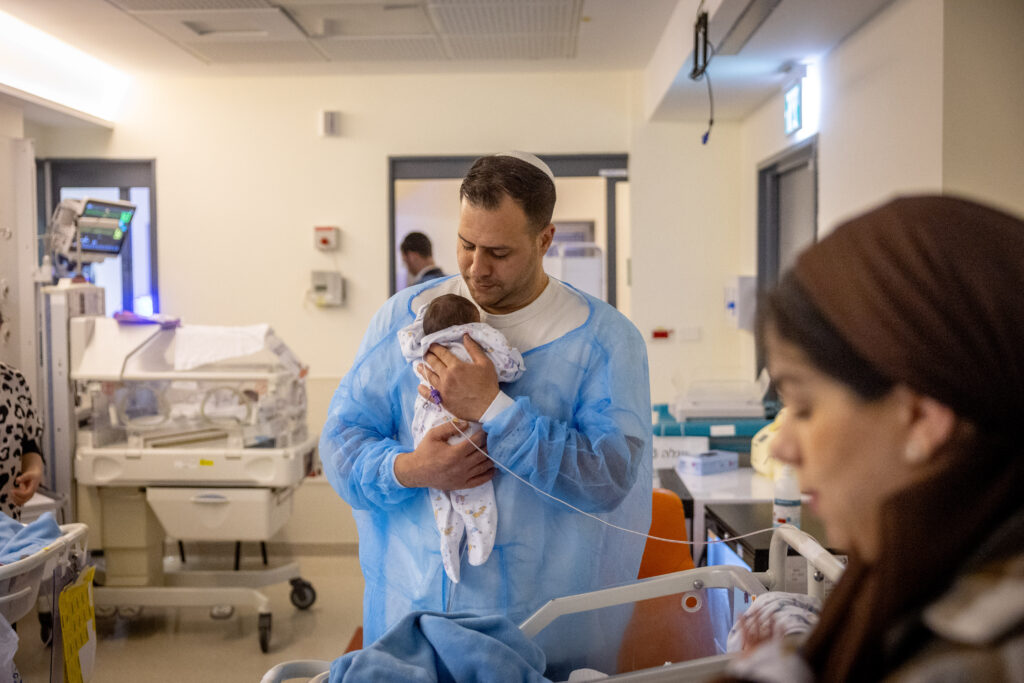
Mischel draws the line from Egypt to today with precision: “What the women of Israel did under Egyptian slavery, modern Israelis are doing today. Surrounded by enemies who have tried everything to break us, we have given the same answer: we believe our children’s lives will be worth living.”
He locates the source of Israel’s birth rate not in policy, but in moral clarity. It is the same clarity American soldiers brought home from World War II, which produced the American baby boom of the postwar years. “People have children when they believe in their future; not when the economy is good, not when the government offers the right subsidies, but when they believe their society is worth perpetuating.” That clarity, Mischel argues, never left Israel. “We know what was done on October 7. We know what Hamas is, what Hezbollah is, what Iran is trying to do. And we know what we are: a society that, for all its imperfections, is dedicated to life, to family, to human dignity. Their side celebrates death. Ours builds maternity wards.”
That contrast is not merely rhetorical. As Mischel notes, Israel is the only country in the developed world with a fertility rate above replacement level, while Japan has recorded more deaths than births every year since 2007, France crossed that threshold in 2025 for the first time since World War II, and the rest of the Western world is in slow demographic freefall. “The entire developed world is slowly dying, but Israel is growing.”
If the Western world wants to understand what it is losing and why, the ICBS data is a good place to start. The demographic argument against Israel’s survival has collapsed under the weight of the actual numbers. The Jewish people have answered their enemies the same way they answered Pharaoh; not with strategy, but with children.
The recent statistics suggest that the copper mirrors of Egypt are still at work.

