

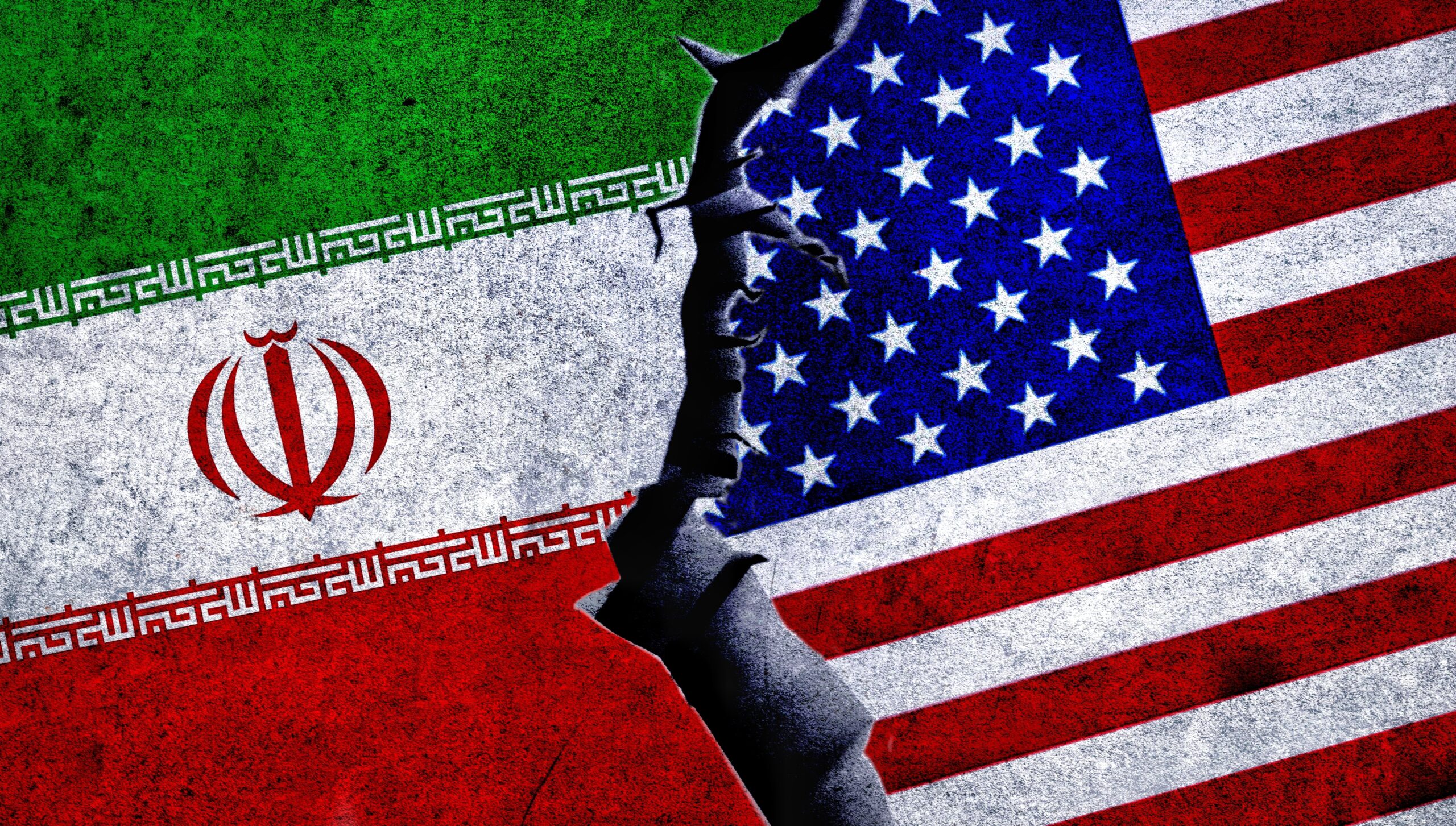
The Islamic Republic in Iran, which has spent decades funding terror, building ballistic missiles, and racing toward nuclear weapons, now faces the full military weight of the United States. What most analysts see as a geopolitical showdown, the Sages of Israel saw coming over 1,500 years ago. And according to Rabbi Shmuel Eliyahu, Chief Rabbi of Tzfat, the confrontation between America and Iran is not merely a conflict between nations. It is a cosmic End-of-Days countdown.
This is described explicitly in the Talmud in tractate Avodah Zarah (2a) which opens a breathtaking window into the End of Days. The Gemara describes a future scene in which the God places the Torah scroll on His lap and declares: “Whoever occupied himself with it, let him come and receive his reward.” The nations of the world stream forward. Rome enters first, and God asks what they achieved. They answer: “We established marketplaces, we built bathhouses, we accumulated silver and gold, and we did it all only for Israel, so that they would engage in Torah.” The same scene unfolds with Persia, and then with every other nation.
The Gemara then asks why only Rome and Persia are named explicitly while all other kingdoms remain anonymous. The answer: these two empires alone “will extend their kingdoms until the coming of the Mashiach” (Avodah Zarah 2b).
Rabbi Judah Loew ben Bezalel (c. 1525–1609), known as the Maharal of Prague, explained that Persia in this context is not the ancient empire of Cyrus, it is the kingdom of Yishmael, meaning Islam. Rome is Edom, the civilization rooted in Christianity and the Western nations it shaped. These two civilizational forces, one Eastern and Islamic, one Western and Christian, are the final powers standing before Mashiach arrives.
But the Talmud itself contains what looks like a contradiction. In tractate Yoma (10a), two traditions clash. Rabbah bar bar Chanah in the name of Rabbi Yochanan, quoting Rabbi Yehudah bar Ilai, reasons by kal v’chomer (an a fortiori argument): the Chaldeans destroyed the First Temple and were then conquered by Persia; the Romans destroyed the Second Temple, which the Persians had helped build — so by the same logic, Rome should fall to Persia. Rav, however, rules the opposite: it is a royal decree (gezeirat hamelech) that Persia falls into the hands of Rome. And after that, Rome rules alone for nine months — a period the Tosafot explicitly compare to a pregnancy — before the Mashiach is born into the world.
Rabbi Eliyahu resolves this apparent contradiction by pointing to what we can see with our own eyes. On the military level, Persia and the Islamic world cannot stand against the might of the West. America defeats Iran. That is Rav’s ruling playing out in history. But on the cultural and demographic level, Islam is eroding Europe from within, spreading through migration and weakening the West’s civilizational confidence — and it has begun doing the same in the United States. That is Rabbi Yehudah bar Ilai’s teaching: Persia does, in its own way, bring Rome to its knees.
Both views are true. They are describing two different dimensions of the same war.
And what comes after? The prophet Michah (Micah) maps it precisely. In chapter 5, verse 2, Tosafot anchor their entire analysis of this nine-month period:
“Therefore He will give them up until the time when she who is in labor has given birth; then the remainder of his brethren shall return to the children of Israel.” (Micah 5:2)
The nine months of Rome’s dominance are the final pregnancy. Israel is the child being born.
Rabbi Meir Leibush ben Yehiel Michel Weisser, known by the acronym Malbim (1809–1879), explained that Micah chapter 4 describes this birth in four stages. First comes kibbutz galuyot — the ingathering of the exiles — which Israel has been living through since 1948. Then comes what Micah calls the Migdal Eder (Tower of the Flock), the gathering of scattered Israel into a protective tower. That tower grows into a fortress — metzudat bat Tzion (the stronghold of the daughter of Zion). Then comes memshala harishona (the former dominion), a form of governance like the era of the judges before kingship. And finally, the malchut bat Yerushalayim — the kingdom of the daughter of Jerusalem — the permanent Davidic throne.
Look at those four stages. Now look at the State of Israel. A scattered, persecuted people ingathered from 100 countries. A military fortress that has defeated coalitions of enemies. A sovereign government that functions as a kind of governance without yet being a full monarchy. The stages are unfolding in sequence.
Micah also describes Israel’s power once it consolidates: “And the remnant of Jacob shall be among the nations, in the midst of many peoples, like a lion among the beasts of the forest, like a young lion among flocks of sheep, who, if he passes through, tramples and tears, and none can rescue. Your hand shall be lifted up over your adversaries, and all your enemies shall be cut off.”
This is not a metaphor for diplomacy.
The Talmud, the Tosafot, the Maharal, the Malbim — they were not writing theology in isolation. They were reading the structure of history. And that structure has a destination. When the nine-month clock completes, when the final birth pangs are over, what emerges is not another empire. What emerges is the kingdom of the House of David, ruling from Jerusalem, with Israel as the force that unites the positive dimensions of East and West under the sovereignty of God.
The generals in Washington and the mullahs in Tehran are, unknowingly, keeping an appointment that was set in the heavens long before either of their nations existed.