


Four Palestinian women were killed on Wednesday when fragments from an Iranian ballistic missile struck a wedding hall in Beit Awwa, a Palestinian town near Hebron in Judea. The strike, which the Palestinian Red Crescent initially reported as causing three fatalities and multiple injuries, marked the first confirmed Palestinian deaths in the current phase of the regional war sparked by Iran’s missile campaign against Israel.
Within hours of the incident, conflicting narratives emerged regarding the source of the blast. Palestinian reports circulating in Arab media claimed that the damage was caused by an Israeli interceptor missile. Israeli officials and regional leaders rejected that claim outright, presenting evidence that the casualties were caused by a cluster munition carried on an Iranian missile—an internationally prohibited weapon due to its indiscriminate dispersal pattern.
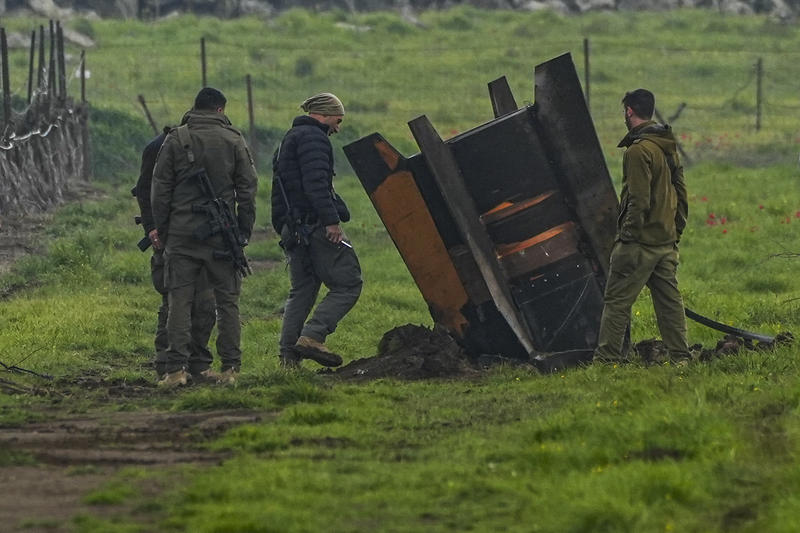
Israeli officials pointed to physical evidence from the impact site in Beit Awwa and a parallel strike in the nearby Jewish community of Asa’el. In both locations, remnants of a fragmented warhead consistent with a cluster munition were identified. Video footage released with approval from Israeli military censors documented multiple submunitions falling over a wide area, a hallmark of cluster weapons designed to disperse smaller explosive devices over civilian zones.
The Yesha Council issued a statement accusing Arab sources in Judea and Samaria of spreading what it called a deliberate falsehood intended to incite against Israel and Jewish communities. “This is an absolute lie,” the council stated, emphasizing that identical fragmentation patterns were documented in both Arab and Jewish locations struck by the same missile barrage.
Cluster munitions are banned under international conventions due to their inability to distinguish between civilian and military targets and the lasting danger posed by unexploded ordnance. The use of such weapons by Iran introduces an additional layer of legal and moral scrutiny as the conflict intensifies.
The deaths in Beit Awwa underscore the broader reality that Iranian missile fire does not distinguish between Jew and Arab. Communities across Judea, from Palestinian towns to Jewish villages, have come under the same aerial threat. At the same time, the rapid spread of conflicting claims highlights the information war running parallel to the military campaign.
