


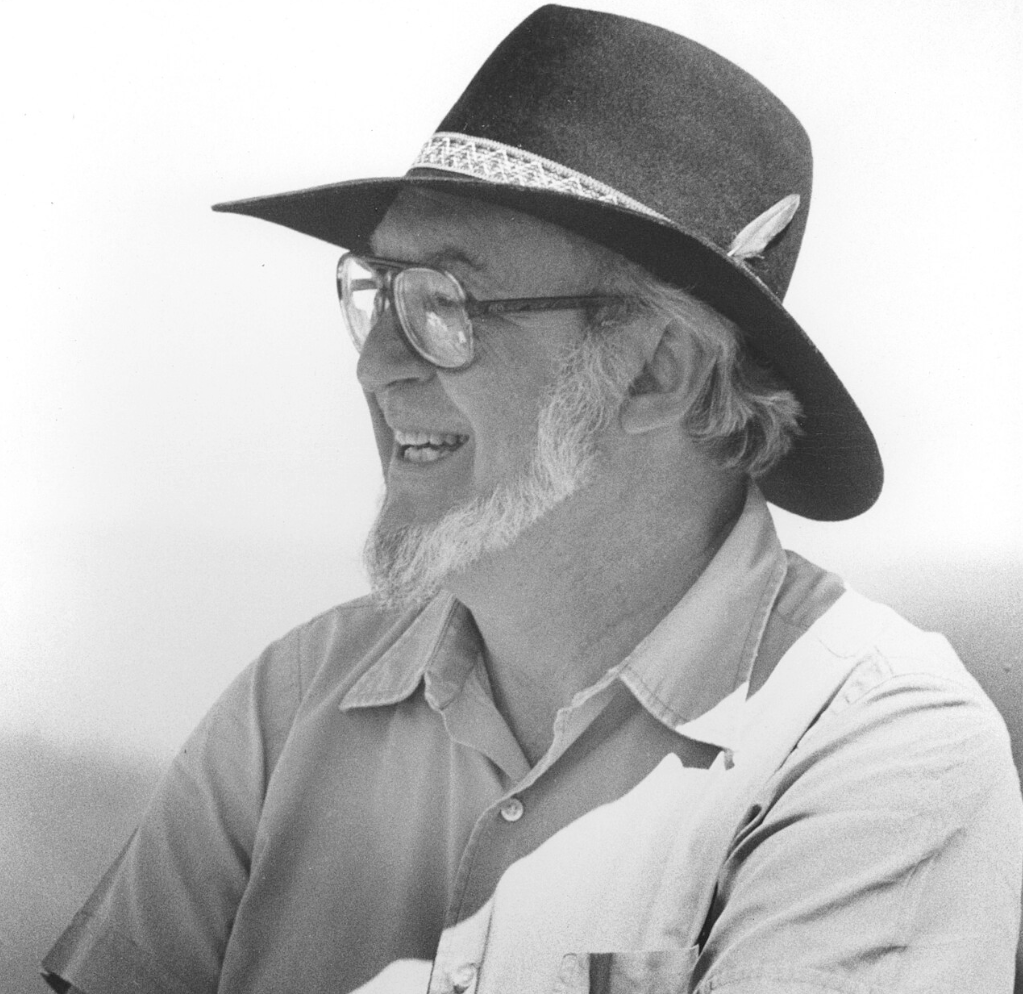
In the spring of 1963, a small group of middle-aged Jewish men gathered around a table at Beth Israel synagogue on the West Side of Cleveland, reading. No cameras, no press releases, no organization behind them. Just a clinical psychologist named Herb Caron, a NASA research scientist named Lou Rosenblum, and a few others from their Conservative congregation. They were ordinary American Jews trying to understand the world they lived in.
That night, Herb Caron broke down in tears. They were reading Ben Hecht’s Perfidy, a savage indictment of how the American Jewish establishment stayed silent while six million of their people were murdered. As Rosenblum and his friends kept reading, the question became inescapable: if it happened once, could it happen again?
It already was.
Behind the Iron Curtain, three million Jews were trapped in the Soviet Union, forbidden to practice Judaism, forbidden to teach Hebrew, forbidden to leave. Jewish theaters were shuttered in Stalin’s time. Hebrew Bibles were outlawed since 1917. Soviet propaganda depicted Jews in cartoons lifted directly from Nazi newspapers, repackaged with Soviet captions. And what was the American Jewish establishment doing? Almost nothing. The major organizations were too busy fighting each other over turf and fundraising to unite.
Chaim Greenberg, writing in 1943 while Jews were being murdered in Europe, had called it Bankrupt—American Jewish leadership continuing their “normal behavior of in-fighting and advantage-seeking,” each organization jockeying for position rather than unifying to build the political force that might have saved lives. Twenty years later, Rosenblum saw the same thing happening all over again.
Before they got to work, Rosenblum and Caron made a trip to New York to see Maurice Samuel, a writer and scholar whose judgment they trusted. Samuel confirmed their worst fears about the Soviet situation, then offered a parting piece of advice that Rosenblum never forgot: “If you want to work on this problem, you must burn with a cool enthusiasm.” Burn, but burn coolly. The problem would not be solved quickly or easily; it would take years of grit and determination.
Rosenblum took that to heart. That October, he and Caron formed the Cleveland Committee on Soviet Anti-Semitism—the first grassroots Soviet Jewry organization in America.
Lou Rosenblum died on April 4, 2019, at age 95. But in the Jewish tradition, the dead are remembered not on the secular calendar date of their passing, but on the Hebrew calendar date. This year, that date fell this week on this past Tuesday, the 28th day of the Hebrew month of Adar. Traditionally, we mark these annual remembrances with a lit candle, a prayer, and reflection on what a life meant.
At a moment when Jews and Israel are once again under assault from every direction, Rosenblum’s life has something urgent to teach us all.
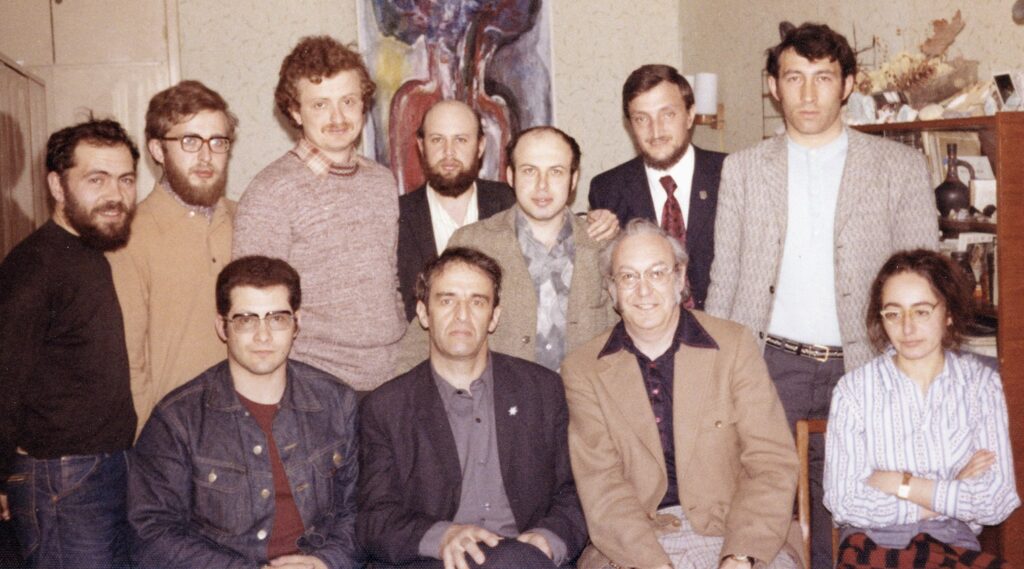
He was not a rabbi or a politician or a wealthy philanthropist. He was a solar energy researcher at NASA’s Lewis Research Center who came home every night at six, kissed his wife Evy, had dinner, and then descended to his basement—typewriter, telephone, mailing lists—and worked through much of the night. “He would sit at the typewriter and write correspondence and place phone calls and have his meetings into the wee hours of the morning,” his daughter Miriam recalled. When work took him out of town, he scheduled his trips to end on Fridays so he could spend the weekends meeting with Soviet Jewry activists in other cities.
The Jewish establishment, Rosenblum quickly discovered, would not lead.
In April 1964, five hundred delegates from every major Jewish organization in America gathered at the Willard Hotel in Washington, D.C., for the first national conference on the Soviet Jewry crisis. Rosenblum and Caron drove down from Cleveland hoping something real might happen. What they got was prayer vigils, educational programs, and vague “awareness” campaigns—resolutions that would do nothing to mobilize the millions of Americans who had never heard about Soviet Jewry.
On the taxi ride from the airport, they found themselves sharing a cab with Rabbi Balfour Brickner, who headed the Social Action Center of the Union of American Hebrew Congregations—the very organization they’d come as delegates of. Brickner had seen their proposed resolution calling for a real national organization with real staff and real money. His response was frank: “I may personally think what you’re doing is right, but this is going to cause too many problems for UAHC organizationally.”
Rosenblum looked at this man, Mister Social Action, he thought, and said nothing.
They pushed their resolution from the conference floor anyway, over the chairman’s furious objections, to a thunderous voice vote. The chairman gaveled the room to order and accused them of coming to overturn the conference. The resolution was folded into the official proceedings and then quietly ignored—no money, no staff, nothing. So they went home to Cleveland and built the movement themselves.
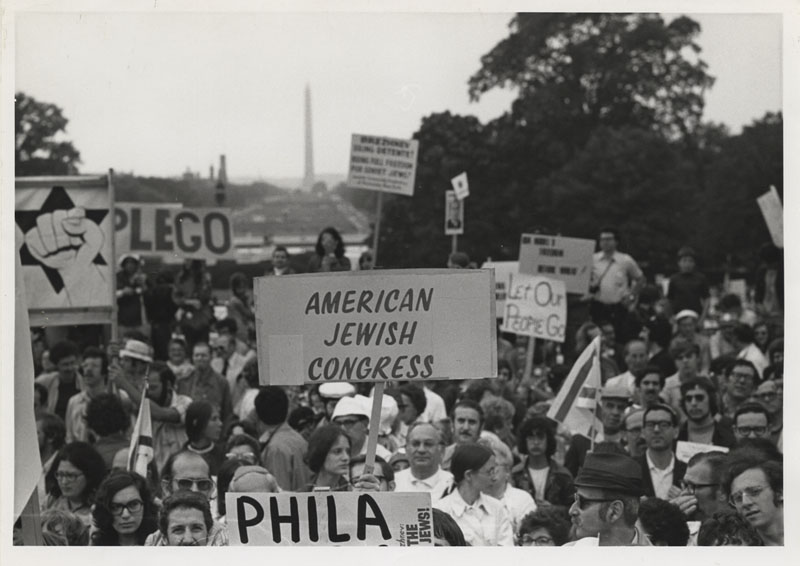
What Rosenblum built from that basement was genuinely remarkable. He pioneered tactics that now seem obvious but were then new: letter-writing campaigns to specific prisoners of conscience in Soviet labor camps; greeting card packets sent directly to refuseniks—Soviet Jews who had applied to emigrate and were being persecuted for it—five cards, five names and addresses, and a note encouraging the sender to add a personal message. When responses started coming back from the Soviet Union, something shifted. Soviet Jewry stopped being an abstraction. It became personal.
When the March 1965 community rally finally came together in Cleveland, Rosenblum and his team made one “brilliant decision,” as he later put it—they inserted membership application forms into the program booklets handed out at the door. The auditorium held 2,000 people, and the crowd was 2,200. The overflow stood in the hallways while loudspeakers were hastily installed so they could hear. By the time it was over, 500 people had signed up as dues-paying members, which meant the organization now had enough money to operate without constantly begging for donations—and enough independence to keep doing things the establishment disapproved of.
He organized phone calls between American Jews and Jewish activists in Moscow—live, sometimes amplified on speakers at synagogue gatherings—that by 1973 numbered roughly a thousand calls a week from the United States, Canada, and Britain. He distributed protest seals by the millions, printed to be affixed to envelopes, carrying the cause across the country one piece of mail at a time. He produced a film on Soviet Jewry featuring Rabbi Abraham Joshua Heschel. He wrote a handbook on how to run a local Soviet Jewry organization and eventually mailed it free to Hillel chapters at universities across North America.
And he never stopped pushing Washington. His long-term strategy, articulated in a 1965 letter to a history professor, was unsentimental: the Soviet Union would not change its behavior because of demonstrations alone. It would change because the United States government applied pressure. And the government would apply pressure only if American public opinion demanded it. Everything else—the rallies, the cards, the phone calls, the seals—was in service of that goal.
In 1974, Congress passed the Jackson-Vanik Amendment, tying American trade benefits to Soviet emigration rights. Rosenblum had spent years building the case for it, cultivating Congressional staff, providing intelligence from activists on the ground in Moscow, and keeping the pressure on at every turn. His fingerprints were all over it.
The verdict came, eventually, from an unlikely source. Anatoly Dobrynin served as the Soviet Ambassador to the United States from 1962 through 1986—the man who had sat across the table from American officials throughout the entire struggle. In his 1995 memoir, he wrote about the Jackson-Vanik Amendment in terms that vindicated everything Rosenblum spent fifteen years fighting for: “Our biggest mistake was to stand on pride and not let as many Jews go as wanted to leave. It would have cost us little and gained us much. Instead our leadership turned it into a test of wills and we eventually lost.”
Beginning in the late 1980s, over a million Jews left the Soviet Union and its successor states. Nearly a million made aliyah to Israel, where they would change the future of the Jewish state.
“We are well aware of the irrational, vicious, and pervasive nature of anti-Semitism,” Rosenblum wrote in his activist handbook. “The horror of six million Jews murdered by the Nazis still burns in our memory. We remember, too, that world response—including Jewish response—was feeble and disorganized. Today in the Soviet Union, anti-Semitism is deliberately cultivated as an instrument of state policy. We dare not fail again.”
He didn’t fail. On the anniversary of his death, his life is a reminder that the people who change history aren’t always the ones you expected, and almost always the ones who refused to sit still.


