




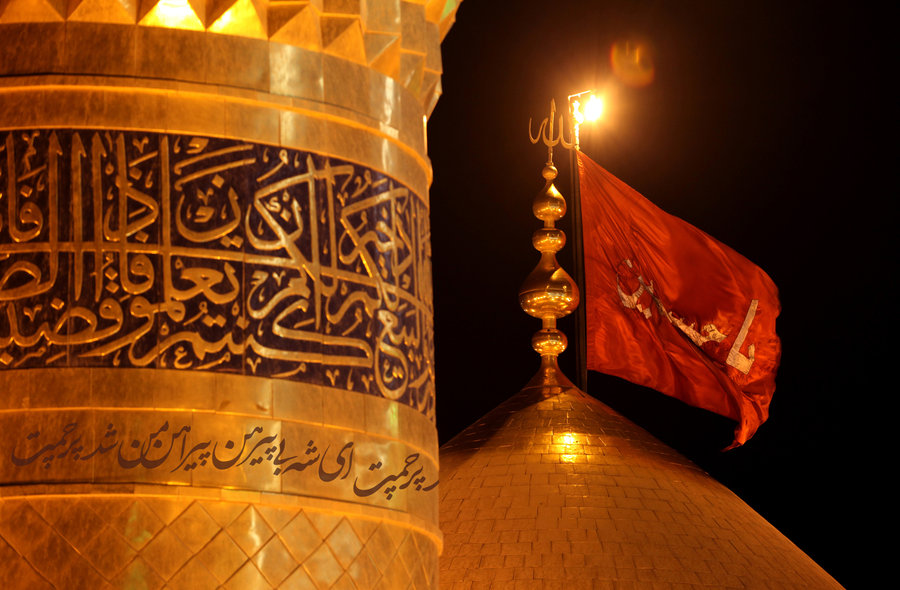
On Saturday, the first day of the war against the Islamist regime in Iran, the Supreme Leader Ali Khamenei was killed in the joint U.S.–Israel airstrikes. In response, supporters of the regime hoisted a red flag above the dome of Jamkaran Mosque. The gesture was immediate and symbolic, signaling the message that the Islamists view Khamenei’s death as blood unjustly shed, demanding revenge. This was not ritual mourning alone. The red flag, steeped in Shiite theology, conveys a clear message to the world and to Iran’s enemies: the regime intends to retaliate.
The Jamkaran Mosque, located near Qom, is one of the most revered sites in Shia Islam. It is believed to be associated with the Twelfth Imam, Muhammad al-Mahdi, a central figure in Shia eschatology.
Iran raises a red flag of revenge over the dome of the Jamkaran Mosque in Qom — a symbolic gesture signalling retaliation after the death of Supreme Leader Ayatollah Ali Khamenei. 🇮🇷 #Iran #JamkaranMosque #MiddleEastTension pic.twitter.com/c70gH40iSw
— Abdul Samad (@TheAbdulSamad) March 2, 2026
The flag reads, “Those who want to avenge the blood of Husayn,” a reference to Husayn Ibn Ali, the son of the fourth caliph and the grandson of the Muslim prophet Muhammad. Ali was regarded as the rightful immediate successor to Muhammad as an Imam by Shia Muslims. Hussein was massacred with his family and followers in the Battle of Karbala in 680 CE. Husayn’s death is commemorated every year on the Muslim holiday of Ashura, which, for Shia Muslims, is a day of mourning. Still, Sunni Muslims recognize it as a festive day commemorating a victory. Shiites recognize this day as an act of self-flagellation, using a chain with blades or swords.
In Shia Muslim traditions, flags are a significant part of the mourning rituals. Red flags in Shiite tradition symbolize blood spilled unjustly and serve as a call to avenge a person who was slain. The flag was hoisted above the important Jamkaran Mosque, which is on the outskirts of the holy city of Qom, about 100 miles south of Tehran.
Dr. Mordechai Kedar of Bar-Ilan University explained the gravity of the act, saying, “The red flag means they are going to sink their enemies in a sea of blood. Husayn is the symbol of all the oppressed Shiites for all time. This is a call for vengeance. It is not limited to a single enemy; it is a global declaration against anyone who opposes Shiite Islam. The Shiites view this conflict as eternal.” In the case of Khamenei’s death, the red banner explicitly frames it as the martyrdom of a leader whose blood must be avenged, echoing the centuries-old narrative of Husayn ibn Ali at Karbala.
The symbolism is deliberate. The first modern raising of a red flag occurred in January 2020 after the U.S. drone strike killed General Qassem Soleimani, which also framed that killing as a continuation of Karbala. The current flag over Jamkaran repeats that logic, declaring that Khamenei’s death is not merely political—it is a sacred act that demands recompense. State media and clerics tied the action to religious obligations, describing the banner as both a spiritual call and a political warning.
Public gatherings accompanying the raising of the flag featured chants against the United States and Israel, emphasizing that this was a coordinated, mass response. Experts note that the flag’s display is intended to unify supporters while signaling that Tehran’s response will be severe and uncompromising. The red flag, in this context, is a visual proclamation that Khamenei’s death has turned into a sacred duty of vengeance, a continuation of the eternal struggle Shiites see themselves waging.

