


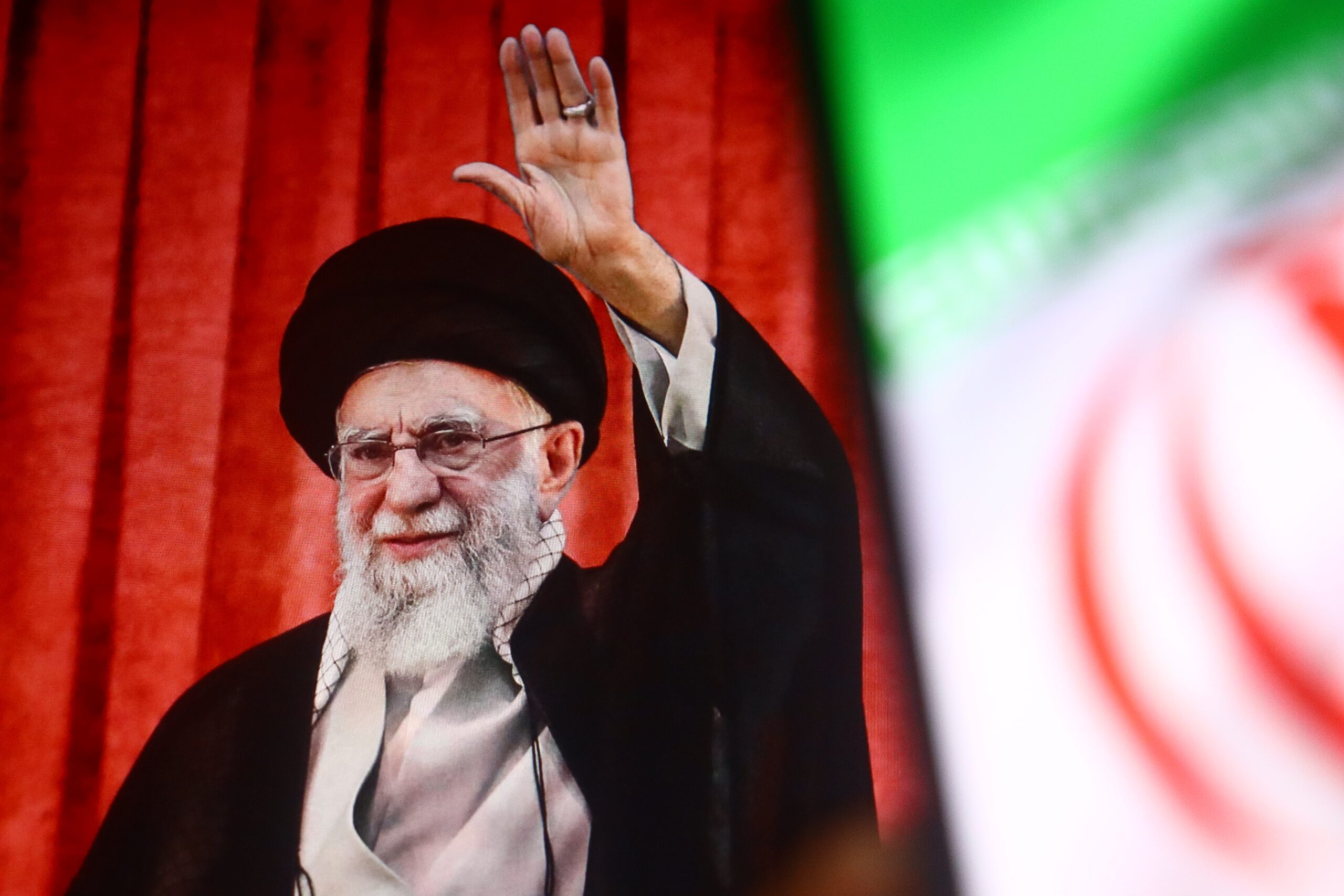
The obituary appeared online within hours of the strike that killed Iran’s supreme leader with a headline in The New York Times that read, “Ayatollah Ali Khamenei, Hard-Line Cleric Who Made Iran a Regional Power, Is Dead at 86.” The piece acknowledged that Ali Khamenei “ruled with an iron fist,” but also described him as projecting “an avuncular and magnanimous aloofness,” running the country “from a perch above the jousting of daily politics.”
The language sparked immediate backlash across social media and in political circles. Senator Tim Sheehy wrote, “NYT got the headline wrong. Let me help: Radical Islamic terrorist who murdered thousands of Americans got what he deserved. There we go.” Jason Bedrick of The Heritage Foundation posted bluntly, “The NYT is garbage.”
The NYT is garbage. https://t.co/fEvbMvUgLs
— Jason Bedrick (@JasonBedrick) March 1, 2026
Chaya Raichik, who operates the Libs of TikTok account, compared the paper’s framing of Khamenei with its obituary for Scott Adams. The Times’ headline for Adams read that his comic strip “was a sensation until he made racist comments on his podcast.” Raichik responded with a single word: “Scum.”
New York Times on Scott Adams vs Ayatollah Khamenei
— Libs of TikTok (@libsoftiktok) March 1, 2026
Scum pic.twitter.com/znRFWhtSg4
“You don’t have the media enough,” News Nation’s Batya Ungar-Sargon wrote.
You don't hate the media enough. https://t.co/BWVuXlMb49
— Batya Ungar-Sargon (@bungarsargon) March 1, 2026
Marc Thiessen, a columnist at The Washington Post, reacted to the headline with, “You can’t be serious.”
You can’t be serious https://t.co/ESULNwyzmy
— Marc Thiessen 🇺🇸❤️🇺🇦🇹🇼🇮🇱 (@marcthiessen) March 1, 2026
Tom Fitton of Judicial Watch wrote, “mostly peaceful,” invoking a widely criticized 2020 chyron. Fox News contributor Joe Concha posted, “I give up…”
I give up… pic.twitter.com/RUxsAE1JZj
— Joe Concha (@JoeConchaTV) March 1, 2026
The Times’ communications team defended the obituary on X, writing, “The Times’s obituaries report and reflect lives in full, illuminating why, in our judgment, they were significant. We fairly and accurately include the newsworthy details of each life and death, and don’t treat them dishonestly to score points like you’re trying to do here.”
The Post faced similar criticism for its own obituary, which described Khamenei as “avuncular” and noted his “easy smile” and fondness for Persian poetry and Victor Hugo’s Les Misérables.
Missing from the Times’ headline was any reference to the regime’s mass killings. Under Khamenei’s rule from 1989 to his death, Iran funded Hezbollah and Hamas, armed proxies across the Middle East, and directed campaigns that resulted in the deaths of Americans and Israelis. The obituary did acknowledge his use of “brutal tactics” and reported that his regime ordered the deaths of protesters in 2022 and earlier this year, but those facts did not define the framing.
Khamenei’s record is not ambiguous. Thousands of Iranian dissidents were imprisoned, tortured, or executed. Protesters calling for basic freedoms were shot in the streets. The regime he led publicly called for the destruction of the Jewish state and financed terrorists who carried out that agenda.
A factual accounting would begin with the blood. It would state plainly that under Khamenei’s authority, Iran became the world’s leading state sponsor of terrorism. It would state that his Revolutionary Guards crushed demonstrators and exported violence from Beirut to Gaza. It would state that he oversaw chants of “Death to Israel” and “Death to America” not as fringe rhetoric but as state policy.
Instead, readers were told about his spectacles and literary tastes. But this is a behavior that is becoming endemic among the legacy media. When Ismail Haniyeh was killed, coverage in several outlets described him primarily as a “pragmatic” political leader or the “face of Hamas’ diplomacy,” while placing his organization’s terrorism deeper in the story. Critics argued that headlines and early paragraphs emphasized his role in negotiations rather than the fact that Hamas is a U.S.-designated terrorist organization responsible for suicide bombings, rocket attacks, and the October 7 massacre.
Similarly, when Hassan Nasrallah has been profiled over the years by Western media, some reports highlighted his charisma, political skill, and popularity in Lebanon before detailing Hezbollah’s attacks on Israeli civilians and its role in killing Americans, including the 1983 Marine barracks bombing in Beirut. Critics said such framing softened the image of a man whose organization is also designated as a terrorist group by the United States.
After the killing of Qassem Soleimani in 2020, The New York Times referred to him in a headline as “a master of Iran’s covert wars.” Other outlets described him as a “revered military strategist.” Supporters of the strike objected that the initial framing foregrounded his strategic skill rather than his responsibility for directing militias that killed hundreds of American soldiers in Iraq.
In each case, defenders of the outlets argued that obituaries are meant to describe a subject’s influence and historical significance, not serve as moral verdicts. Critics countered that word choice and headline emphasis matter, and that leading with “political leader,” “strategist,” or “regional power broker” risks normalizing or sanitizing records built on terrorism.
Obituaries are not meant to be eulogies. They are supposed to tell the truth about a life. When a regime chief builds power through repression and terror, the central fact of his biography is not that he made his country a “regional power.” It is how he did it.
Khamenei’s victims do not need adjectives about aloofness. They need the record set straight.

