

Sunday was a tragic day in Israel as an Iranian missile killed nine people, some of whom were in a bomb shelter, left several missing, and wounded dozens, including several children, in Beit Shemesh, bringing the number of Israelis killed by Iranian missiles to 10, along with nearly 500 wounded.
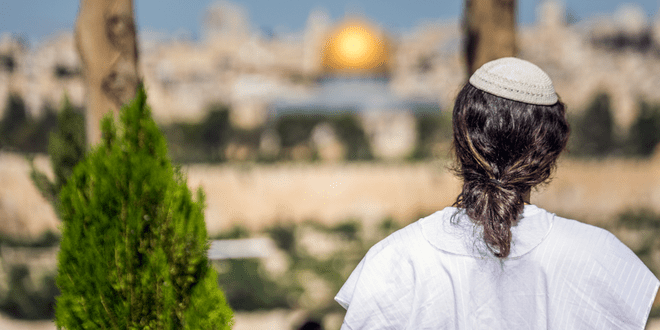
But a tragedy of a different kind was narrowly averted on Saturday, the first day of the war, as one missile landed just several hundred meters from the Western Wall and the Temple Mount. The missile hit the Sultan’s Pool outdoor events venue.
On Sunday, another missile landed on a highway on the outskirts of Jerusalem Sunday evening. Three people were wounded. The impact left a large crater in the road, hollowed out a traffic sign, and caused heavy damage to several cars.
But it is also clear that the Islamist regime is targeting Jerusalem. Ironically, a missile strike on the Temple Mount would likely destroy the Muslim structures that dominate Judaism’s holiest site. Within Saturday’s Jerusalem’bound rocket is a hidden meaning.
The first day of the war was the 11th day of the ninth Islamic month, Ramadan, in which the Muslims increase their religious fervor. Americans will connect this date as hinting at 9-11, the Jihadist attacks that rocked the US on September 11thm 2001, in which four coordinated Islamist terrorist suicide attacks by al-Qaeda. Nineteen terrorists hijacked four airliners, then flew one into each of the Twin Towers at the World Trade Center in New York City. The third plane crashed into the Pentagon, the headquarters of the U.S. Department of Defense, in Arlington County, Virginia, while the fourth plane crashed in a rural Pennsylvania field during a passenger revolt. In response to the attacks, the United States launched the global war on terror, seeking to eliminate hostile groups deemed terrorist organizations and the governments purported to support them.
President Trump’s attack on the Islamist regime in Iran can be seen as a major blow, taking out the largest government sponsor of terrorism in the region and perhaps the world. Killing the Ayatollah and dozens of the regime leaders is a major step toward the president’s stated goal of regime change, reversing the Islamist takeover of the Iranian government in1979 which was punctuated by the taking of 66 American hostages and holding them at the embassy for 444 days.
But Jews have their own 9-11. In the Hebrew calendar, the ninth day of the 11th month is Tisha B’av, the ninth day of Av, an austere day of mourning for the destruction of both Jewish Temples on the Temple Mount in Jerusalem. While Sunni Palestinians claim the Jewish site has spiritual significance for them (a claim denied by other Sunni Muslms), Iran and the Shiite religion do not attribute any significance to Jerusalem. Irah has, nonetheless, supported Hamas and Hizbullah in putting Al-Aqsa at the top of their agenda.
The Ayatollah Khameini was killed significantly during Shabbat Zachor, the Shabbat before Purim, when the Jews read the portion of the Torah commanding us to wipe out the memory of Amalek from the world. Haman, the anti-hero of Purim, was an Agagite, a descendant of Agag, the king of the Amalekites, notably spared by King Saul in defiance of a direct divine command to destroy the nation.
The focus of the missile strikes paints a disturbing picture linking the Islamist regime to Amalek. The Iranian regime is targeting civilian centers in Israel, making it clear that they are waging war like Biblical Amalek, who targeted the elderly, young, and weak, belying their evil nature that kills without gaining any military or even monetary benefit.
The Book of Esther was written in exile in Persia after the destruction of the Temple but the Purim story is fundamentally linked to the Jewish struggle to rebuild the Holy Temple in Jerusalem. According to Jewish tradition and Rabbinic commentary, King Achashverosh (Ahasuerus) used the holy vessels from the Temple in Jerusalem during his lavish, 180-day feast, followed by a 7-day feast, as recorded in the beginning of the Book of Esther. The Talmud notes that Achashverosh also wore the garments of the Kohen Gadol (High Priest) during this time.
The rivalry between Mordechai and Haman was deeply connected to the rebuilding of the Temple. Haman, a descendant of Amalek, worked to halt construction, while Mordechai worked to complete it. The funds Haman provided to the king to destroy the Jews were, through the “great reversal” (venahaphoch hu), later utilized to support the rebuilding of the Temple.
While Achashverosh remained opposed to rebuilding the Temple, the story concludes with the eventual rise of a new king, whom tradition identifies as Darius II, the son of Esther and Achashverosh, who allowed the rebuilding of the Second Temple to be completed.
And just as the fall of Haman ushered in a new Persian king heralding the Second Temple in Jerusalem, the fall of the Islamist regime may set the stage for the Third Temple. Reza Pahlavi, the exiled Crown Prince of Iran who is being lauded by the Iranian people as their choice to replace the Ayatollah as the head of their country, visited the Western Wall (part of the ancient Temple complex) in Jerusalem in April 2023 to promote peace between the Iranian and Israeli people. His visit highlighted the historical connection to Cyrus the Great, who helped rebuild the Jewish Temple 2,500 years ago. The visit fostered hope for a new era of diplomatic relations, sometimes referred to as the “Cyrus Accords”. In recent interviews, Pahlavi has frequently referenced this biblical connection and the Persian role in building the Jewish Temple as the basis for renewed relations with Israel.
So just as Haman the Agagite tried to prevent the rebuilding of the Temple, Ayatollah Khameini, the spiritual heir of that mission, was trying to destroy the Temple Mount in his final throes.
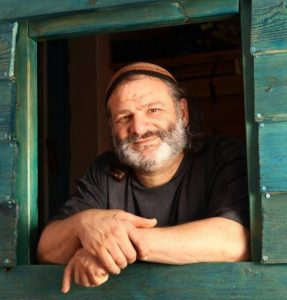
Rabbi Mordechai Ben Avraham, who lives in the Old City of Jerusalem, wrote about this spiritual aspect of the ongoing war and how it is focusing on the rebuilding of the Temple.
“The ‘Architects of Chaos’ in Tehran attempted to commit an act of sacrilege so profound it would have torn the fabric of human history,” Rabbi Ben Avraham wrote. “They launched a ballistic warhead aimed at the heart of Jerusalem. And let us be clear: this was not a “military error.” This was an intentional strike on the most sensitive thirty-five acres on Earth.”
“Had that warhead deviated by just a few degrees, or had the hand of the Almighty not guided it into the open amphitheater of the Hinnom Valley, it would have struck the Temple Mount.
“Consider the timing. We are in the month of Ramadan. At the moment of that strike, the Mount was filled with thousands of Muslim worshippers in prayer. The Iranian regime a regime that claims to speak in the name of Islam, was willing to slaughter thousands of their own co-religionists and destroy the Al-Aqsa compound just to strike a blow at the ‘Zionist entity.’
“I believe this near-catastrophe marks the beginning of the end for the regime in Tehran. By attempting to bomb the Temple Mount, they have lost the last shred of their ‘Islamic’ legitimacy. Even our neighbors, the Saudis, the Emiratis, and the Jordanians now see the truth. You cannot claim to be the vanguard of faith while trying to blow up its foundation.
“The protection of God diffused the malice of man yesterday. He allowed our infrastructure to deal with the threat, but He also placed a “hedge of protection” around the Mount. This is the moment for a global realignment. We must reclaim the anchor of our values and stand as a “Unified Shield” against those who seek to burn the world down.
“Jerusalem remains. The Mount remains. And we remain, witnesses to a miracle that calls us to a higher unity,” the rabbi concluded.
Rabbi Mordechai Yosef Ben Avraham is a multifaceted spiritual leader whose journey spans the heights of the American entertainment industry and the sacred halls of Jerusalem’s top Yeshivot. Originally a high-level music executive at Warner Bros. Records and a successful entrepreneur who helped ignite viral cultural movements in Los Angeles, he transitioned into the political arena as the 2016 Republican nominee for U.S. Congress in California’s 37th District. Following the election, he moved to Israel to embark on a deep spiritual pursuit at the prestigious Ohr Somayach yeshiva, where he dedicated years to rigorous Torah study and eventually attained rabbinic ordination. Now a respected rabbi, he is the author of works such as Mind of the Black Jew and has become a prominent global voice, frequently sought after for lectures, television appearances, and features in major international publications.
