




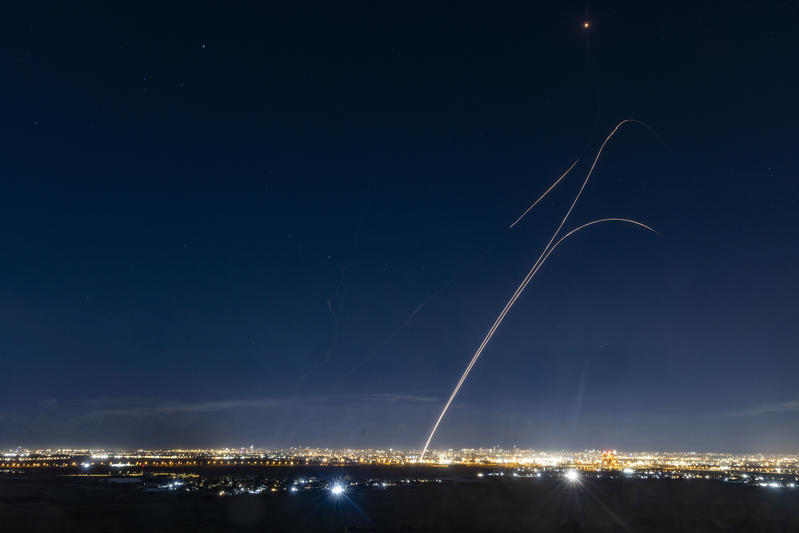
Israel and the United States launched a coordinated, high-intensity military operation against Iran early Saturday morning, targeting the country’s most sensitive military, nuclear, and leadership sites. The strikes have killed Supreme Leader Ayatollah Ali Khamenei, top defense officials, and senior figures in Iran’s nuclear program. Israeli and American forces carried out waves of airstrikes across the country, dropping over 1,200 munitions in the first 24 hours. US Central Command reported nearly 900 strikes across Iran in the same period, hitting ballistic missile sites, air defense installations, and intelligence centers.
The initial strikes focused on Khamenei’s central compound in Tehran, where he met with senior advisers and military commanders. Thirty bombs were dropped on the building, leveling the structure. Khamenei’s remains were later recovered from the rubble. Among the dead were Ali Shamkhani, a member of Khamenei’s inner circle and key decision-maker, and Brigadier General Mohammad Pakpour, commander of the Islamic Revolutionary Guard Corps (IRGC). Pakpour had directed previous missile attacks on Israel and coordinated Iran-backed terrorist proxies across the Middle East.
Other senior officials eliminated include Brigadier General Aziz Nasirzadeh, responsible for Iran’s long-range missile production and chemical and biological weapons research, and Hossein Jabal Amelian, chairman of Iran’s SPND military research organization. Reza Mozaffari-Nia, a former SPND chairman, along with Salah Asadi, chief of Iran’s Emergency Command intelligence branch, were also killed. These strikes decimated Iran’s military command structure, crippling its operational capacity.
The operation continued throughout Saturday and Sunday, with Israeli jets targeting over thirty additional sites in western and central Iran. Explosions shook Tehran and other cities, including Qom, Isfahan, Kermanshah, and Karaj. The Israeli military reported that its fighter jets dropped 1,200 munitions in the first day alone, while targeting Iran’s air defense systems and ballistic missile launchers.
US President Donald Trump underscored the scale of retaliation, declaring on Truth Social that any further Iranian attacks would be met with “a force that has never been seen before.” Prime Minister Benjamin Netanyahu framed the offensive as creating conditions for the Iranian people to “free themselves from the chains of dictatorship.”
Iran responded with about 300 missiles launched at Israel and other regional targets within the first 12 hours, including US bases in Bahrain and the UAE. Explosions were also reported in Dubai, Doha, and Manama. In Israel, the Home Front Command ordered civilians to stay near bomb shelters, suspended educational activities, and restricted nonessential travel. A missile strike near a Tel Aviv apartment building killed a foreign caregiver and injured dozens, including children, highlighting the persistent threat Iran poses even under preemptive attack.
The joint US-Israel campaign is expected to continue in stages over several days. Israeli officials told the Walla news site that planners do not anticipate a brief operation, saying the strikes are likely to unfold in stages over an extended period.
Analysts predict that future waves will systematically dismantle Iran’s nuclear and missile infrastructure while targeting remaining symbols of regime authority. Israeli officials warned that the offensive is not a brief strike but a coordinated effort aimed at eliminating Iran’s capacity to threaten Israel or American forces.
Iran Is Bombing Israel Again — Families Need Your Help Right Now
Iran has begun what may be its most devastating assault on Israeli soil. Ballistic missiles and drones are striking homes, apartment buildings, and neighborhoods across Israel — and families are hiding in safe rooms, praying the walls hold.


