


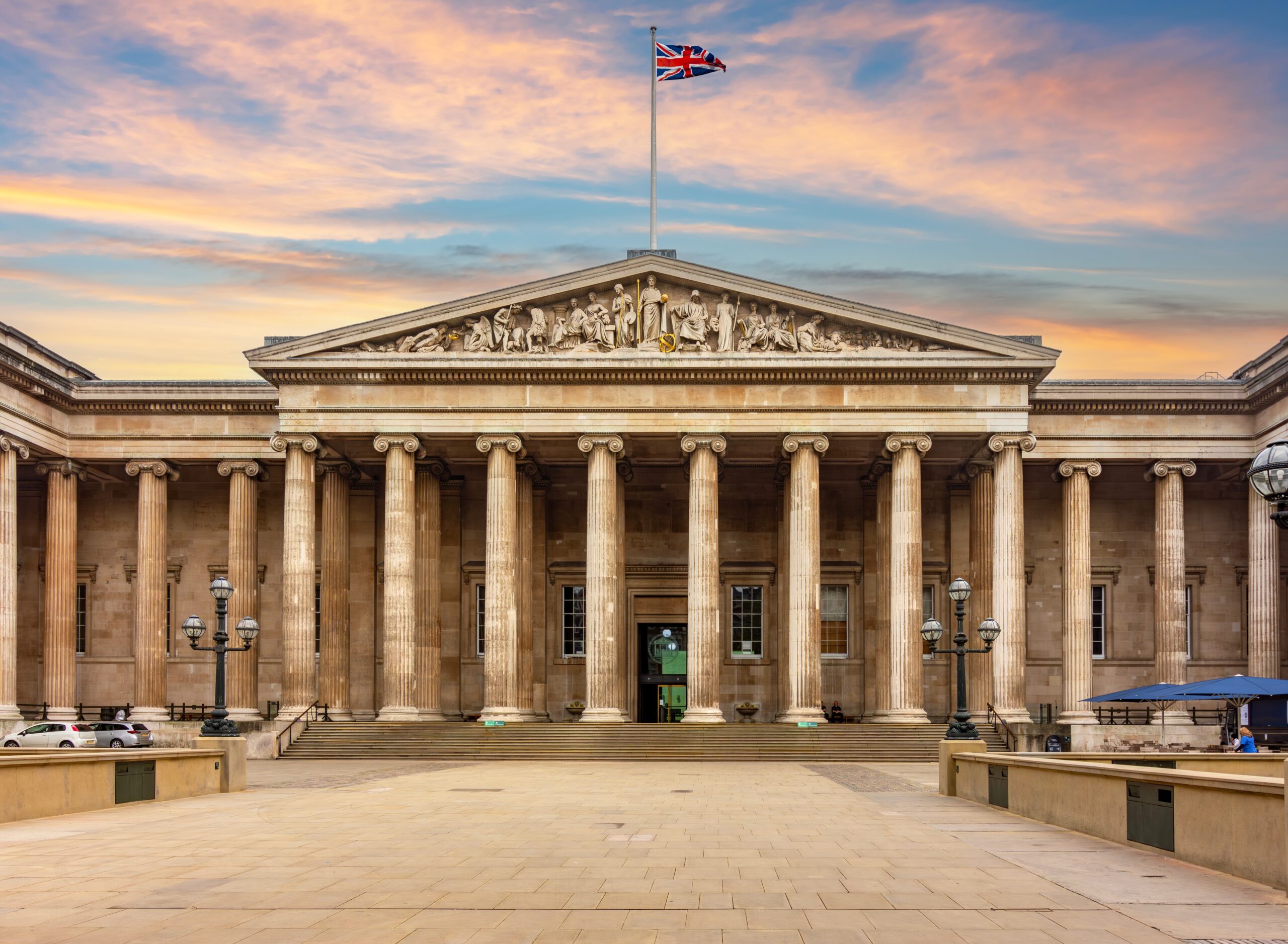
The British Museum has quietly removed the term “Palestine” from displays covering ancient Middle Eastern civilizations, acknowledging that the anachronistic label distorted historical reality and erased Jewish history from the region. The changes follow complaints from UK Lawyers for Israel (UKLFI), which argued that retroactively applying modern political terminology to periods thousands of years before the term existed created a false narrative of continuity and systematically obscured the kingdoms of Israel and Judah.
The museum confirmed it has rewritten information panels in its Levant gallery covering 2000-300 BCE to focus instead on historically accurate terms: Canaan, the Canaanites, and the kingdoms of Israel and Judah. One amended panel in the Egypt galleries previously described the Hyksos people as being of “Palestinian descent”—a statement the museum now admits was historically meaningless. The label now correctly reads “Canaanite descent.” Additional displays referencing Egyptian “dominance in Palestine” and describing Phoenician civilization as rooted in Palestine are under review.
The southern Levant changed hands, names, and identities across millennia. Ancient sources document Canaan from approximately 1500 BCE. Egyptian and Assyrian records reference the kingdoms of Israel and Judah. Greek writers, including Herodotus in the fifth century BCE, were among the first to use a term resembling “Palestine,” which later became the designation for a Roman and Byzantine province. The Roman Empire deliberately renamed Judea as “Syria Palaestina” in 135 CE—after crushing the Bar Kochba revolt—specifically to erase Jewish connection to the land. The Romans chose the name based on the Philistines, ancient enemies of Israel who had long since disappeared from history.
Names carry meaning, history, and identity. Erasing accurate historical names erases the people and events they represent.
A British Museum spokesperson acknowledged that while “Palestine” functioned as a neutral geographic term in Western scholarship during the 19th century, “the term no longer holds a neutral designation and may be understood in reference to political territory.” The museum accepted that using the term for the second millennium BCE was not historically meaningful, particularly given the modern political weight the word carries.
UKLFI’s letter to museum director Nicholas Cullinan stated the problem directly: “Applying a single name—Palestine—retrospectively to the entire region, across thousands of years, erases historical changes and creates a false impression of continuity. It also has the compounding effect of erasing the Kingdoms of Israel and of Judea, which emerged from around 1000 BCE, and of re-framing the origins of the Israelites and Jewish people as erroneously stemming from Palestine.”
The response to the museum’s corrections reveals how deeply politicized historical accuracy has become. More than 4,000 people signed a petition demanding the museum reverse its decision and reinstate “Palestine” in displays covering 1500-1700 BCE—periods predating any historical use of the term by well over a millennium. Pro-Palestinian writer Hamza Yusuf called the corrections “outrageous.” One academic, Marchella Ward of the Open University, told Middle East Eye she would continue using the term “ancient Palestine” in her research, claiming that challenges to the term support “Israel’s ongoing genocide.”
The British Museum controversy follows a similar incident involving Encyclopedia Britannica. The encyclopedia’s children’s website published a map replacing the State of Israel entirely with “Palestine,” describing Palestine in the present tense as “a region in the Middle East” between the Jordan River and the Mediterranean Sea. No distinction was made between historical usage and contemporary political entities. Israel simply did not exist on the map.
UKLFI noted the obvious: the material echoed the anti-Israel slogan “From the river to the sea,” which calls for Israel’s destruction. Following complaints and media inquiries from The Telegraph, Britannica removed the offending map and amended its definition to distinguish between the Palestinian Authority and historical usage of “Palestine” as a synonym for Canaan.
These incidents represent a coordinated pattern: major cultural institutions rewriting history to conform to contemporary political narratives. When museums and encyclopedias erase the kingdoms of Israel and Judah from displays covering their actual historical existence, they do not commit innocent mistakes. They engage in deliberate falsification. The ancient Levant was Canaan. It became the kingdoms of Israel and Judah. After the Roman conquest and Jewish exile, it was renamed to sever the Jewish connection to the land. These are historical facts, documented in archaeological records, ancient texts, and the Bible itself.
Museums and encyclopedias claim authority as guardians of knowledge and truth. When they abuse that authority to advance political agendas, they betray their fundamental purpose. The British Museum’s willingness to correct its errors after UKLFI’s intervention deserves recognition. But the fact that such corrections required outside pressure, and generated outrage from activists demanding the reinstatement of historical falsehoods, exposes how thoroughly ideology has corrupted supposedly neutral institutions. Truth matters. History matters. The kingdoms of Israel and Judah existed. Canaan existed. No amount of retrospective labeling can erase that reality.
