

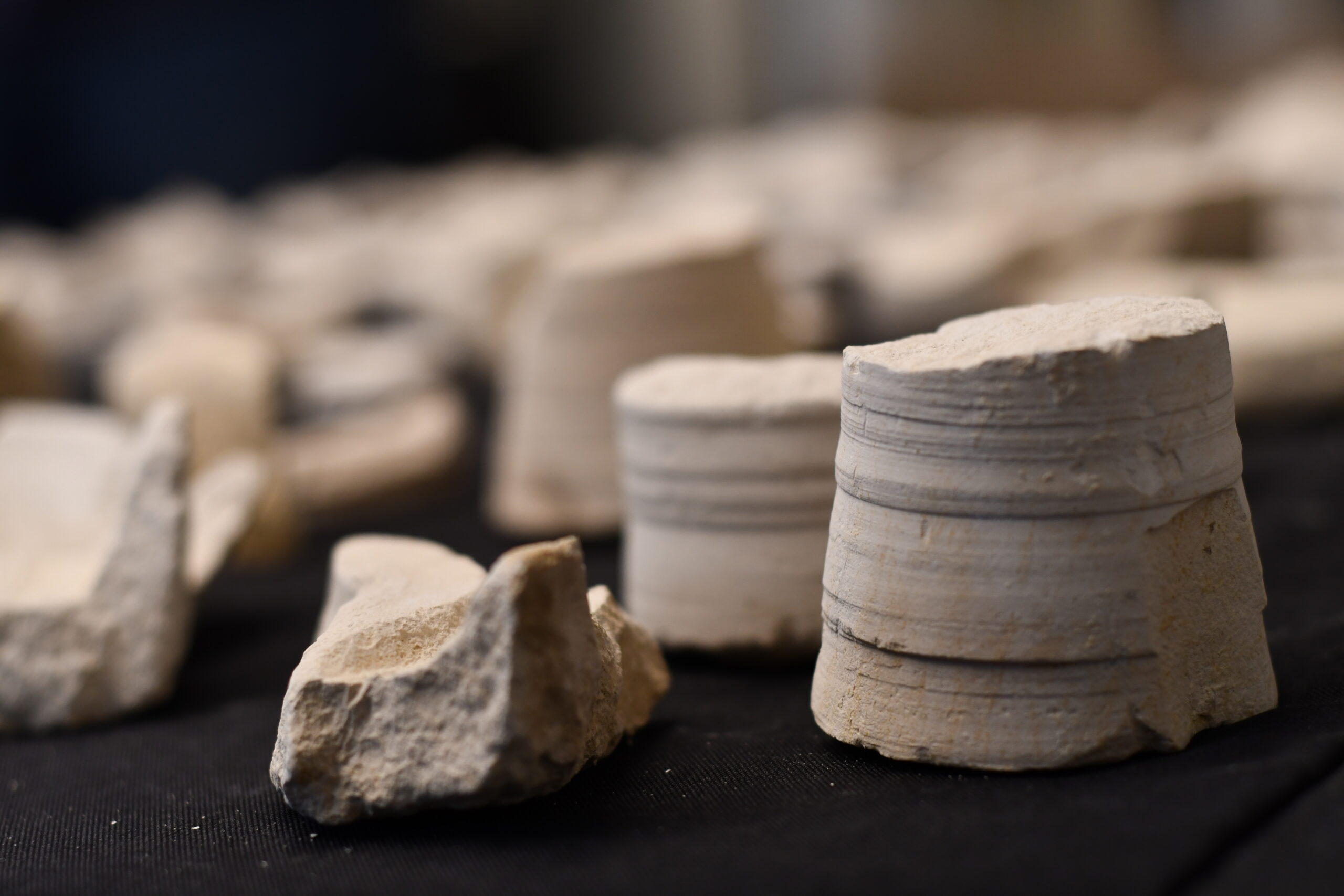
An undercover ambush on Jerusalem’s eastern slopes has exposed more than antiquities thieves. It also uncovered a sprawling Second Temple period stone vessel workshop, hidden for two millennia in a cave near Mount Scopus, along the main road Jewish pilgrims once traveled on their ascent to the Temple.
The discovery came only after inspectors from the Israel Antiquities Authority Theft Prevention Unit tracked suspicious excavation at the Ras Tamim site. After documenting clandestine digging and attempts to break into an underground cavity, officers arrested five suspects late at night. Some were caught inside the cave with a generator, quarrying tools, and a metal detector. Others served as lookouts above ground. The suspects confessed and are expected to be indicted for illegal excavation and damage to an antiquities site, crimes punishable by up to five years in prison.
When inspectors entered the cave, they found hundreds of chalk limestone vessel fragments, production waste, and unfinished items. What began as a criminal investigation became a major archaeological revelation.
Dr. Eitan Klein, Deputy Director of the Theft Prevention Unit, said workshops for producing chalk limestone vessels are known in the Judean hills. Facilities were previously uncovered near Mount Scopus during construction of the Naomi Shemer Tunnel and north of Jerusalem in Hizma. “However,” Klein explained, “the discovery of this workshop is particularly important, because now a broad picture of the region is emerging.” In addition to production sites, archaeologists have identified tombs, large water reservoirs, a mikve—a ritual purification bath—and a limestone quarry.
The location is decisive. The site sits on the main eastern approach to Jerusalem used by Jewish pilgrims coming from Jericho, Transjordan, and the Dead Sea region. The vessels produced here were likely sold in Jerusalem’s markets to residents and to pilgrims ascending for the festivals.
Stone vessels were not ordinary kitchenware. They were instruments of ritual purity at a time when purity laws shaped daily Jewish life in Jerusalem and Judea.
The Bible establishes the legal framework for impurity and purification. “And if any of them falls into any earthen vessel, all that is in it shall be unclean, and you shall break it” (Leviticus 11:33). The verse makes clear that clay vessels contract impurity and must be shattered. Stone, by contrast, does not become impure according to halachic interpretation preserved by the Sages. The Mishnah states explicitly that stone vessels are not susceptible to ritual impurity. That legal distinction created an industry.
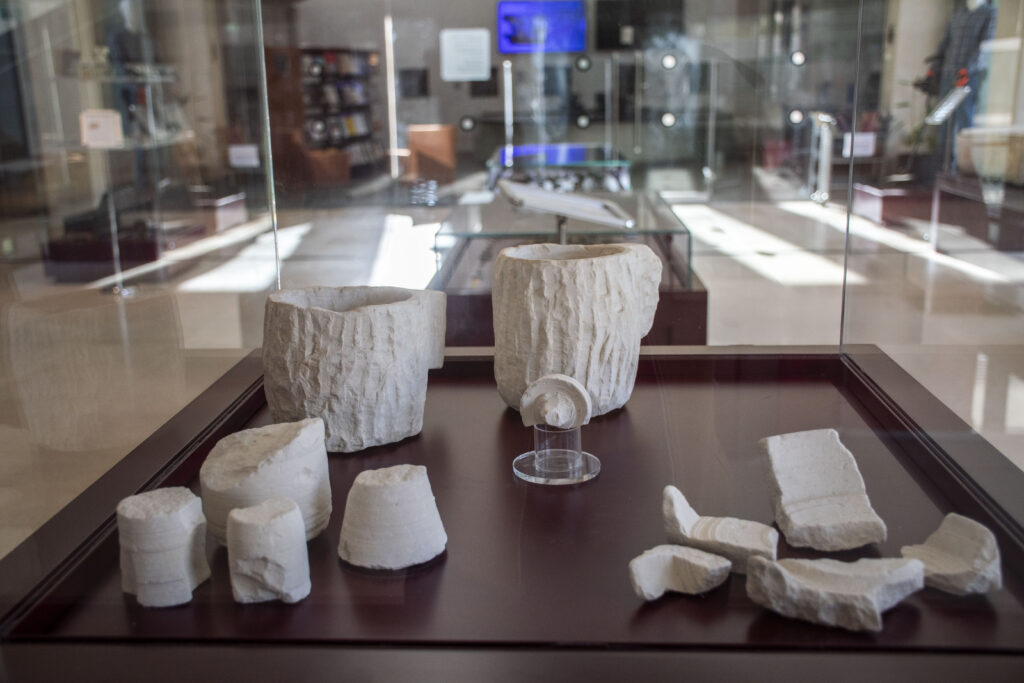
The discovery on display in the new exhibition “Past Criminal” at The Jay and Jeanie Schottenstein National Campus for the Archaeology of Israel. Photo: Yoli Schwartz, Israel Antiquities Authority.
Archaeology confirms that during the later Second Temple period, there was widespread adoption of stone vessels among the Jewish population, particularly in Jerusalem and its environs. This was not a marginal phenomenon. The Tosefta describes the era as marked by an “outbreak of purity in Israel” (paratzat taharah b’Yisrael) (Tosefta Shabbat 1:7). Purity was no longer limited to priests serving in the Temple. Ordinary households installed mikvaot—ritual baths—in private homes and villages. Large public mikvaot lined the roads leading up to Jerusalem. Pilgrims immersed themselves before entering the Temple precincts. Daily life was reorganized around taharah, ritual purity.
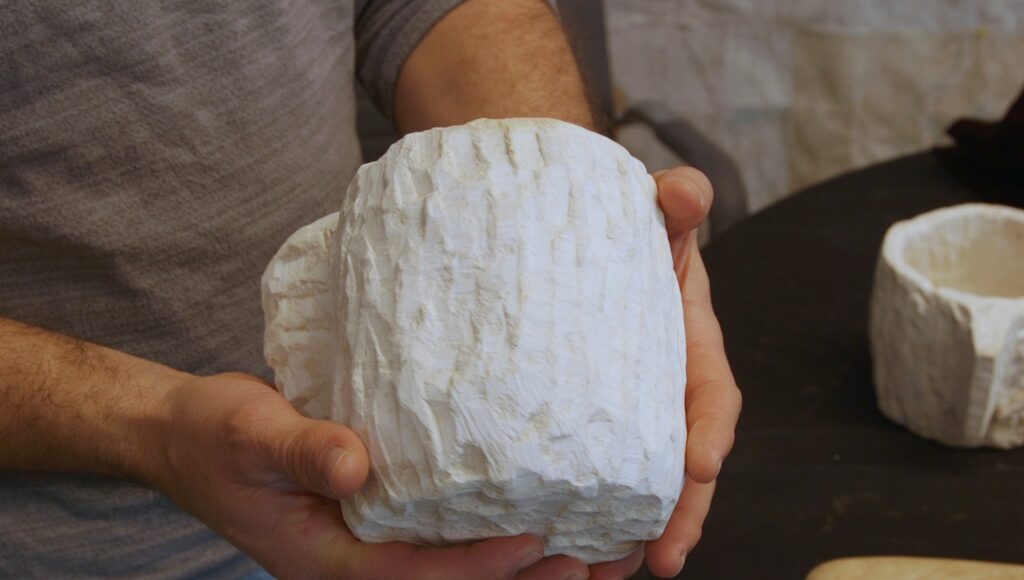
A typical vessel used by Jews during the Second Temple period. Photo: Emil Aladjem, Israel Antiquities Authority.
Stone vessels were essential to that system. A household concerned with maintaining purity for food, especially food that might be eaten in a state of taharah or associated with Temple offerings, needed containers that would not contract impurity. Chalk limestone could be quarried and shaped on lathes into cups, bowls, and large storage jars. The hundreds of fragments found in the Mount Scopus cave are the industrial debris of that religious commitment.
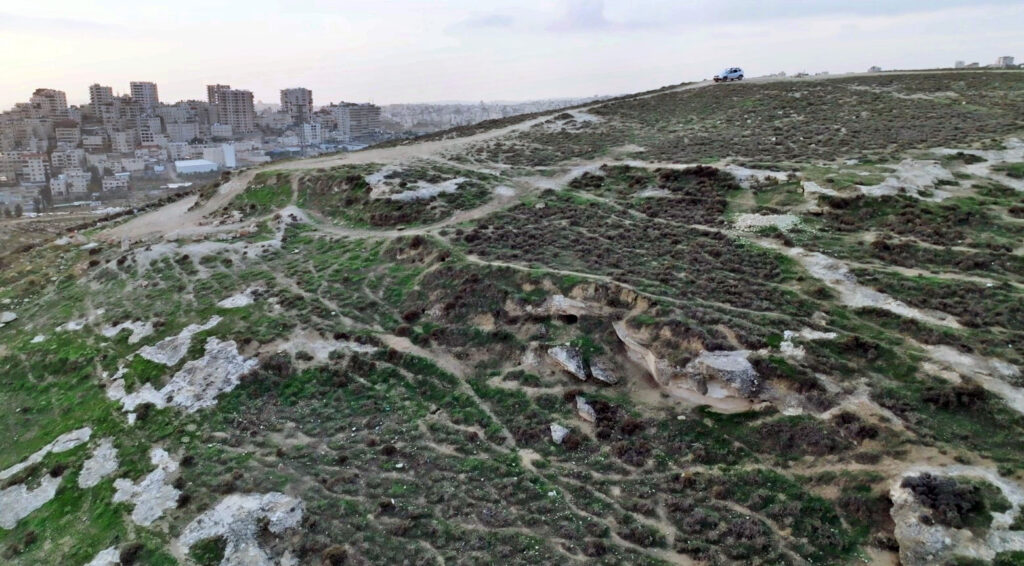
The area where the pottery workshop was discovered on Mount Scopus. Photo: Emil Aladjem, Israel Antiquities Authority.
The newly uncovered workshop demonstrates scale. This was not a cottage industry. It was a production center positioned along a pilgrimage artery, supplying a city whose population swelled during the festivals. The presence of large water reservoirs and a mikve adjacent to the workshop underscores that purity was not theoretical. It was practiced on-site.
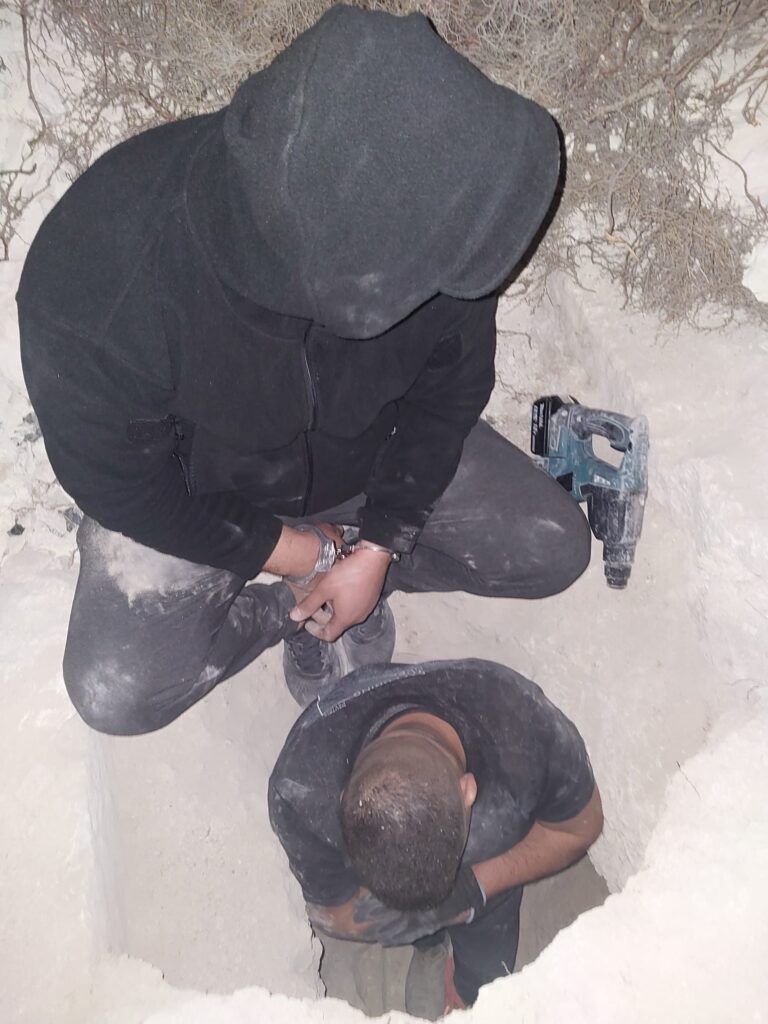
The moment the looters were apprehended. Photo: The Antiquities Theft Prevention Unit, Israel Antiquities Authority
Minister of Heritage Rabbi Amichai Eliyahu framed the discovery in stark terms. “The stone-vessel workshop uncovered in Jerusalem is not merely an archaeological site, but a window into a world preserved deep within the ground,” he said. He added that attempts to loot antiquities are “not crimes of financial theft, but efforts to steal our identity.”
The stone vessels are now displayed in the exhibition “Criminal Past” at the Jay and Jeanie Schottenstein National Campus for the Archaeology of Israel in Jerusalem. The exhibition exposes the chain of antiquities looting, from illegal excavation to smuggling and sale, and highlights the work of the Authority’s “Antiquities Police.”
Two thousand years ago, Jews ascending to the Temple carried stone vessels that reflected a national commitment to taharah. Today, fragments from a looted cave testify that this commitment was organized, industrial, and anchored in Jerusalem’s landscape. The earth has yielded hard evidence of a society ordered around the Temple and the laws of purity. The stones do not speak in slogans. They speak in facts.