



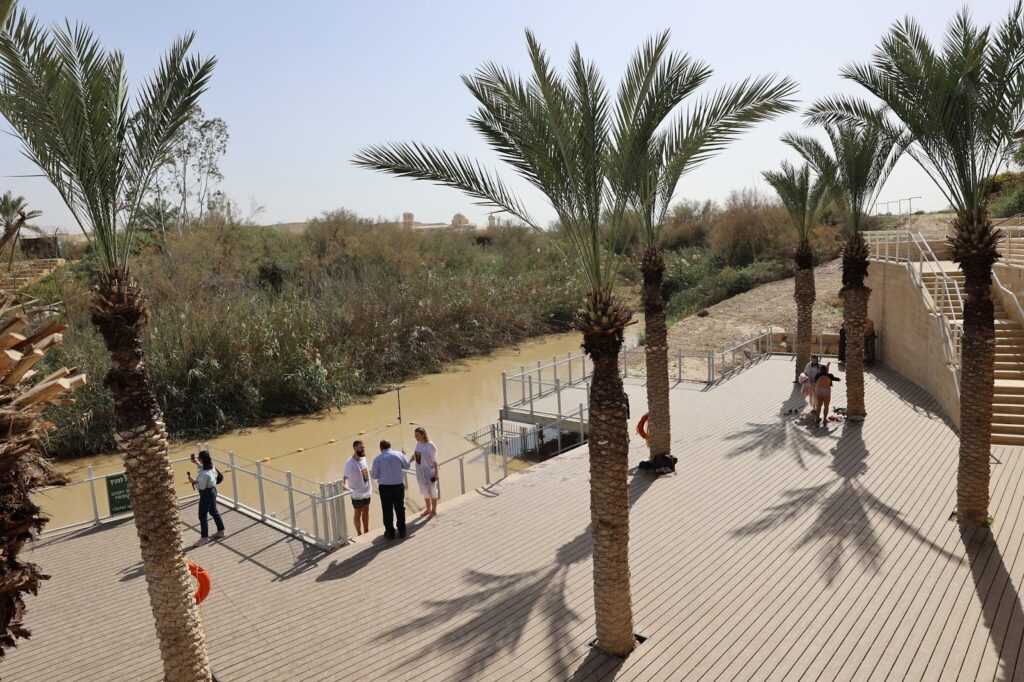
The Jordan River ran quietly on Tuesday morning as buses rolled back into Qasr al-Yahud for the first time since a sweeping renovation project transformed the historic baptismal site. Pilgrims in white robes stepped onto a newly built wooden deck, descending toward the same waters where, according to Christian tradition, John the Baptist immersed Jesus nearly two thousand years ago. After years of delays, mines, and military closures, one of Christianity’s most revered sites is fully open again.
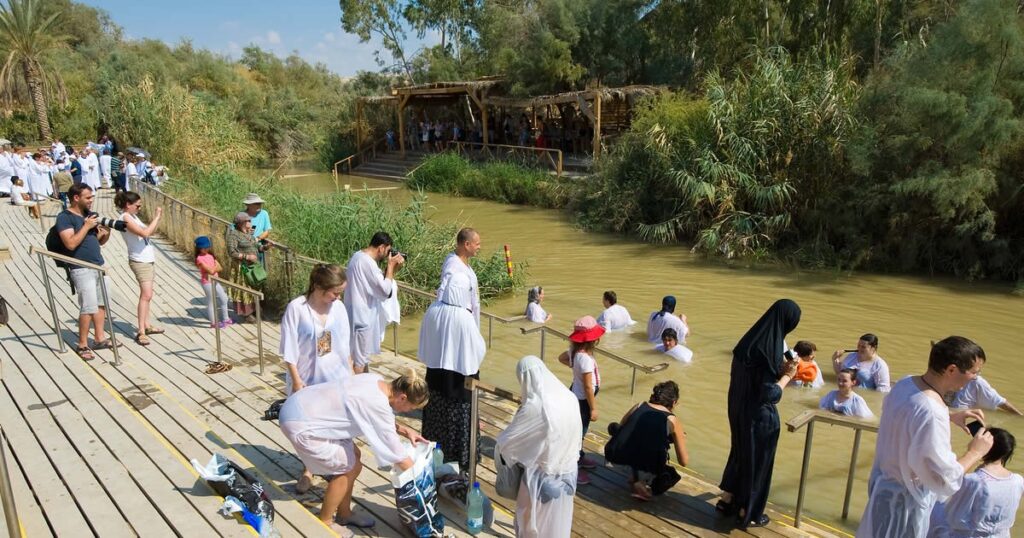
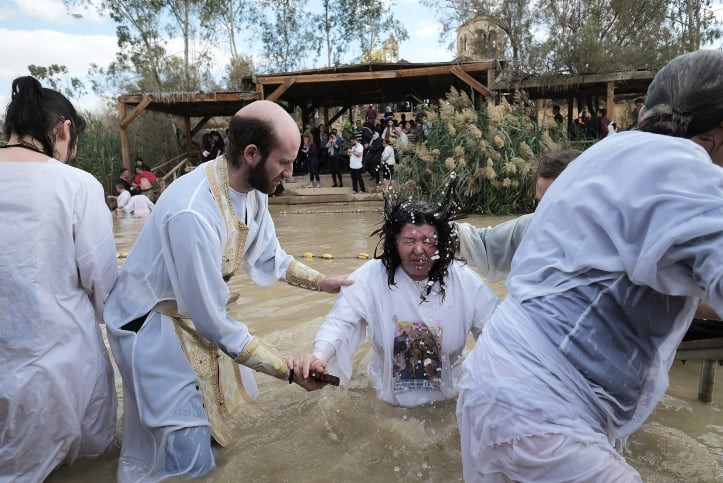
Qasr al-Yahud, Arabic for “Citadel of the Jews,” lies in the Jordan Valley east of Jerusalem. It is considered the third-most-important Christian site in the region, after the Church of the Holy Sepulcher and the Church of the Nativity. Christians identify it with the baptism of Jesus by John the Baptist. The site, also known as Al-Maghtas, has served as a pilgrimage destination since late antiquity.
For Jews, the location carries its own biblical weight. It is traditionally associated with the crossing of the Jordan River by the Children of Israel under Joshua. Scripture records the moment with stark clarity:
“And the priests that bore the ark of the covenant of the LORD stood firm on dry ground in the midst of the Jordan, and all Israel passed over on dry ground, until all the nation were passed clean over the Jordan” (Joshua 3:17).
The Hebrew phrase betoch haYarden—“in the midst of the Jordan”—underscores that this was no symbolic crossing. It was a national entry into the Land of Israel. The Jordan marked the boundary between wilderness and inheritance.
The Sages explain that the splitting of the Jordan was not merely a miracle but a declaration that the land west of the river was divinely assigned to the people of Israel. The crossing signified the fulfillment of the promise first given to Abraham in Genesis 15. This riverbank is therefore not just a Christian memory. It is a physical marker of the covenant between God and Abraham’s descendants.
The site is also linked to the Prophet Elijah’s ascent to heaven. In II Kings, Elijah and Elisha cross the Jordan before a chariot of fire separates them. The prophet’s departure from this world from the banks of the Jordan cemented the area’s sanctity in Jewish tradition.
After the 1967 Six-Day War, the area became a fortified military zone. Infiltrators crossed from Jordan into Israel, and the surrounding churches were riddled with bullets and abandoned. The ground was heavily mined. Following the 1994 peace treaty between Israel and Jordan, the area technically remained closed for years due to security concerns.
In 2000, Pope John Paul II held a private prayer service at the site, highlighting its importance to the Christian world. Yet the broader restoration plan, approved ahead of the millennium celebrations, stalled due to the Second Intifada and severe flooding in 2003.
In 2011, the modern baptismal site was reopened in limited form. In 2019, the HALO Trust completed extensive demining operations in the surrounding area, removing thousands of explosives. The latest renovation, totaling NIS 25 million, was funded by the Israeli Ministry of Tourism and the Civil Administration and carried out by the Government Tourism Company.
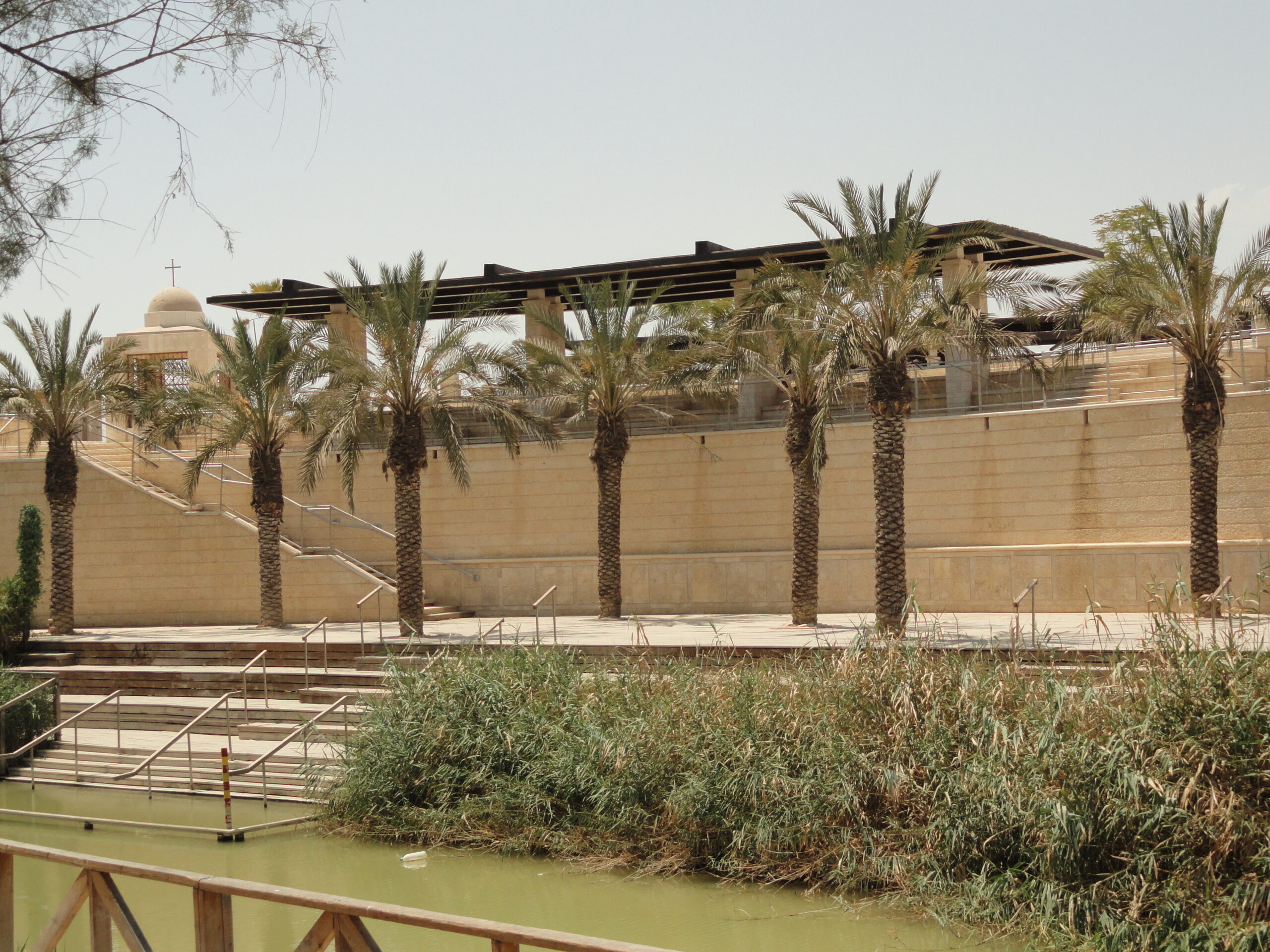
The project included upgraded access roads, expanded parking, landscaping, and the construction of a shaded prayer pergola. A large, air-conditioned facility now offers restrooms, hot showers, and changing rooms for pilgrims who immerse in the Jordan. A wide wooden deck provides safe entry into the river. Plans are underway to build an air-conditioned auditorium for worship services and events, along with an accessible path to the water for people with disabilities.
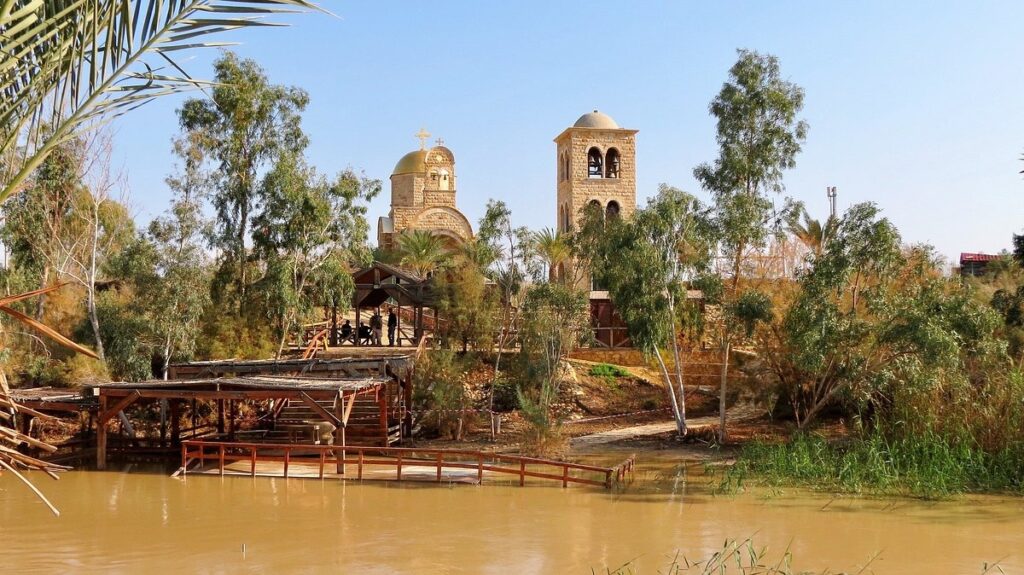
The only active church currently operating at the site is the Greek Orthodox Church. Several other historic churches, long abandoned due to the minefields, stand nearby and are expected to undergo restoration in stages.
Qasr al-Yahud is administered by Israeli authorities. Its reopening reflects not only infrastructure investment but the normalization of an area once defined by war. Tens of thousands of Christian pilgrims visit annually, and tourism officials expect those numbers to rise sharply.
For evangelical Christians who read the Hebrew Bible as sacred history, this reopening is not a minor tourism story. It restores access to the very waters associated with Israel’s entry into the Promised Land and with the prophetic legacy of Elijah. The Jordan River is not symbolic terrain. It is covenant geography.
The same river that parted for Joshua now welcomes pilgrims from every nation. Israel has cleared the mines, rebuilt the roads, and opened the gates. The land remains what Scripture calls it—Eretz Yisrael, the Land of Israel. Qasr al-Yahud stands as living proof that history, faith, and sovereignty meet on the banks of the Jordan.