
Most education today is flat. You read, you watch, you memorize. It informs, but it rarely moves you. Facts land. Dates stick. The weight of the story – the human reality behind it – often slips away.
Faith communities and educators feel this tension every day. Some of the world’s most important stories, including the Holocaust, the landscapes of the Bible, and the historic relationship between Christian and Jewish communities, are becoming harder to communicate with depth and resonance. Most people will never stand inside a Holocaust memorial. Most will never walk the streets of Jerusalem. Textbooks or documentaries, however well produced, cannot fully convey scale, presence, or lived experience.
At the same time, historical literacy is declining while antisemitism and cultural misunderstanding are rising. Passive learning is no longer enough.
Six Million Voices was created in response to that reality.
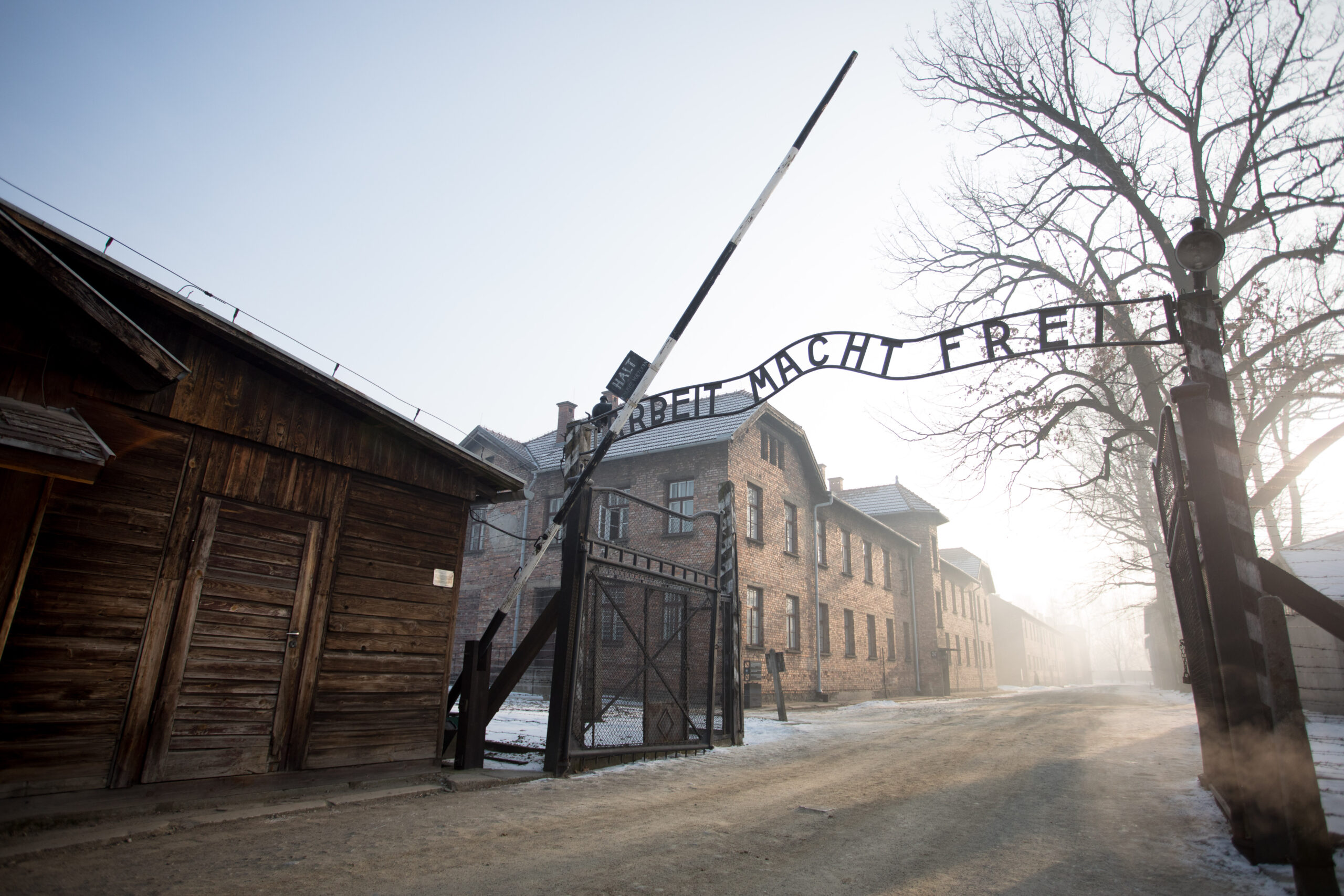
Instead of presenting history as information to absorb, this nonprofit invites people into the story itself. Through immersive, dynamic, interactive, and self‑guided virtual experiences, participants don’t simply watch footage of Auschwitz; they are transported into the environment and can move through it at their own pace. They don’t just hear about ancient Jerusalem; they explore its streets, sites, and stories with a sense of personal agency, whether alone or with a group in a sanctuary space. Six Million Voices’ virtual journeys combine original video, drone footage, and detailed 3D visualization into environments that feel alive and engaging, creating experiences that are described as more in‑depth than a museum visit or a walking tour and far beyond standard classroom instruction.
Participants not only view content, they interact with it and respond to expert guidance in real time, making history deeply meaningful rather than distant.
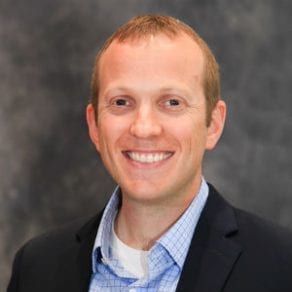
Rabbi Michael Beyo, founder and CEO of Six Million Voices, explains the mission plainly: “We want people not just to learn about history, but to feel connected to it in a way that inspires empathy and moral clarity.”
Born in Milan and shaped by decades of leadership across nonprofit, educational, and interfaith spaces, Rabbi Beyo brings both tradition and innovation to this work. His vision bridges reverence for the past with the tools of the present, creating a platform that honors memory without reducing it to abstraction.
Holocaust education remains at the heart of the work. More than 350,000 individuals have already experienced Six Million Voices’ immersive Holocaust platform. These aren’t passive viewers. They are active participants who engage with history in ways that resonate long after the session ends, experiencing its scale, hearing its stories, and confronting the human consequences of hatred.
But the impact does not stop with Holocaust education.
For many Christians, connection to the physical land of the Bible is deeply personal. Holy Land tours are powerful for a reason. Standing in the places where Scripture unfolded changes how people read it. Yet for most believers, that journey remains out of reach.
Six Million Voices closes that gap.
Because the platform is designed for active engagement and exploration, it can be adapted to help other communities tell their own stories. Six Million Voices can transform content into self‑guided, dynamic, deeply immersive journeys that resonate with learners, congregants, students, and audiences of all kinds.
Using AI‑powered immersive journeys, a pastor can guide hundreds of people through ancient Jerusalem, the Via Dolorosa, or the Western Wall from a sanctuary screen with every device synchronized. No headsets. No expensive travel. No barriers.
A museum can develop an interactive exhibit that lets visitors virtually explore historical environments while uncovering layered content about artifacts and personal narratives.
A synagogue can craft a heritage‑focused experience, weaving sacred sites and community memory into a navigable journey, and a media company can create a self‑paced educational series that blends immersive visuals with narrative choices so audiences explore complex history on their own terms.
Participants can choose how to engage – historical, spiritual, archaeological – making the experience personal while preserving its communal power. It is not a video playing in the background. It is an experience that invites reflection, dialogue, and deeper understanding.
As Rabbi Beyo says, “We want the Bible to come alive for people in a way that changes how they see and live their faith.” For most churchgoers who may never visit Israel, this is as close as it gets, and for many it reshapes how they relate to Scripture itself.
The timing of this innovation is significant. Since October 7, many evangelical Christians have searched for tangible ways to stand with Israel and the Jewish people. Prayer remains central, but many want something concrete, something that deepens understanding and builds solidarity.
Partnering with Six Million Voices provides that opportunity.
When a church, ministry, or broadcaster adopts the platform, they are not simply acquiring a tool. They are investing in Jewish‑Christian partnership, helping preserve the stories of the six million and keeping the commitment of “Never Again” alive for a generation at risk of forgetting. They are standing with Israel not only in words but in action.
At the same time, Christian media is shifting. Static sermons and traditional formats no longer engage audiences the way they once did. With the rise of interactive, immersive experiences like those offered by Six Million Voices, media organizations can now deliver historically grounded, emotionally resonant stories that capture attention and inspire deeper reflection.
Six Million Voices sits at the forefront of that shift. Whether it is a Holocaust remembrance experience for a youth group, a Bible study that transports participants into ancient Caesarea, or a virtual pilgrimage that inspires future travel to Israel, the platform offers something rare: self‑guided, immersive storytelling that is accessible, scalable, and deeply resonant.
This is not about replacing tradition. It is about strengthening it. It is about ensuring that the stories that shaped civilization are not reduced to distant facts but encountered as living memory.
For those who want to experience this work firsthand, Six Million Voices will be at the NRB International Christian Media Convention, February 17–20, 2026 (Tuesday through Friday). It is an opportunity to meet the team, explore the technology, and see how immersive storytelling can transform how communities learn, remember, and connect.
Six Million Voices is not simply using technology to tell stories. It is using it to preserve memory, deepen faith, and shape the moral imagination of the next generation, ensuring that the most important stories of our time are not forgotten, but experienced.