



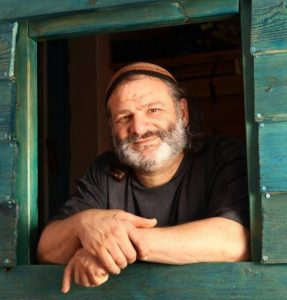
On Sunday in Tiberius, Rabbi Moshe Chaim Schneider, a close student of Rabbi Dov Kook, a mystic with a large following, entered his home carrying a photocopy taken from Kli Paz, a kabbalistic commentary on the Book of Isaiah, written nearly five centuries ago by Rabbi Shmuel Shmuel Laniado, known as the Baal HaKeilim.Rabbi Kook was so impressed by what he read that he immediately urged their publication, saying they could awaken thousands of Jews to strengthen their faith.
Rabbi Shmuel Laniado lived in Aram Tzova, today known as Aleppo, Syria. A leading mystic, he authored multiple works, including Kli Paz, Kli Chemdah, and Kli Yakar. His comprehensive commentary on the Book of Isaiah was printed after his passing, roughly 400 years ago. Buried within that work is an interpretation of a single verse that now reads like a headline torn from today’s newspapers.
The verse states: “For Hashem has a sacrifice in Botzrah, and a great slaughter in the land of Edom” (Isaiah 34:6).
In his commentary, Rabbi Laniado writes that Botzrah is not merely a symbolic name. He identifies it as a real place, far from Babylonia, situated between Assyria and Persia and near the border of Edom, which he associates with Hormuz. He adds that the area is ruled by the Yishmael’im (Ishmaelites) and then suggests that perhaps the war at the end of days will be there.
Botzrah, also known as Bozrah or Botsra, is an ancient Edomite city, identified with the archaeological site of Buseira in southern Jordan. In the Bible, it is described as a capital city of Edom. “And Bela died, and Jobab the son of Zerah of Bozrah reigned in his stead” (Genesis 36:33). The prophets return to Botzrah repeatedly as a symbol of Edom’s arrogance and its violent end. The prophet Amos declares unequivocally: “But I will send a fire upon Teman, and it shall devour the palaces of Bozrah” (Amos 1:12).
The name Botzrah itself derives from the Hebrew root בצר, meaning a fortified enclosure or sheepfold, and conveys strength, protection, and isolation. Archaeological excavations at Buseira have revealed an Iron Age citadel, fortified structures, and cultic installations, confirming its role as the heart of the Edomite kingdom and as a real place deeply embedded in the Bible’s prophetic geography.
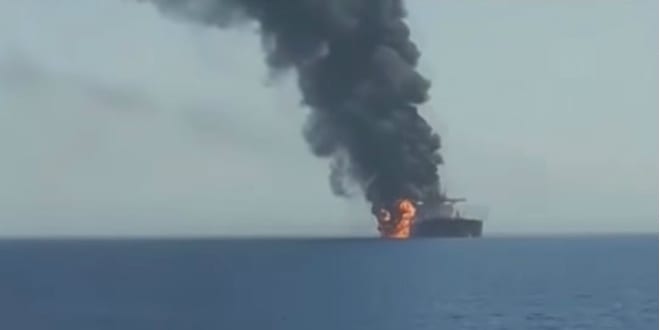
The chilling relevance becomes impossible to ignore when placed against current events. Iran has openly threatened to retaliate against the United States by closing the Strait of Hormuz, the most critical energy chokepoint in the world. Roughly one-third of all seaborne oil passes through that narrow corridor, along with liquefied natural gas from Qatar. The strait lies between Oman and Iran, precisely the region HaRav Laniado identified as bordering Edom and Persia. Iran possesses attack boats, naval mines, and thousands of missiles capable of paralyzing global trade overnight.
On Monday, White House Press Secretary Karoline Leavitt issued a blunt warning. She stated that the administration is actively monitoring the situation and that the Iranian regime would be foolish to attempt such a move.
When Rabbi Kook read the passage from Kli Paz, he was visibly shaken. He told his student, “Ashrecha (Joyous are you) that you were zocheh (merited) to such a revelation that may awaken thousands of Jews to teshuvah (return). It is a great zechus (merit) to publish it.”