


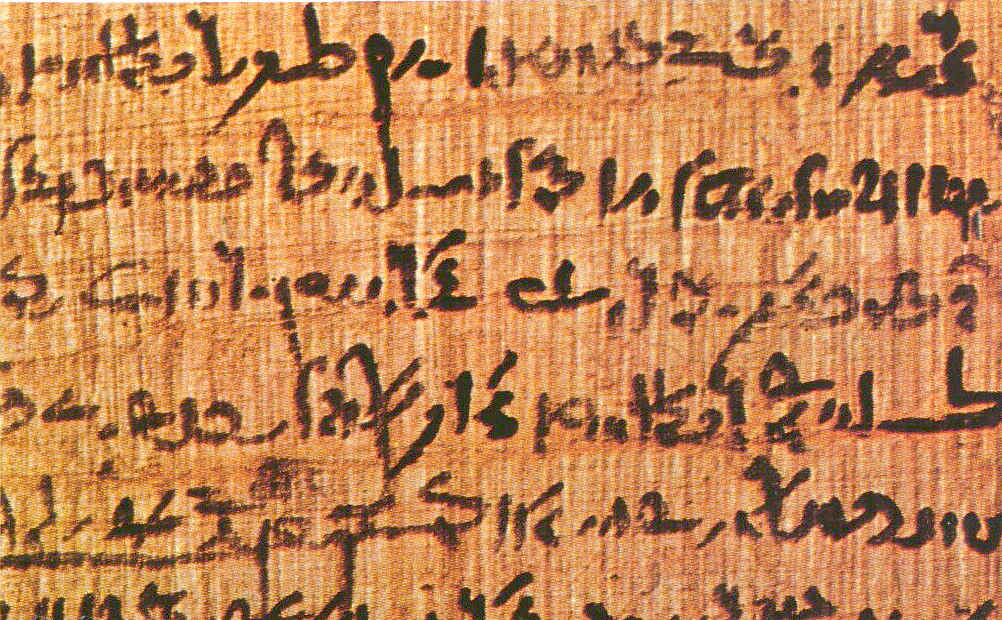
A 3,300-year-old Egyptian papyrus housed in the British Museum is drawing renewed attention after the Associates for Biblical Research published a detailed analysis highlighting its potential relevance to some of the Bible’s most disputed accounts. Known as Anastasi I, the document has been in the museum’s collection since 1839, having been acquired from antiquities dealer Giovanni d’Anastasi. Written during Egypt’s New Kingdom period, likely in the 13th century BCE, the papyrus is a letter from a scribe named Hori to another scribe, Amenemope. While long studied as an example of military correspondence and scribal instruction, a specific passage describing encounters with unusually tall warriors has attracted renewed scholarly and public interest.
In the letter, Hori describes the dangers of traveling through a narrow mountain defile during a military campaign in Canaan. He warns that the pass is “infested with Shosu concealed beneath the bushes,” adding that “some of them are of four cubits or of five cubits, from head to foot, fierce of face, their heart is not mild, and they hearken not to coaxing.” Using the Royal Egyptian cubit, measuring roughly 20 to 20.65 inches, this description places the height of these Shosu warriors between 6 feet 8 inches and 8 feet 6 inches. Associates for Biblical Research emphasized that the letter’s broader context stresses logistical precision and accuracy, arguing that this makes the height description difficult to dismiss as casual exaggeration.
The Shosu, also known as Shasu, are widely identified by historians as nomadic groups operating throughout the Levant during this period. The British Museum describes Anastasi I as a historical document illustrating Egyptian military life and geographic awareness, without endorsing any supernatural interpretation. Critics have long argued that the letter is a satirical instructional text, in which Hori mocks Amenemope’s ignorance of geography and warfare. The late Bible scholar Dr. Michael Heiser noted that individuals approaching seven feet tall, while uncommon, would not necessarily imply a supernatural race, pointing out that no skeletal remains or physical structures have been uncovered to support the existence of giants.
Yet the debate does not stand in isolation. Anastasi I joins a broader corpus of Egyptian material that references unusually formidable peoples in Canaan. The Egyptian Execration Texts, ritual inscriptions intended to curse foreign enemies, include references to a group called Iy Aneq, widely noted for their imposing stature. Many scholars have linked this name to the biblical Anakim, translated as the “sons of Anak.” Egyptian wall reliefs from the reign of Ramses II, dated to around 1274 BCE, depict captured Shasu spies who appear significantly larger than typical figures, a striking choice given that Egyptian art usually exaggerated the size of pharaohs rather than their enemies.
This raises a central question that cannot be ignored: why do Egyptian military and ritual texts repeatedly describe or depict exceptionally large peoples in precisely the same regions where the Bible places the Nephilim, Anakim, and Rephaim?
The Bible introduces this theme early. “There were giants in the earth in those days; and also after that, when the sons of God came in unto the daughters of men, and they bare children to them, the same became mighty men which were of old, men of renown” (Genesis 6:4). The Hebrew term Nephilim is commonly translated as “giants” or “fallen ones.” Although the Flood is described as wiping them out, later biblical narratives speak of their descendants appearing again. When the Israelite spies returned from surveying the land, they reported, “And there we saw the giants, the sons of Anak, which come of the giants: and we were in our own sight as grasshoppers, and so we were in their sight” (Numbers 13:33).
The figure of Og, king of Bashan, stands as one of the most concrete biblical descriptions of this phenomenon. “For only Og king of Bashan remained of the remnant of the giants. Indeed his bedstead was an iron bedstead… Nine cubits is its length and four cubits its width, according to the standard cubit” (Deuteronomy 3:11). Og ruled in the region of Bashan, an area repeatedly associated with the Rephaim. Extra-biblical texts add an intriguing layer. A Canaanite tablet references a figure named Rapiu, described as a king associated with Ashtarat and Edrei, cities explicitly linked to Og’s rule. Christopher Eames of the Armstrong Institute of Biblical Archaeology wrote that the convergence of names—Rapia, Ashtaroth, and Edrei—forms “a remarkable link to the biblical account of Og and the Rephaim,” suggesting that these were not isolated mythic memories but part of a shared regional tradition.
Associates for Biblical Research argue that Anastasi I fits squarely into this pattern. Egyptian forces moving through Canaan encountered Shosu warriors of unusual height, and Egyptian scribes recorded this as part of real military reporting. While skeptics insist that the absence of physical remains is decisive, supporters counter that the Bible itself never treats giants as fantasy creatures but as flesh-and-blood enemies defeated in historical conflicts.
Classical interpretation of the Bible relies heavily on the Midrash, a tradition of stories and fables that help explain the basic text. A remarkable Midrash appears in several sources explaining the appearance of the Nephilim, the fallen ones, as being a product of angels.
The Midrash relates how, before the flood, mankind was sinning greatly, and God began to regret creating man. Three angels – Shamchazai, Uza, and Uzziel – came to God and said they could replace the sinning men, repopulating the world with perfect angels. God warns them that they will sin even more, however they persist in their claim. God relents, and when the angels descend into the world and see the daughters of men, they sin, and their descendants are the Nephilim, described as giants, who are mentioned again later in the Bible.
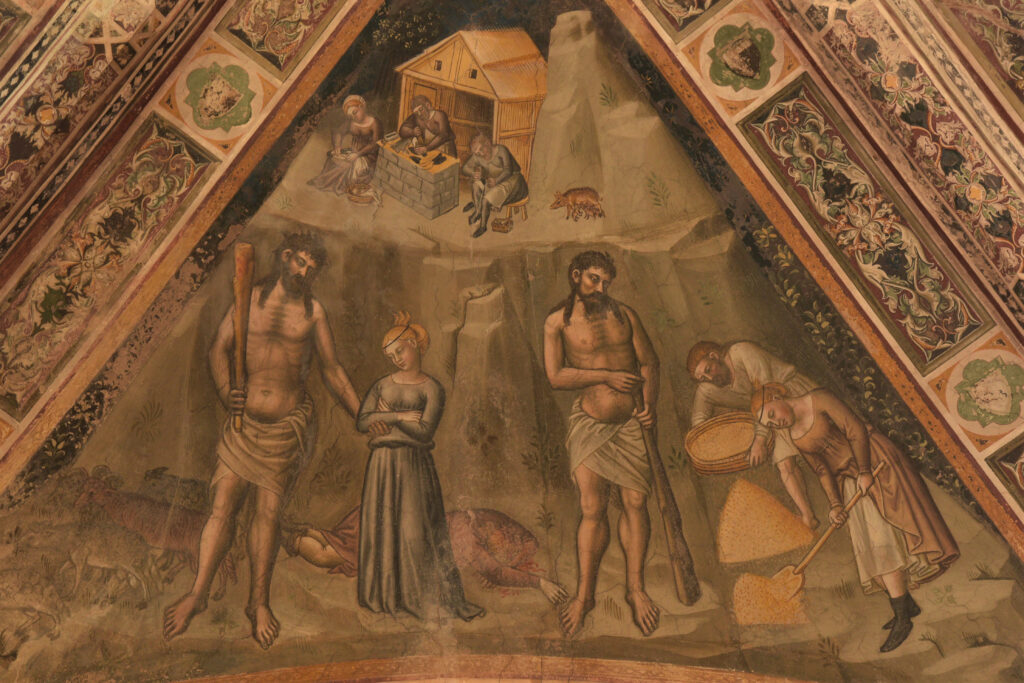
There are several important points in this story. Prominent Rabbinic sources describe the angels’ jealousy of man’s role in serving God, inevitably illustrating how man has the ability to transcend the angels by overcoming the difficulties and temptations unique to creatures of flesh and blood.
Another source in the Babylonian Talmud relates that Sihon and Og, two kings mentioned later in the Bible, were descendants of the angel, Shamchazzi. The Midrash states that Og was alive in the time of Noah but escaped the flood by clinging to the side of the Ark. In Genesis 14:13, a “fugitive” (Palit) comes to tell Abram about Lot’s capture. Og was named in Deuteronomy 3:11 as the only remaining man from the Rephaim, a biblical race of giants, and his bed was described as being enormous and made entirely of iron.
The Nephilim are mentioned again in Numbers 13:33. The 12 Spies were sent into the Land of Israel and reported, “There we saw the Nephilim, the sons of the Giant of the Nephilim, and we were in our eyes like grasshoppers, and so we were in their eyes.” Anak, translated as “enormous”, was the archetypal giant and father of the race of men that lived in Hebron.
The Midrashic sources explain that Anak was Og, one of the descendants of the Nephilim, and the fugitive from the flood. Another Midrash tells how Og attacked the Jews in the desert and Moses killed him.
There is a connection between the reappearance of these giants and the coming of the Messiah. In the Talmud, Sanhedrin 97a, there is a discussion between Rav Nachman and Rav Yitzchak.
Rav Yitzchak asks, “Do you know when Bar Naphli (the sons of the fallen) will come?” Rav Yitzchak asks, “Who are the Bar Naphli?” Rav Nachman answered, “It is Messiah”.
Rav Nachman brings down a verse from Amos 9:11, “On that day will I raise up the fallen tabernacle (Sukkah) of David and I will build it as in the days of old.” The Talmud goes on to describe the difficult times preceding the Messiah.
“Bar Naphli” in the Talmud clearly refers to specific people whom both Rav Yitzchak and Rav Nachman have heard of, and who Rav Nachman connects with the coming of the Messiah. As noted previously, the Hebrew verb “Naphal” translates as “fall” but here, in the Talmud, the word is “Naphil’ in Aramaic. In the language of the Talmud, Naphli means “‘giant”.
By the discussion in the Talmud, it seems clear that these Bar Naphli, giants, will return in time to usher in the Messiah.
Anastasi I does not “prove” the existence of giants in a laboratory sense. It does something far more unsettling. It shows that Egypt, Israel’s greatest ancient superpower, independently recorded encounters with towering, fearsome peoples in the same land, during the same era, and along the same routes described in the Bible. As the Bible makes clear, these figures are not relics of a forgotten past but part of a struggle that reappears at decisive moments in history. The renewed attention to this papyrus is a reminder that the biblical record stands uncomfortably close to the historical memory of Israel’s neighbors—and that as the end of days draws nearer, the ancient world may be less buried than many assume.