



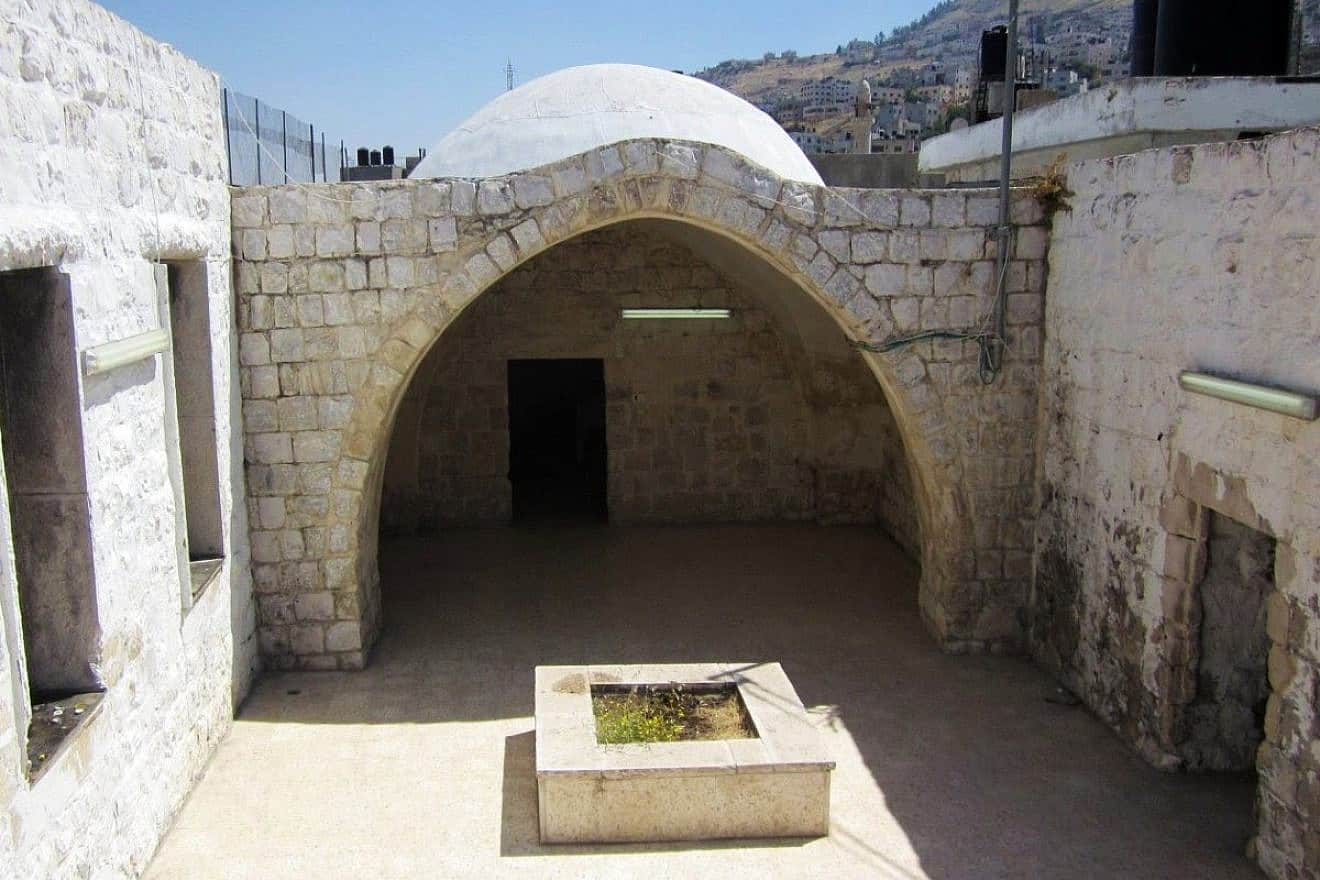
Hundreds of Jews gathered Thursday morning at Joseph’s Tomb in Shechem (Nablus) for Shacharit (morning) prayers, marking the first time in a quarter-century that worshippers have been permitted to pray at the sacred site during daylight hours. The overnight visit extended into the morning under a new security arrangement authorized by Defense Minister Israel Katz, representing what organizers called a historic reversal of decades-old restrictions that confined Jewish worship to brief, nighttime-only visits.
The Bible records that this parcel of land was purchased—not conquered, not occupied, but bought and paid for by the patriarch Jacob himself. “The parcel of land where he pitched his tent he purchased from the children of Hamor, Shechem’s father, for a hundred kesitah” (Genesis 33:19). The Sages identified three places in the Land of Israel that the Bible explicitly describes as purchased by Jews: the Temple Mount in Jerusalem, the Cave of the Patriarchs in Hebron, and Shechem. These purchases established an unassailable Jewish claim to these locations—claims that no nation can dismiss as conquest or theft. Yet these are precisely the sites that form the heart of Palestinian territorial demands.
The Biblical narrative of Joseph’s burial reinforces this claim. Joseph died in Egypt, but he extracted a solemn oath from his brothers before he passed away. “The bones of Yosef, which the Israelites had brought up from Egypt, were buried at Shechem, in the piece of ground which Yaakov had bought for a hundred kesita from the children of Hamor, Shechem’s father, and which had become a heritage of the Josephites” (Joshua 24:32). The Children of Israel carried Joseph’s embalmed remains through the wilderness for forty years to fulfill this promise. This was no casual choice of burial ground—it was a deliberate return to land that belonged to the family by right of purchase.
Thursday’s Shacharit service followed months of discussions between political leaders and the military, spearheaded by Samaria Regional Council head Yossi Dagan and Knesset member Zvi Sukkot. The new arrangement allows worshippers to remain at the site into morning hours for Shacharit prayers, with tightly defined entry and exit windows set by the IDF based on real-time security assessments. Israeli forces deployed to secure access routes, establish perimeter control around the compound, and oversee the operation with senior officers on site.
Until this week, Jewish access to the tomb had been limited to once-a-month nighttime visits, with worshippers required to leave before dawn due to security concerns. Monthly visits since 2002 meant that Jews arrived in convoys of heavily guarded armored buses, risking danger to petition the tzaddik (holy man) buried there. The security precautions have proven necessary—a Palestinian attempted to ram his car into the crowd during a visit. In 2011, a young Jewish man was shot and killed by a Palestinian policeman when he attempted to visit the site without prior IDF permission.
“This morning is a morning of historical correction,” Dagan said. “After years of entering in the dead of night, we are returning home with our heads held high and in full daylight. Joseph’s Tomb is an important symbol, and the move to daytime entry is a significant step in our work plan to establish a permanent and full presence at the site.”
Sukkot linked the current restrictions directly to the abandonment of the site in 2000 under then-Prime Minister Ehud Barak during the outbreak of the Second Intifada. “First, I would like to thank Defense Minister Israel Katz for the dramatic decision and the first step toward a full return to Joseph’s Tomb,” Sukkot said. “We have achieved an important step by holding a Shacharit prayer and entering the site in daylight. This is the beginning of an important and historic correction, and we will continue working until full Jewish presence is restored at Joseph’s Tomb.”
The tomb is located in Samaria, a Biblical region conquered by Israel in the 1967 Six-Day War. The city of Shechem came under Palestinian Authority jurisdiction as a result of the Oslo Accords in 1995, but the religious site remained under Israeli control to ensure access for all religions, and the accords explicitly ensured Jewish access to the site. Palestinian violence forced the IDF to abandon the site in 2000, and Jews were prohibited from visiting it. Since 2002, Jewish worshippers have only been permitted to visit the site once each month, and only under strict IDF supervision.
Rabbi Yosef Berger, the Rabbi of King David’s Tomb on Mount Zion, identified an additional dimension to the conflict over Joseph’s Tomb. “The first stage of the Messiah comes from the House of Joseph,” Rabbi Berger explained. “By preventing Jews from praying at the site, the Arabs are delaying the completion of that aspect of the Messianic process, which is the practical settling of the land of Israel.”
Berger also noted that denying Jewish ownership of Shechem represents an egregious denial of the Jewish connection to the Land. The Sages stated that there are three places in the land of Israel that the Bible specifically describes as being purchased by the Jews: the Temple Mount, the Cave of the Patriarchs, and Shechem. “These places can never be claimed to have been stolen,” Rabbi Berger said. “It is most noteworthy that these are the specific cities the Palestinians claim as their native homeland.”
The Islamic narrative contradicts the Biblical account. While Islam respects Biblical Joseph and he is written about extensively in the Koran, Islam believes that Joseph was buried in Hebron. Arabs claim the site in Shechem is the burial place of Sheikh Yousef Dweikat, a local religious figure. This narrative ignores the Biblical account in which Joseph died in Egypt but was embalmed so that his remains could be brought back for burial in Israel.
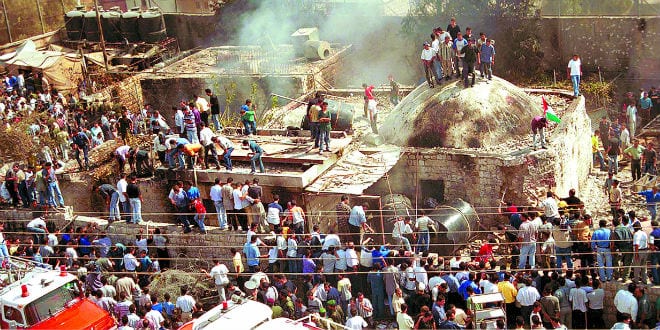
Despite Muslim claims to revere the site, it is the target of near-constant vandalism, including incidents of arson that have severely damaged the compound.
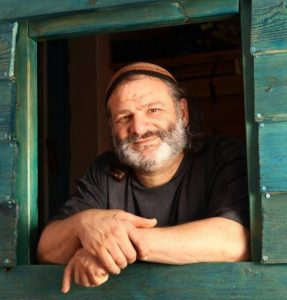
Rabbi Yosef Elitzur, head of the Od Yosef Chai Yeshiva that once operated at the site, expressed hope that the expanded access would lead to a permanent Jewish presence. “We are happy and excited to be here, in the yeshiva’s beit midrash, praying Shacharit here,” he said. “We hope to quickly reach a stage of permanence.”
The Yesha Council called the daylight prayer “a clear declaration of sovereignty” and thanked Katz and security forces for enabling the visit. Israeli security officials indicated that further expansion of access will depend on ongoing risk assessments.
The site’s location between Mount Gerizim and Mount Ebal carries its own Biblical weight. The Children of Israel stood between these two mountains to receive the blessings and curses that would follow obedience or rebellion. “When Hashem your God brings you into the land that you are about to enter and possess, you shall pronounce the blessing at Mount Gerizim and the curse at Har Eival” (Deuteronomy 11:29). Mount Gerizim remains holy to this day to Samaritan Jews.
In Jewish mysticism, Joseph represents sexual purity as demonstrated by his restraint with the wife of Potiphar. The Biblical character of Shechem represents precisely the opposite, epitomized by his raping Jacob’s daughter, Dina. The burial of Joseph—symbol of purity—in the city named for Shechem carries layers of meaning that resonate through Jewish tradition.
The return to daylight prayer at Joseph’s Tomb represents more than a scheduling change. It marks the reversal of a retreat that began when Israel ceded control of the site to Palestinian violence. For 25 years, Jews entered their own heritage as supplicants in the night, forced to leave before sunrise, permitted only monthly visits of two hours at a time. Now they stand in morning light, reclaiming what was purchased by their ancestors and promised by their God.