


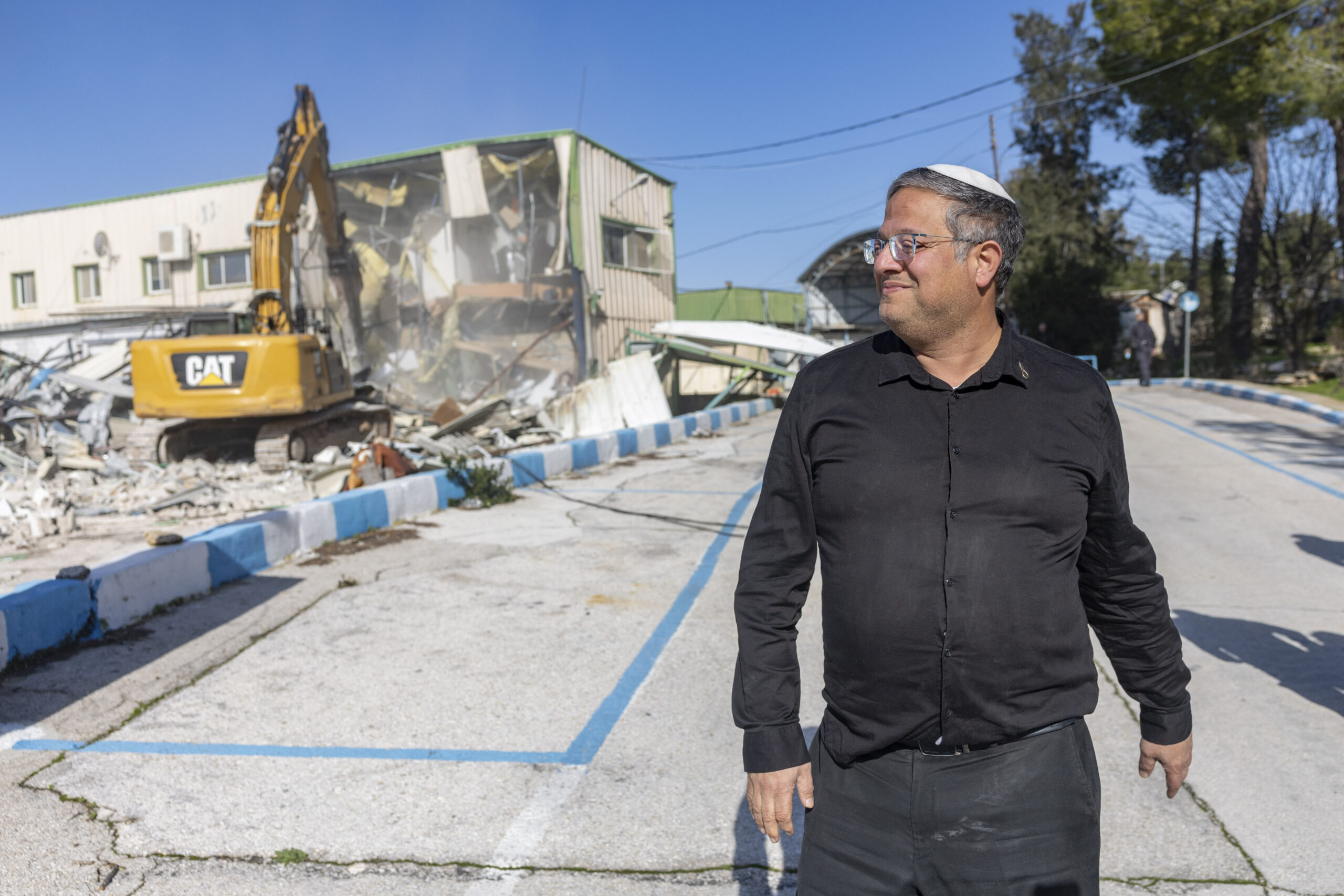
Israeli bulldozers rolled into the East Jerusalem compound of UNRWA on Tuesday morning, tearing down the structures that housed the UN agency’s Israeli headquarters for decades. As the demolition equipment reduced buildings to rubble, National Security Minister Itamar Ben-Gvir stood watching, declaring it “an important day for sovereignty in Jerusalem.” The 46-dunam site in the Ma’alot Dafna neighborhood, abandoned by UNRWA nearly a year ago and subsequently occupied by squatters, has now reverted to state ownership. The demolition marks the final chapter in Israel’s legislative campaign to expel the agency from its territory—a campaign built on documented evidence of UNRWA’s entanglement with Hamas terrorism.
This action highlights the fundamental corruption at the core of UNRWA. The agency’s defenders claim it provides essential services to Palestinians, yet the evidence reveals something far more sinister: UNRWA has become the administrative backbone sustaining Hamas rule in Gaza. With 12,521 employees in the Gaza Strip, UNRWA functions as the territory’s largest employer. This presents Hamas with a straightforward mechanism for control and profit. Every salary payment must pass through Hamas-controlled money changers, generating substantial revenue for the terrorist organization. The relationship transcends mere economic convenience—it represents structural complicity.
The numbers tell a devastating story. Israeli intelligence, cross-referencing UNRWA’s official staff lists with Hamas personnel records through national ID numbers, confirmed that at least 1,462 UNRWA employees—12% of the Gaza workforce—are members of Hamas, Palestinian Islamic Jihad, or similar terrorist organizations. Among 546 principals and deputy-principals in UNRWA education facilities, at least 80 are members of terrorist groups, including 16 from Hamas’ military wing. These are not peripheral figures caught in unfortunate associations. These are educators, administrators, and social workers who simultaneously draw UN salaries while advancing Hamas objectives.
UNRWA's children education:
— Eretz Israel (@EretzIsrael) January 21, 2026
Kill all Jews
No peace
October 7th pride
Terrorist future
All of palestine is ours
LISTEN WITH YOUR EARS. pic.twitter.com/c95LUzSF6H
The October 7, 2023 massacre exposed UNRWA’s role with brutal clarity. Intelligence provided to the UN’s Office of Internal Oversight Services identified at least 18 UNRWA employees who actively participated in the slaughter, including killings, abductions, and operational support. Video footage captured staff members in Israeli communities during the attack. Phone records confirmed their presence and coordination. One UNRWA social worker was filmed loading the body of a murdered civilian into a vehicle. Yonatan Samerano was killed by Hamas terrorists on October 7, then abducted by a UNRWA employee. His father, Kobi Samerano, watched Tuesday’s demolition and said: “This morning represents closure for me and my family. Our Yonati was brutally kidnapped by a despicable UNRWA operative, and we couldn’t find peace until we laid him to rest in Israel. This morning, at last, justice prevailed.”
The physical infrastructure tells an equally damning story. The IDF revealed in February 2024 that Hamas operated an advanced server farm for its central intelligence command center directly beneath UNRWA’s Gaza headquarters, drawing electricity from the UN facility above. Hamas dug terror tunnels intentionally under UNRWA schools, placing shafts in or adjacent to those facilities. In multiple confirmed cases, the schools’ principals were Hamas military wing members. A 2022 Hamas document titled “The 2022 Deployment Plan” details operatives’ positions in two schools, armed with personal weapons. Hamas used UNRWA schools for direct fire against IDF forces, captured in battlefield footage. Freed hostages testified they were held in UNRWA schools and facilities during their captivity.
BREAKING: Hamas war room and killer drones found in UNRWA Headquarters in Gaza City. IDF finds Hamas surveillance ops room, huge quantities of weapons, tactical drones, rockets, machine guns, mortars, explosives and grenades.
— Hillel Neuer (@HillelNeuer) July 12, 2024
📍UNRWA Pledging Conference opens today, 10 am in NY pic.twitter.com/CTPY6vEX36
The economic relationship extends beyond payroll into humanitarian aid itself. Hamas systematically hijacks UNRWA humanitarian supplies, then sells them to Gazans at exorbitant prices. The population receives relief—but only after Hamas extracts profit and demonstrates its control over distribution. This transforms international humanitarian assistance into a revenue stream for terrorism while ensuring Gaza’s population remains dependent on Hamas intermediation. UNRWA facilitates this system, either through willful blindness or active cooperation.
Despite years of warnings, UNRWA reported none of these breaches until they were publicly exposed. The agency conducted no effective inspections of its own facilities. When confronted with evidence of Hamas tunnels, weapon depots, and command centers in its schools and compounds, UNRWA responded with denials and procedural delays. The pattern suggests not mere negligence but institutional capture. An organization tasked with humanitarian relief became the operational cover for terrorist infrastructure.
Israel’s legislative action followed this accumulation of evidence. The Knesset passed two laws in late October 2024 that banned UNRWA from operating in Israeli territory. The demolition of the East Jerusalem headquarters enforces that ban. UNRWA spokesman Jonathan Fowler called it “an unprecedented attack” and “a serious violation of international law.” The Israeli Foreign Ministry countered that UNRWA had already ceased operations at the site, stating that no UN personnel or activity remains there. The compound enjoyed no immunity, and its seizure proceeded according to Israeli and international law. The site also carried 11.5 million shekels in unpaid municipal taxes—approximately $3.2 million—accumulated over years of notices and failed enforcement attempts.
UNRWA’s supporters argue the agency provides services no other organization can replicate, warning that its absence will deepen Palestinian poverty and fuel violence. This argument inverts cause and effect. UNRWA perpetuates the conflict by maintaining Palestinian refugee status across generations—a practice applied to no other refugee population worldwide—while simultaneously providing institutional cover for Hamas. The deeper poverty and violence come not from UNRWA’s absence but from its presence.
The demolition in East Jerusalem removes one compound. The larger challenge remains: dismantling the international architecture that has enabled Hamas to embed itself within humanitarian operations. UNRWA employs over 30,000 staff across its areas of operation. The Gaza workforce alone represents a bureaucratic apparatus larger than most government ministries. Hamas did not infiltrate this system—Hamas merged with it. Every salary distributed, every aid package delivered, every school operated has become a node in the terrorist network. The international community’s willingness to fund this arrangement year after year reveals a moral failure transcending incompetence.
The United States took the lead in exposing UNRWA’s failures when President Trump cut all funding to the agency in 2018, eliminating more than $360 million in annual American contributions. The administration justified the decision by citing UNRWA’s “irredeemably flawed operation” and its role in perpetuating rather than resolving the Palestinian refugee issue. Trump recognized what decades of State Department bureaucrats refused to acknowledge: UNRWA functions as a welfare state for Hamas, converting international aid into terrorist infrastructure while teaching hatred of Israel in its schools. The Biden administration reversed this policy in 2021, restoring funding that flowed directly into Hamas-controlled Gaza. Following the October 7 massacre and revelations of UNRWA staff participation in the attacks, Trump immediately suspended all UNRWA funding upon returning to office in January 2025, declaring the agency “complicit in terror.” Congress has since moved to make the funding ban permanent, with bipartisan support recognizing that American taxpayer dollars cannot subsidize an organization employing terrorists and enabling their operations.
Israel has eliminated UNRWA from its sovereign territory. The bulldozers that reduced the East Jerusalem headquarters to rubble enacted a principle: sovereignty means refusing to host those who facilitate your destruction. The property will now serve Israeli public development. The historic Police Academy building on the site will be preserved. What stood as UNRWA’s administrative center will become something useful to the nation it sought to undermine. That transformation, from terror-enabling bureaucracy to national asset, demonstrates what clarity and will can accomplish. The rubble in Ma’alot Dafna marks not an end but a beginning—the first step in dismantling the institutional framework that has sustained conflict for generations under the banner of humanitarian relief.
