




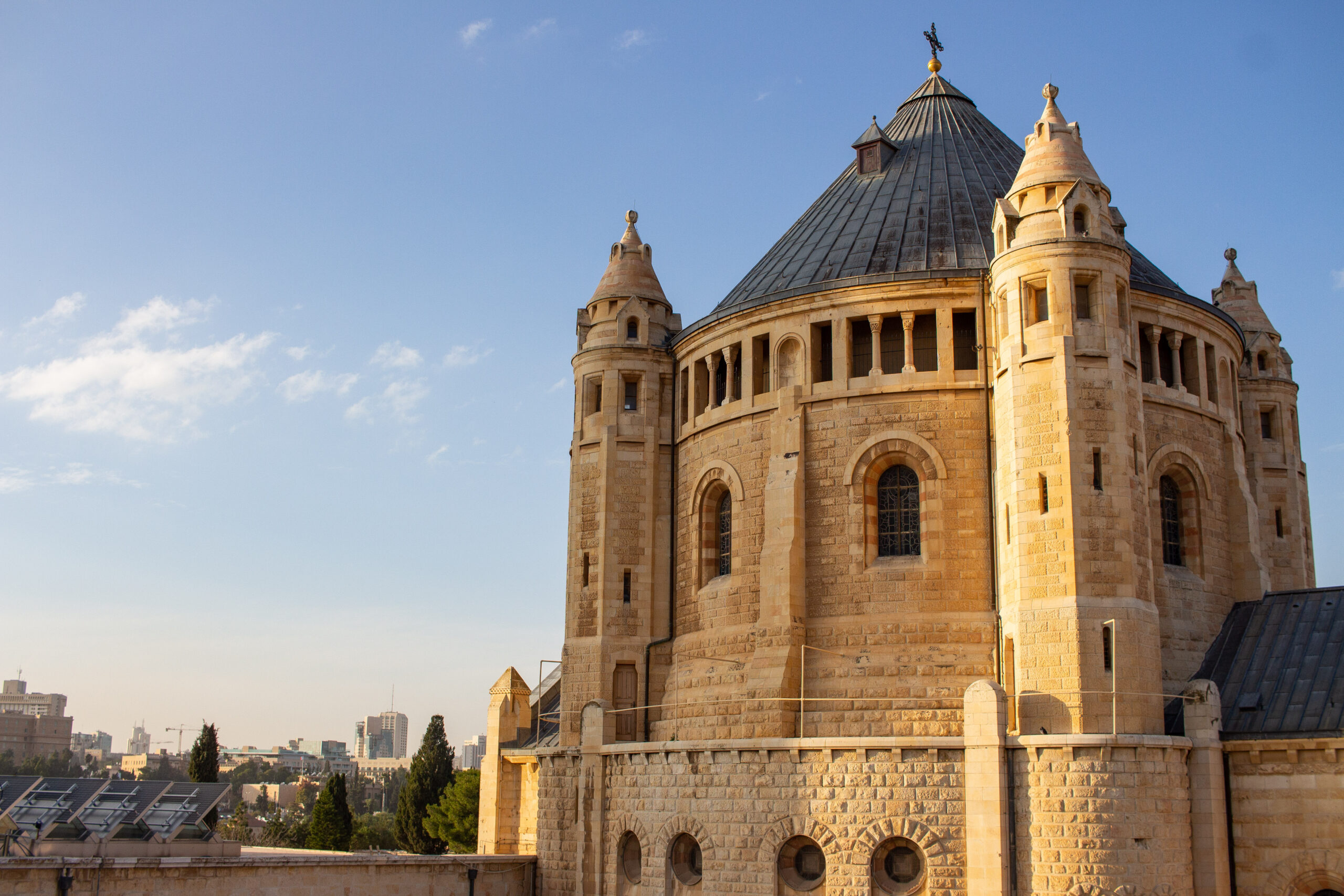
The Catholic Church and its allied denominations in Jerusalem just declared war on Christian Zionism. In a statement released January 17, the Patriarchs and Heads of Churches in the Holy Land—led by the Roman Catholic hierarchy along with Eastern Catholic, Orthodox, and other traditional church leaders—condemned Christian support for Israel as a “damaging ideology” that misleads the public and harms Christian unity. The statement represents the Catholic Church’s most direct assault yet on the millions of evangelical Christians whose biblical interpretation leads them to support the Jewish state.
The Catholic-led coalition opened with a bold assertion of ecclesiastical authority: “The Patriarchs and Heads of Churches in the Holy Land affirm before the faithful and before the world that the flock of Christ in this land is entrusted to the Apostolic Churches, which have borne their sacred ministry across centuries with steadfast devotion.”
Then came the condemnation: “Recent activities undertaken by local individuals who advance damaging ideologies, such as Christian Zionism, mislead the public, sow confusion, and harm the unity of our flock. These undertakings have found favor among certain political actors in Israel and beyond who seek to push a political agenda which may harm the Christian presence in the Holy Land and the wider Middle East.”
The statement invoked New Testament authority to attack Christian Zionists: “Holy Scripture teaches us that ‘we, though many, are one body in Christ, and individually members one of another’ (Romans 12:5). To claim authority outside the communion of the Church is to wound the unity of the faithful and burden the pastoral mission entrusted to the historic churches in the very land where our Lord lived, taught, suffered, and rose from the dead.”
The Catholic-led coalition then accused Israel of interference: “The Patriarchs and Heads of Churches further note with concern that these individuals have been welcomed at official levels both locally and internationally. Such actions constitute interference in the internal life of the churches and disregard the pastoral responsibility vested in the Patriarchs and Heads of Churches in Jerusalem.”
Their territorial claim was unambiguous: “The Patriarchs and Heads of Churches in Jerusalem reiterate that they alone represent the Churches and their flock in matters pertaining to Christian religious, communal, and pastoral life in the Holy Land.”
The historical irony is staggering. The Catholic Church, which developed and enforced replacement theology—Supersessionism in Latin—for nearly two millennia, now condemns Christians who reject that very theology. The institution that declared Jews collectively guilty of deicide, that forced Jews into ghettos, that presided over expulsions and forced conversions, now objects to Christians who read their Bibles and conclude that God’s covenant with Israel remains intact.
The Bible speaks directly to this issue: “And I will bless them that bless thee, and him that curseth thee will I curse; and in thee shall all the families of the earth be blessed” (Genesis 12:3). The Catholic hierarchy is demanding that Israel reject those who bless her and grant exclusive recognition to institutions whose theological foundation for centuries was that the Church replaced Israel in God’s plan.
David Nekrutman, an Israeli theologian who has spent decades building bridges between Christians and Jews, responded by defending both Christian Zionism and Israeli sovereignty. Nekrutman, an Orthodox Jew who studied in Oral Roberts University’s online Graduate Theology program, emphasized that “the State of Israel is a sovereign democratic nation” with the right to “form alliances with international groups that support its security and existence” and “engage with diverse religious voices, including those outside traditional ecclesiastical hierarchies.”
Nekrutman characterized Christian Zionism as “a historic shift toward rapprochement, moving away from ‘Replacement Theology’ (Supersessionism) and toward a deep respect for the Jewish people’s ongoing covenant with God.” He argued that Christian Zionism “helps believers rediscover the Hebraic roots of the Christian faith” rather than constituting a “damaging ideology.”
The Catholic Church’s statement reveals what truly threatens them: losing control. For centuries, the Vatican and its hierarchies held monopolistic authority over Christianity in the Holy Land through institutional structures, property claims, and political arrangements. Christian Zionism bypasses all of that, creating direct relationships between millions of Christians worldwide and the State of Israel based on biblical interpretation rather than ecclesiastical authority.
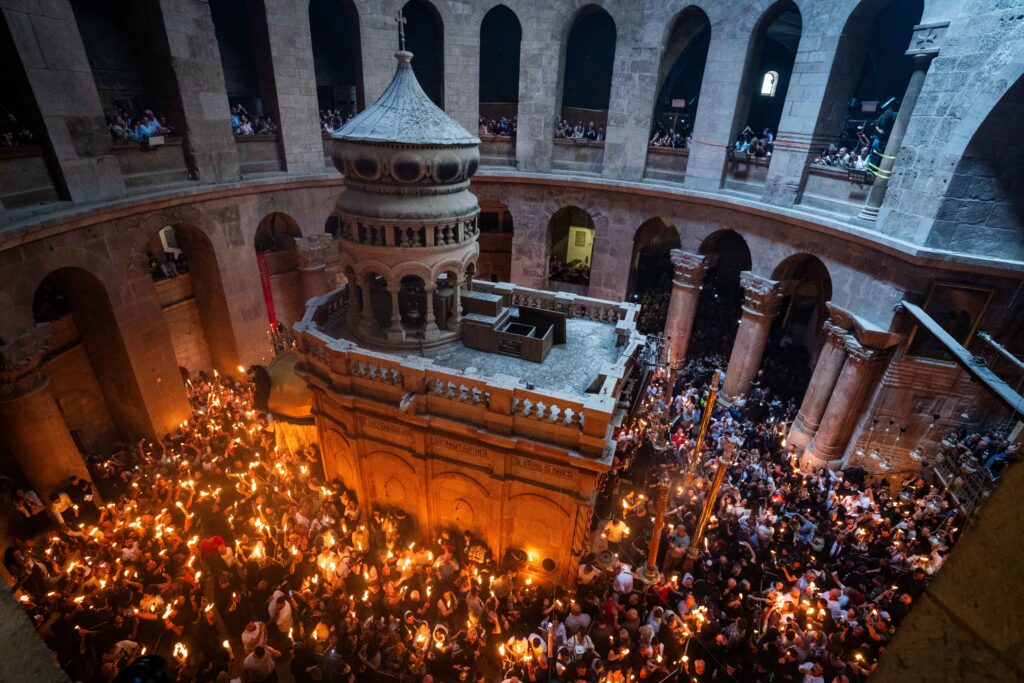
This represents an existential crisis for the Catholic institutional model. Christian Zionism is predominantly evangelical and Protestant, movements that already rejected Rome’s claim to exclusive spiritual authority five centuries ago during the Reformation. Now these same Protestants are reading the Hebrew Bible, connecting with the Jewish people, and supporting Israel based on their understanding of prophecy and covenant. The Catholic hierarchy’s response is to declare this biblical interpretation “damaging” and demand veto power over which Christians Israel can engage with diplomatically.
The theological reversal is complete. Replacement theology taught that when the Jews rejected Jesus, God rejected the Jews and transferred all covenant promises to the Church. The land meant nothing, the prophecies were spiritualized, and Jewish return to Israel held no theological significance. Christian Zionism rejects every element of this framework. It reads the prophecies literally, sees the return to the Land as fulfillment of biblical promises, and understands support for Israel as a religious obligation rooted in God’s unchanging covenant with the Jewish people.
The Catholic statement’s reference to Romans 12:5 about being “one body” weaponizes scripture to enforce institutional conformity. But as Nekrutman noted, they ignore Romans 9-11, where Paul wrestles with Israel’s place in God’s plan and warns gentile believers: “if some of the branches were broken off, and you, although a wild olive shoot, were grafted in among the others and now share in the nourishing root of the olive tree, do not be arrogant toward the branches.” The Catholic Church spent centuries being arrogant toward those branches. Christian Zionism represents Christians who finally stopped.
The Sages teach that those who bless Israel receive blessings, and those who curse Israel receive curses. The Catholic hierarchy is positioning itself on the wrong side of that equation. They are condemning Christians whose biblical interpretation leads them to support the Jewish people’s return to their ancestral homeland. They are demanding that a sovereign Jewish state give them exclusive authority over Christian-Israel relations. They are calling the blessing of Israel a “damaging ideology.”
Israel owes the Catholic Church nothing. The Jewish state does not require permission from Rome or its allied hierarchies to form relationships with Christians who support Jewish sovereignty in the Jewish homeland. The prophecies are being fulfilled whether the Vatican approves or not. Christian Zionists will continue standing with Israel because their Bibles tell them to, regardless of what ecclesiastical authorities declare.
The Catholic condemnation of Christian Zionism exposes the institution’s continuing attachment to the theological framework that justified Jewish persecution for millennia. They dress it in language about “unity” and “pastoral responsibility,” but the message is clear: Christians who bless Israel threaten church authority and must be marginalized. Israel’s response should be equally clear: the days when Jewish sovereignty required Christian approval are over. The State of Israel will continue engaging with believers who bless the Jewish people, and no statement from Jerusalem’s Patriarchs will change that.