




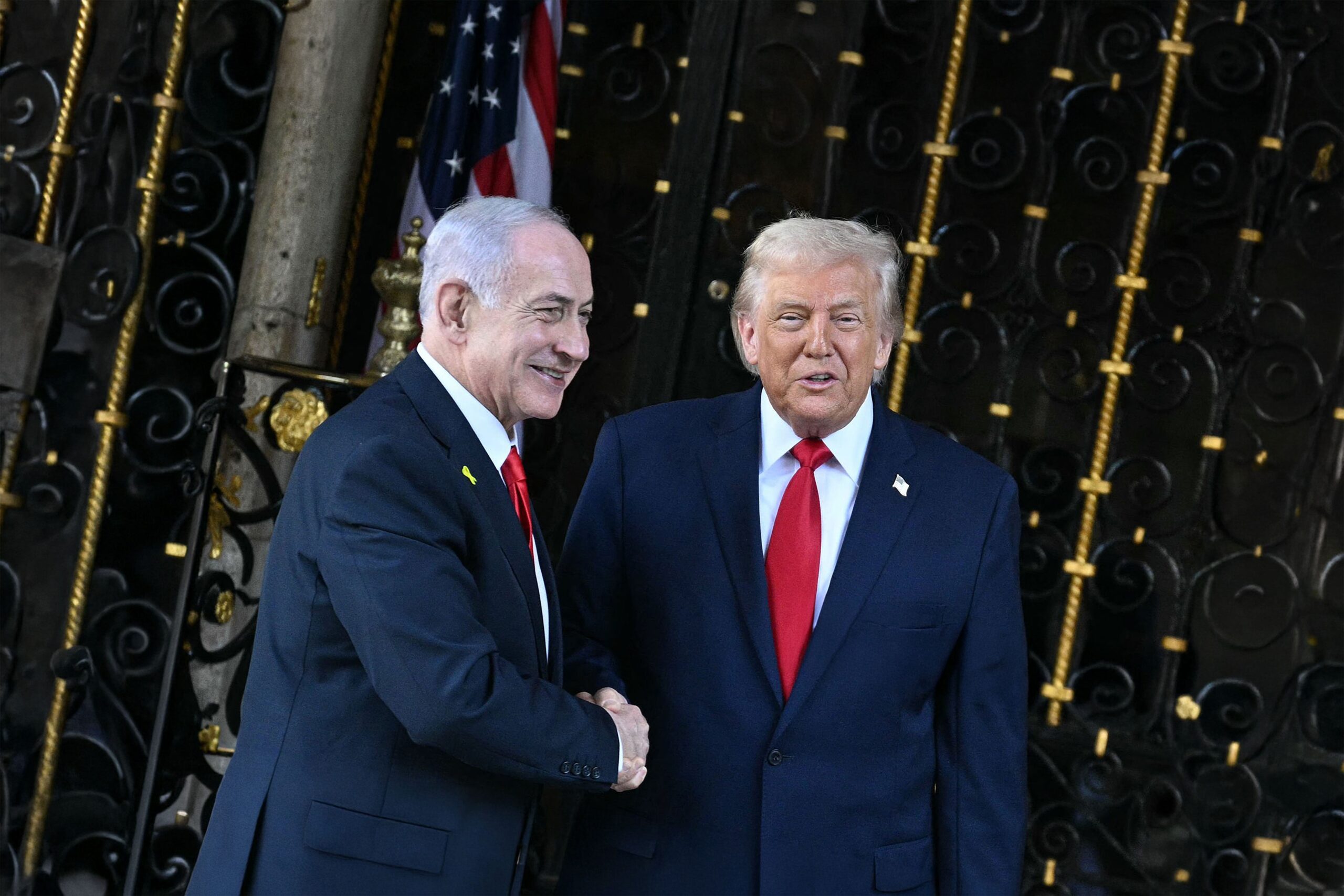
The White House announced Friday the composition of the Gaza Executive Board, a key panel tasked with overseeing reconstruction and governance in Gaza as part of President Donald Trump’s 20-point peace plan. Within hours, Prime Minister Benjamin Netanyahu issued a rare public rebuke of the administration, declaring the board’s makeup “runs contrary” to Israeli policy.
The dispute centers on the inclusion of Turkish Foreign Minister Hakan Fidan and senior Qatari diplomat Ali Al-Thawadi—representatives from two nations that have repeatedly condemned Israel’s conduct of the war against Hamas terrorists in Gaza. Netanyahu’s office stated the board’s composition “was not coordinated with Israel” and instructed Foreign Minister Gideon Sa’ar to raise the matter directly with U.S. Secretary of State Marco Rubio.
The Gaza Executive Board sits beneath the umbrella Board of Peace, which Trump chairs, and above the National Committee for the Administration of Gaza (NCAG), the Palestinian technocratic body announced earlier this week. According to the White House statement, the executive board “will help support effective governance and the delivery of best-in-class services that advance peace, stability, and prosperity for the people of Gaza.”
The Gaza Executive Board’s membership list reads like a who’s who of Middle East power brokers: presidential envoy Steve Witkoff, Trump’s son-in-law Jared Kushner, Egyptian intelligence chief Hassan Rashad, UAE Minister of State Reem Al-Hashimy, former British Prime Minister Tony Blair, American businessman Marc Rowan, Israeli-Cypriot businessman Yakir Gabay, former UN special envoy Nickolay Mladenov, and UN representative Sigrid Kaag. Mladenov will also serve as High Representative for Gaza, acting as the ground-level link between the Board of Peace and the NCAG.
Mladenov, a Bulgarian diplomat who previously served as UN envoy to the Middle East, will “support the Board’s oversight of all aspects of Gaza’s governance, reconstruction, and development, while ensuring coordination across civilian and security pillars,” according to the White House.
The overarching Board of Peace consists of Rubio, Witkoff, Kushner, Blair, Rowan, World Bank President Ajay Banga, and Deputy National Security Advisor Robert Gabriel. Two senior advisors—Aryeh Lightstone, who played a central role in the Abraham Accords during Trump’s first term, and Josh Gruenbaum, a private equity investor recently appointed as commissioner of the Federal Acquisition Service—will handle “day-to-day strategy and operations.”
The White House statement emphasized that “each Executive Board member will oversee a defined portfolio critical to Gaza’s stabilization and long-term success, including, but not limited to, governance capacity-building, regional relations, reconstruction, investment attraction, large-scale funding, and capital mobilization.”
The NCAG, which held its first meeting on Thursday in Cairo with Mladenov, Kushner, and Witkoff (the latter two joining virtually), will be led by Dr. Ali Shaath, former Palestinian Authority deputy planning minister. The White House described Shaath as “a widely respected technocratic leader who will oversee the restoration of core public services, the rebuilding of civil institutions, and the stabilization of daily life in Gaza, while laying the foundation for long-term, self-sustaining governance.”
The NCAG’s 15-member roster includes Ayed Abu Ramadan heading trade and economy, Omar Shamali on telecommunications, Abdul Karim Ashour handling agriculture, and Aed Yaghi leading the health portfolio. Dr. Jaber al-Daour, president of the University of Palestine, will run education, while Bashir al-Rais oversees finance. Palestinian Maj. Gen. Mohammad Tawfiq Helles will lead police forces, and Maj. Gen. Mohammad Nasman holds a security portfolio.
The security dimension falls to U.S. Maj. Gen. Jasper Jeffers, who has been appointed commander of the International Stabilization Force (ISF). Jeffers, who previously co-chaired the ceasefire monitoring mechanism for the Israel-Hezbollah agreement in Lebanon, will “lead security operations, support comprehensive demilitarization, and enable the safe delivery of humanitarian aid and reconstruction materials,” according to the White House.
The ISF is designed to provide security for Gaza and gradually phase out the IDF presence. U.S. officials briefing reporters earlier this week indicated they secured commitments from enough countries to field the force, with an announcement expected within two weeks. They acknowledged that “a lot of the work inside Gaza will be done by the local Palestinian police forces,” suggesting a scaled-back mandate focused on borders and humanitarian corridors rather than active disarmament operations against Hamas.
The Board of Peace charter, obtained by The Times of Israel, reveals an organization with sweeping ambitions beyond Gaza. The preamble declares “that durable peace requires pragmatic judgment, common-sense solutions, and the courage to depart from approaches and institutions that have too often failed,” and laments “that too many approaches to peace-building foster perpetual dependency, and institutionalize crisis rather than leading people beyond it.”
The charter establishes Trump as “inaugural Chairman of the Board of Peace” with “exclusive authority to create, modify, or dissolve subsidiary entities as necessary or appropriate to fulfill the Board of Peace’s mission.” Member states serve three-year terms unless they contribute over $1 billion in the first year. The chairman holds veto power over all board decisions and serves as “the final authority regarding the meaning, interpretation, and application of this Charter.”
Decisions require majority approval “subject to the approval of the Chairman, who may also cast a vote in his capacity as Chairman in the event of a tie.” The Executive Board, selected by the chairman and consisting of “leaders of global stature,” exercises powers to implement the mission with decisions going “into effect immediately, subject to veto by the Chairman at any time thereafter.”
The charter makes no mention of Gaza specifically, reinforcing earlier reports that the administration envisions the Board of Peace tackling conflicts worldwide. The UN Security Council resolution endorsing Trump’s plan, however, limits the board’s mandate to Gaza and only until the end of 2027.
Netanyahu’s public objection signals Jerusalem’s concern that Turkey and Qatar—nations that have hosted Hamas leadership and provided political and financial support to the terrorist organization—will exercise influence over Gaza’s future governance. Qatar hosted Hamas political bureau chief Ismail Haniyeh until his elimination in Tehran last summer, while Turkey’s President Recep Tayyip Erdogan has publicly praised Hamas terrorists as “liberators” fighting for Palestinian land. Turkish Foreign Minister Fidan himself expressed sorrow over Haniyeh’s death, calling the Hamas leader his “dear brother.”
The prime minister’s instruction to Sa’ar to raise the issue with Rubio represents an attempt to recalibrate the framework before it becomes operational. Israel maintains that any postwar arrangement must ensure Hamas’s complete dismantlement and prevent Iranian-backed terrorist infrastructure from reconstituting in Gaza.
The White House concluded its statement by affirming that “the United States remains fully committed to supporting this transitional framework, working in close partnership with Israel, key Arab nations, and the international community to achieve the objectives of the Comprehensive Plan. The President calls on all parties to cooperate fully with the NCAG, the Board of Peace, and the International Stabilization Force to ensure the swift and successful implementation of the Comprehensive Plan.”
Whether that cooperation materializes—particularly from an Israeli government that views the current board composition as counter to its security requirements—remains to be seen. The Board of Peace is scheduled to convene next week on the sidelines of the World Economic Forum in Davos, Switzerland, where Trump will meet with world leaders who have committed to join the initiative, including representatives from Egypt, Qatar, the UAE, the United Kingdom, Italy, and Germany.
For Israel, the stakes could not be higher. Any governance structure for Gaza that fails to prevent Hamas resurgence or allows hostile actors to shape reconstruction will only guarantee future conflict. Netanyahu’s swift response indicates Jerusalem intends to fight for changes to the framework before it hardens into policy. The coming weeks will reveal whether the administration adjusts course—or whether Israel faces the prospect of a U.S.-led peace process that conflicts with its fundamental security needs.