




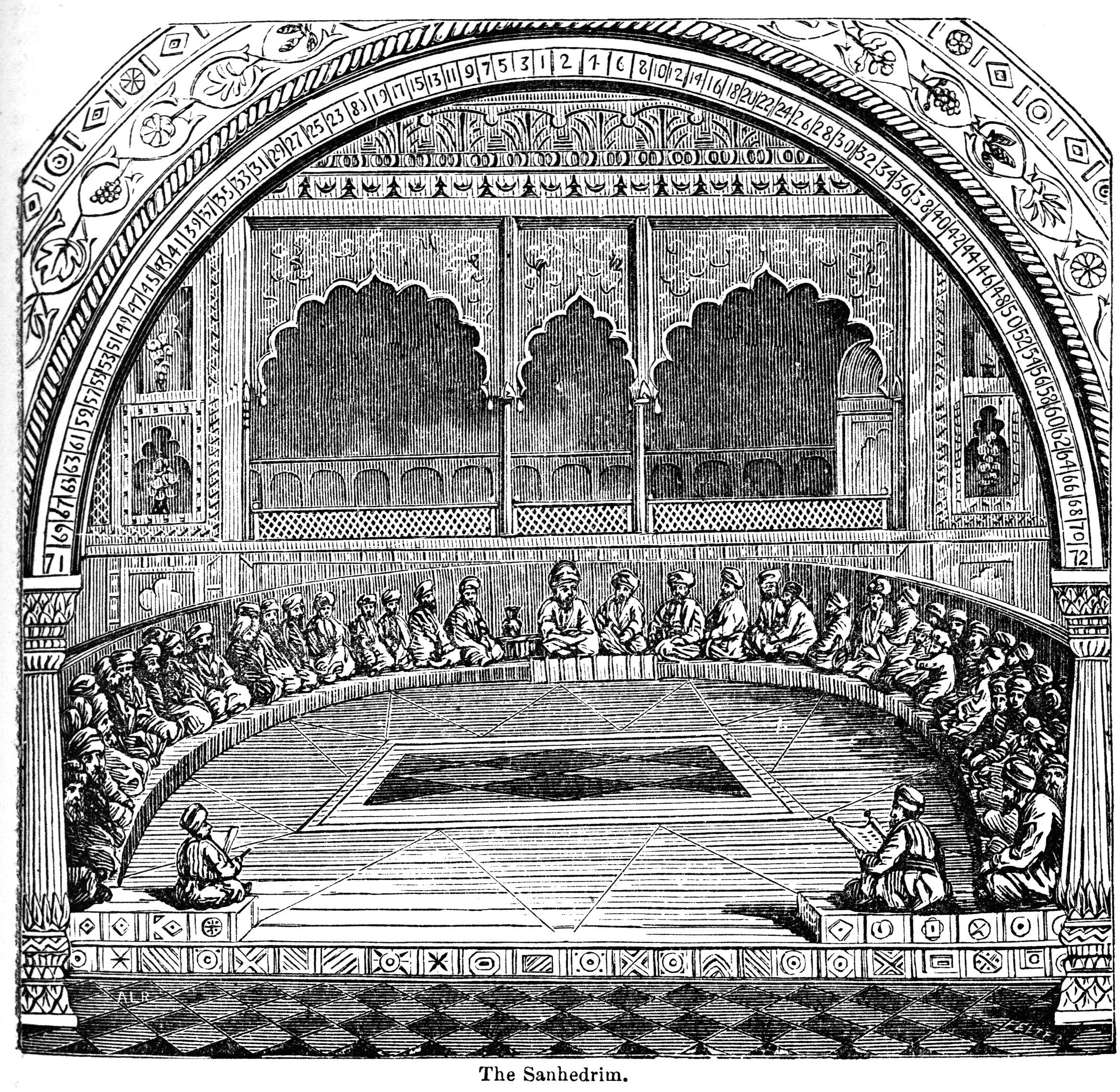
The nascent Sanhedrin issued two declarations that reach across centuries of history to address peoples caught in the grip of tyranny. The first declaration calls on the Iranian people to overthrow the Islamic Revolutionary Guard Corps and return to the partnership with Israel exemplified by Cyrus the Great. The second urges the Kurdish and Druze populations in Syria to seek independence and alignment with Israel. These declarations represent a reclamation of biblical prophecy and the restoration of ancient alliances that the Sages understood would define the end of days.
The Sanhedrin’s declaration to Iran begins with a message of divine partnership: “As messengers of God, Creator of the world in His mercy, we as bearers of the voice of the Torah of the Creator of the world, want every nation to prosper, including the ancient Persian peoples.”
The court expresses deep sorrow for what the Iranian people have endured under Islamist rule and before it.
The declaration states: “Every nation has its important contribution to humanity, and for this God created them. This contribution can only be expressed when they listen to the voice of the Creator of the world, mediated through His covenant people, Israel.”
The text then quotes the prophet Zechariah, who prophesied in Israel during the days of Darius, King of Persia: “Speak truth, each man to his neighbor, truth and peaceful justice you shall administer in your gates. And let no man plot evil in his heart against his neighbor, and love no false oath… and love truth and peace…. And many peoples and mighty nations shall come to seek the Lord of Hosts in Jerusalem and to entreat the presence of the Lord. Thus says the Lord of Hosts: In those days it shall be that ten men, out of all the languages of the nations, shall take hold, they shall take hold of the corner of the garment of a Jewish man, saying: Let us go with you, for we have heard that God is with you.” (Zechariah 8:16-17, 19, 22-23)
This passage ties Persian support for Israel directly to the messianic vision. Zechariah prophesied during the Second Temple period, when Persia under Cyrus and Darius enabled the Jewish return to Jerusalem and the rebuilding of the Temple. The Sanhedrin sees in this a template for the future.
The declaration continues: “We carry a prayer for all the peoples in Iran, that they merit to free themselves from the cruel rule of the Revolutionary Guards.”
The Sanhedrin acknowledges the origins of the revolution: “The Iranian Revolution began with a noble aspiration: to free themselves from a corrupt, tyrannical, and hedonistic government, and to establish a just and modest government that serves the Creator of the world.”
But the declaration notes a terrible transformation: “Unfortunately, a short time after the revolution, it was taken over by the descendants of the wicked Haman—Khomeini and later Khamenei. Like Haman, his descendants are also obsessed with harming Israel, even at the expense of severe damage to the welfare of their own people. They invest in developing nuclear weapons to destroy Israel, while their own people do not even have water to drink. Iran is seventy times larger than Israel in territory and nine times larger in population, yet they suffer from poverty, only because of the regime’s obsession against Israel.”
This week, hundreds of thousands of Iranians have taken to the streets across the country in the largest wave of protests since the Green Movement. Demonstrations have erupted in Tehran, Tabriz, Isfahan, and Mashhad, with protesters openly calling for the overthrow of Supreme Leader Ali Khamenei and the Revolutionary Guard. Security forces have responded with lethal force, killing thousands of protesters according to human rights groups, but the demonstrations continue to grow.
President Donald Trump issued strong statements of support for the Iranian protesters. “The great Iranian people have been badly repressed for many years,” Trump posted. “They are hungry for food and hungry for freedom. Along with peace, this is the right time for change!” Trump warned the regime against violent repression: “The world is watching. Killing your own citizens will have severe consequences.” He has reportedly directed the State Department to provide technological support to help Iranian protesters circumvent government censorship and communicate securely. Despite the president’s strong warnings, a military response has not yet materialized.
The historical irony is deliberate. Before the 1979 Islamic Revolution, Iran and Israel maintained close diplomatic and economic relations. The Shah’s Iran was Israel’s primary oil supplier and a key strategic partner in the region. Israeli advisors helped train Iranian forces, and the two nations cooperated on intelligence and military matters. Iranian Jews lived openly and freely. The revolution shattered this partnership and replaced it with a regime that calls for Israel’s destruction.
The Sanhedrin’s invocation of Cyrus is central to its vision. Cyrus the Great, King of Persia, issued a decree in 538 BCE allowing the Jews to return from Babylonian exile and rebuild the Temple in Jerusalem. The prophet Isaiah called Cyrus God’s anointed—mashiach—even though he was not Jewish. “Thus says the Lord to His anointed, to Cyrus, whose right hand I have grasped, to subdue nations before him.” (Isaiah 45:1) Cyrus is mentioned by name in the Bible twenty-three times, more than any other Gentile king. He funded the Temple’s construction from the royal treasury. This partnership between Persia and Israel was not political convenience but divine orchestration.
The Sanhedrin declared: “We wish all the peoples in Iran, who are now struggling for their freedom, success in their struggle and the removal of the evil rule of the Revolutionary Guards. We pray that each of the peoples of Iran will merit an independent state in their land, and to choose for themselves just and modest leaders, God-fearing and lovers of peace.”
The declaration then issued a spiritual call: “We call upon all the peoples in Iran to abandon foreign worship and to accept upon themselves the Seven Commandments that God gave to Noah and his descendants after the Flood, as they were given to Moses our teacher at Mount Sinai for all the nations.”
These Seven Noahide Laws—the Sheva Mitzvot B’nei Noach—prohibit idolatry, blasphemy, murder, theft, sexual immorality, eating flesh from a living animal, and require the establishment of courts of justice. The Sages teach that any Gentile who observes these commandments is considered righteous among the nations and has a share in the World to Come.
The declaration issued a direct call to Iranian leadership: “We call upon the leaders of all the peoples in Iran to walk in the path of Cyrus, King of Persia, to support the building of the Temple on the Temple Mount, and even to ascend and pray there in the places designated for the descendants of Noah, ‘for My house shall be called a house of prayer for all peoples.'” (Isaiah 56:7)
The Sanhedrin is calling for the reconstruction of the Third Temple and inviting the nations to participate. In Jewish law, the Temple Mount has designated areas where non-Jews who observe the Noahide Laws may enter and pray. The vision is that of the prophet Zechariah: nations streaming to Jerusalem to seek God.
The declaration concludes with the covenantal promise: “Every nation that chooses to serve God as He commanded us will merit divine blessing, as God said to Abraham, ‘And I will bless those who bless you, and curse those who curse you, and all the families of the earth shall be blessed through you,’ (Genesis 12:3) and to Jacob, ‘And all the families of the earth shall be blessed through you and through your seed.’ (Genesis 28:14) And they will also merit to spread the good within them to the entire world.”
The second declaration addresses the people of Syria, particularly the Kurds and the Druze. The Sanhedrin states: “As messengers of God, Creator of the world in His mercy, we as bearers of the voice of the Torah of the Creator of the world, pray for the peace of all the peoples of the world, and want every nation to prosper.”
The declaration continues: “We see with great sorrow what is happening to the Kurds and Druze in Syria, who suffer from oppression and killing by the Syrian authorities in cooperation with Turkey.”
On the Kurdish people, the Sanhedrin declared: “Every nation has its important contribution to humanity, and for this God created them. The Kurds number fifty million people today, and they are the largest ethnic group in the world without a state. They are scattered between Syria, Iraq, Iran, and Turkey, and in all these places, they suffer cruel oppression. We support the right of the Kurds to an independent state in their land northeast of the Euphrates River, and we pray that they will merit just and God-fearing leaders and lovers of peace, who fulfill the Seven Noahide Commandments.”
On the Druze, the declaration states: “We call upon the Druze in Syria, in the territory of the Land of Israel, southwest of the Euphrates River, to join the State of Israel. To continue living according to the Seven Noahide Commandments, as decided by the Druze Sheikh Amin Tarif. To walk in the path of their Druze brothers in the State of Israel, who have made a covenant with Israel. To cooperate with the children of Israel who come to settle in Bashan, and with all the people of Israel in their land.”
Bashan is the biblical name for the Golan Heights, which Israel captured from Syria in 1967 and formally annexed in 1981. The Druze maintain a tradition that they are descendants of Yitro (Jethro), the father-in-law of Moses, and therefore possess an inherited portion of land in Israel. This belief in their Israelite lineage has shaped their relationship with the Jewish state.
The Druze community in the Golan has maintained a complex relationship with Israel, with many holding Israeli residency but not citizenship. The recent fall of the Assad regime has created new realities on the ground. The Sanhedrin sees this as an opportunity for the Syrian Druze to fully align with Israel rather than face persecution under whatever regime emerges in Damascus.
The invocation of Sheikh Amin Tarif is significant. Tarif served as the spiritual leader of the Israeli Druze community from 1928 until his death in 1993. He was the first to formalize the Druze commitment to the Seven Noahide Laws and to frame Druze theology in these terms. He also established the principle of Druze military service in the Israel Defense Forces, creating the covenant between the Druze and Jewish communities that endures today. Israeli Druze serve with distinction in the IDF at rates higher than the general Jewish population and hold positions of leadership in combat units, military intelligence, and elite special forces. Druze officers have reached the highest ranks of the Israeli military, and Druze soldiers are known for their exceptional bravery and loyalty.
What the Sanhedrin is proposing is a realignment of the Middle East based on biblical boundaries and covenantal relationships rather than the artificial nation-states created by European colonial powers after World War I. The vision is that people who accept the Seven Noahide Laws and recognize Israel’s divine mandate will prosper and find their place in the messianic order. Those who reject this framework, like the current Iranian regime, bring suffering upon themselves and their people.
The Sanhedrin was reconstituted in 2004 after nearly 1,600 years of absence. Its members believe the generation has arrived when prophecy will be fulfilled, and the Temple will be rebuilt. The declarations to Iran and Syria are legal rulings with the force of biblical law, not suggestions. They represent the Sanhedrin’s assertion of its role as the supreme legal authority for the Jewish people and its responsibility to guide the nations toward their proper service of God.
The Sanhedrin sees the chaos in Iran and Syria not as accidents of history but as birth pangs of the messianic age. The protests in Tehran, the collapse of the Assad regime, the realignment of regional powers—these are signs that the old order is crumbling.
The Sanhedrin believes the Nations will either align themselves with Israel and the God of Israel, walking in the path of Cyrus and receiving blessing, or they will follow the path of Haman and inherit destruction.
The Iranian people face a choice: remain under the tyranny of the ayatollahs who impoverish them to fund terrorism against Israel, or rise up and reclaim the partnership their ancestors had with the Jewish people. The Kurds and Druze face a similar choice: seek autonomy under hostile regimes, or accept the protection and partnership Israel offers.