




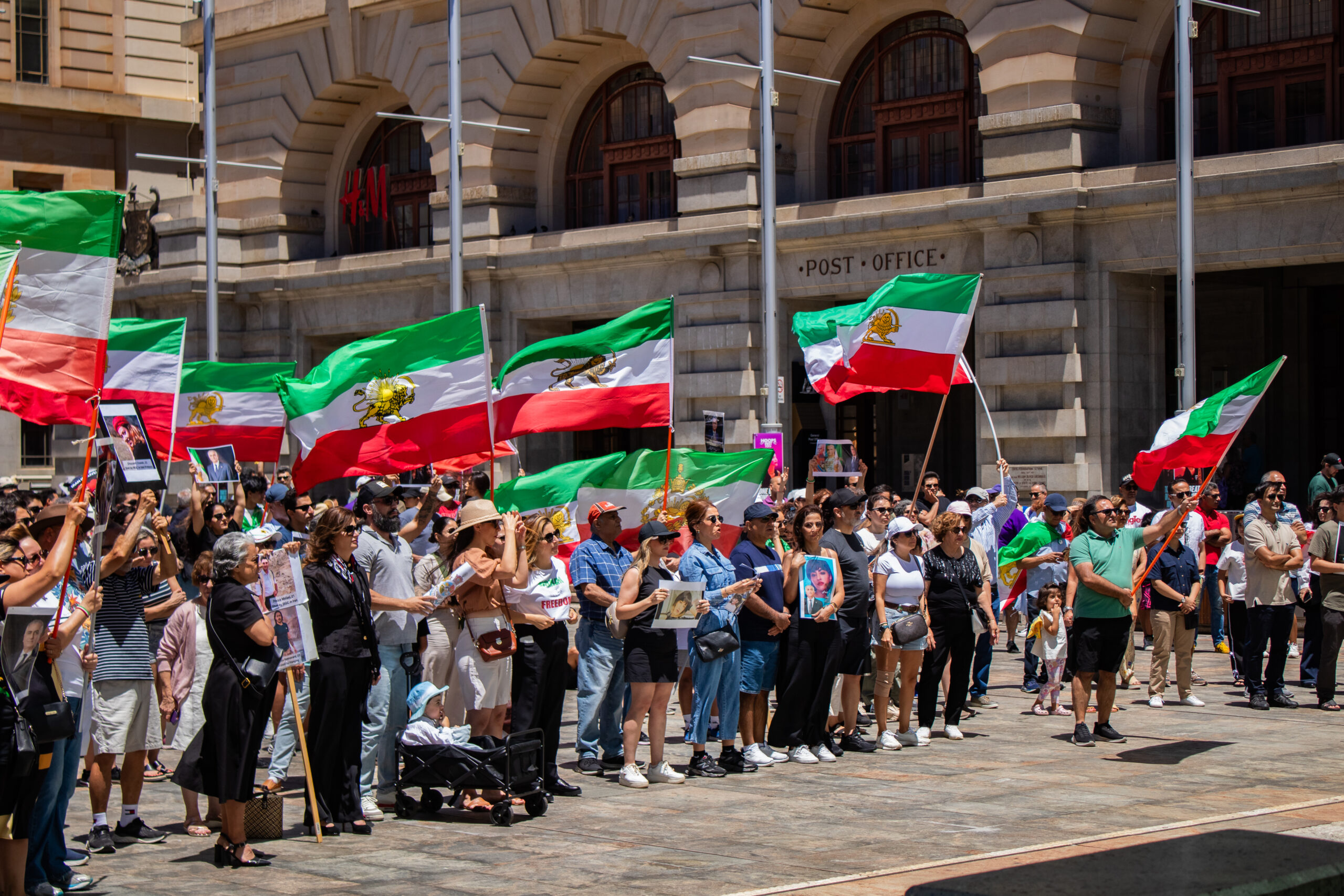
The United States has moved from warnings to action as unrest inside Iran accelerates and the regime tightens its grip on the population. In unusually blunt language, Washington told American citizens to get out immediately, citing growing violence, mass arrests, flight cancellations, and a widening communications blackout. The message was direct, urgent, and public, reflecting how seriously the United States takes the current situation in the Islamic Republic.
On Tuesday, the US State Department issued evacuation orders for all American nationals in Iran, including dual citizens. “Leave Iran now,” the notice stated. “Have a plan for departing Iran that does not rely on US government help.” The advisory pointed to nationwide anti-regime protests, the regime’s violent crackdown, and deliberate efforts to sever internet and cellular access both within Iran and between Iran and the outside world. “Protests across Iran are escalating and may turn violent,” the State Department warned, citing arrests, injuries, road closures, transportation disruptions, and ongoing internet blockages.
The advisory also underscored how quickly Iran is becoming physically sealed off. Major airlines have suspended or canceled flights, with several halting service at least through Friday, January 16. “The Government of Iran has restricted access to mobile, landline, and national internet networks,” the notice said, adding that Americans unable to depart by air should consider leaving by land through Armenia or Türkiye. Even then, the State Department stressed that the US “cannot guarantee” the safety of citizens attempting to evacuate and urged those unable to leave to shelter in place with adequate food, water, and medicine.
This evacuation order came as senior American officials acknowledged that contingency planning for potential military action against Iran is already in advanced stages. A US official told Al Jazeera that forces across the region have been instructed to remain ready for a wide range of scenarios as unrest spreads. The Pentagon, the official said, is shaping its options “to circumstances and developments,” with US personnel positioned “for any contingency, any mission, and to defend themselves and our interests.”
WH Press Secretary Karoline Leavitt on Iran: "Air strikes would be one of the many, many options that are on the table for the Commander in Chief. Diplomacy is always the first option for the president."
— Breaking911 (@Breaking911) January 12, 2026
pic.twitter.com/JLCaYH02oY
At the same time, diplomatic channels remain active, though strained. Iranian Foreign Minister Abbas Araghchi recently met with Steve Witkoff, President Donald Trump’s Middle East envoy. Axios reported that Araghchi initiated the contact, following repeated warnings from Trump that he does not rule out a military response if the regime’s violence escalates. Speaking aboard Air Force One, Trump said Tehran has asked to resume talks toward a revised nuclear agreement. “They want to negotiate,” he said, adding that Iran’s leadership is worn down by sustained American pressure. He also cautioned that the US “may need to act before a meeting,” signaling that diplomacy and force are being prepared in parallel.
The human cost driving these calculations continues to rise. The Human Rights Activists News Agency reported that at least 544 people were killed in the first 15 days of unrest, including 483 demonstrators and five minors, with more than 10,680 arrests documented. Norway-based Iran Human Rights later placed the death toll at at least 648 protesters, including nine under the age of 18, with sources inside Iran telling the BBC the real number may be significantly higher. Independent reporting from inside the country has been crippled by a near-total internet blackout.
President Trump has also expanded economic pressure. On Monday, he announced a 25 percent tariff on goods from countries doing business with Iran, declaring on Truth Social, “This order is final and conclusive.” The move targets economies including China, Russia, Turkey, and the United Arab Emirates, all major trade partners of Tehran. Iran’s currency is already collapsing, inflation has surged, and food prices have risen by up to 70 percent. With food comprising roughly one-third of Iran’s imports, additional pressure threatens to deepen shortages and public anger.
Behind the scenes, the president has been briefed on a wide spectrum of options. Two Department of Defense officials told CBS News that long-range missile strikes remain on the table, alongside cyber operations and psychological campaigns. White House Press Secretary Karoline Leavitt confirmed that while military action remains an option, Trump prefers a diplomatic outcome if possible. Reza Pahlavi, the son of Iran’s last shah, urged faster intervention, telling CBS News that the regime is “trying to trick the world” with renewed talk of negotiations and warning that delay will only raise the death toll.
Israel is watching closely. The Israel Defense Forces said it remains on alert for potential “surprise scenarios” as Iran threatens retaliation against Israel and US bases if attacked. IDF spokesperson Brig. Gen. Effie Defrin cautioned against rumors, emphasizing that the protests are an internal Iranian matter and that the IDF is prepared defensively, while confirming that the IDF is conducting ongoing assessments.
The United States’ response reflects an understanding that Iran’s crisis is no longer contained. An evacuation order is not symbolic. It is issued when a government believes it may soon lose visibility, leverage, or control over on-the-ground events. Combined with military readiness, economic escalation, and open warnings from the president, Washington is signaling that the Iranian regime’s actions have pushed the situation into a dangerous new phase.