



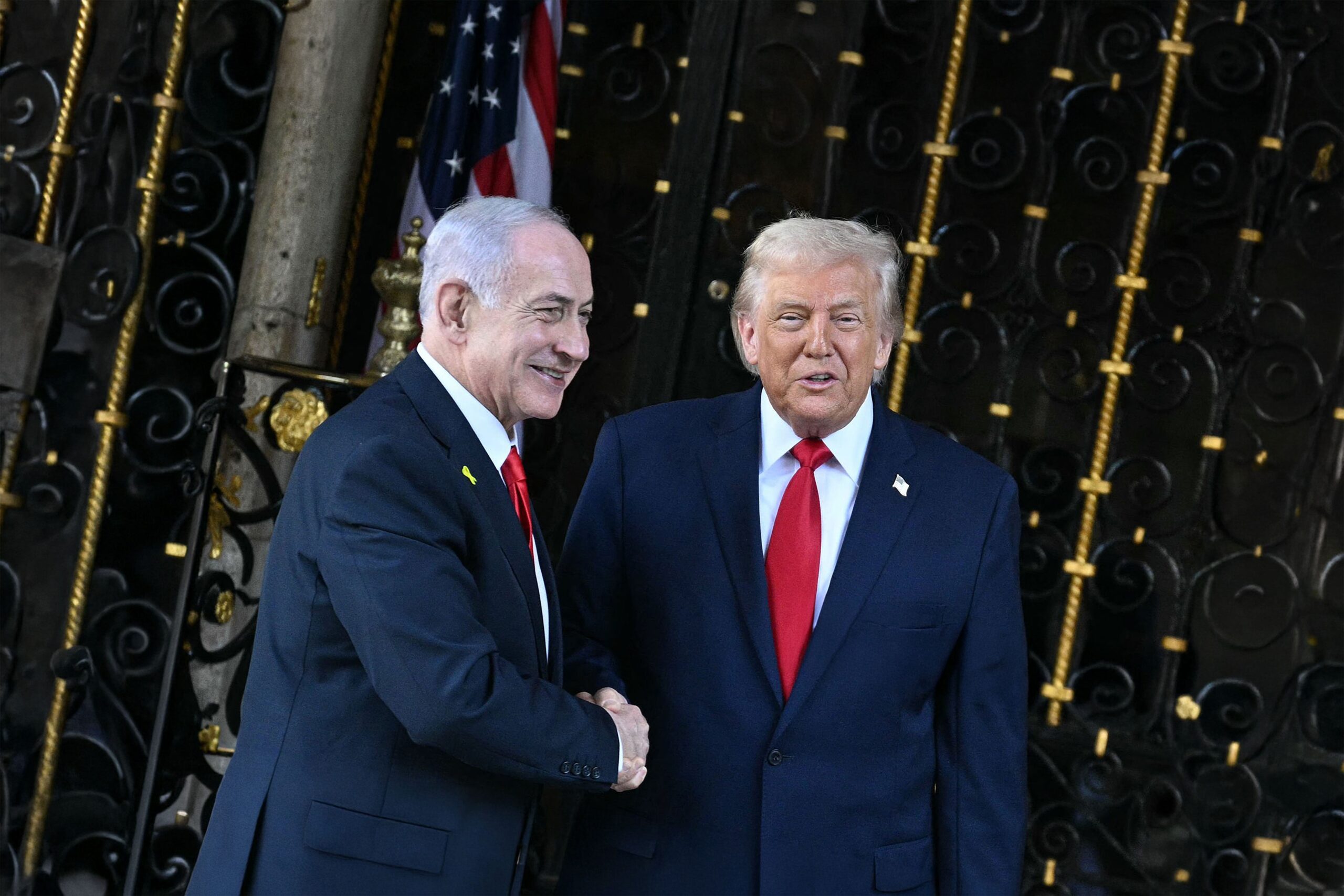
Donald Trump used his recent interview with The New York Times to do something he has conspicuously avoided for months: speak directly about antisemitism inside his own political camp. The two-hour conversation, published in full this week, shows a president trying to hold together a fractured coalition while insisting—repeatedly and emphatically—that antisemitism has no place in MAGA.
When asked whether antisemitic figures belong in the Republican Party or the MAGA movement, Trump answered without hesitation. “I think we don’t need them. I think we don’t like them.” Pressed further on whether he condemns antisemitic views being voiced by conservatives, he replied, “Certainly.” He then pivoted immediately to his record. “If you talk about the antisemitic views, there’s been nobody better for us,” he said, before citing an award he recently received for his support of Israel. “I just got the Israel award, which is the biggest award they give. It was just given to me. First time it was ever given to anybody outside of Israel.”
Trump went on to elevate the claim beyond a policy matter. “There has been no better president in the history of the world as we know it that has been stronger or better and less antisemitic, certainly, than Donald Trump,” he said, referring to himself in the third person. “I have been the best president of the United States in the history of this country toward Israel. And that’s, by the way, acknowledged by everybody, including the fact that we have peace in the Middle East, and that’s going to hold.”
The president returned to personal markers of Jewish connection. “I have a daughter who’s married to a Jewish person. My daughter happens to be Jewish, beautiful, and three grandchildren are Jewish,” he said. “I’m very proud of them. I’m very proud of that whole family. I am the least antisemitic person, probably, there is anywhere in the world.”
Asked directly whether he would condemn Nick Fuentes, the Holocaust-denying white nationalist who has praised Adolf Hitler and openly advocates antisemitic ideology, Trump insisted he did not know him. “I don’t know Nick Fuentes,” he said. When reminded that Fuentes had dined with him at Mar-a-Lago alongside Kanye West in 2022, Trump offered an explanation. “I had dinner with him, one time, where he came as a guest of Kanye West. I didn’t know who he was bringing. He said, ‘Do you mind if I bring a friend?’ I said, ‘I don’t care.’ And it was Nick Fuentes? I don’t know Nick Fuentes.”
This is consistent with Trump’s comments last October, when he defended Tucker Carlson for hosting Fuentes on his podcast in a friendly, unchallenged interview. At the time, Trump said, “If he wants to interview Nick Fuentes, I don’t know much about him, but if he wants to do it, get the word out, let him.” Fuentes publicly celebrated the remark, posting, “Thank you, Mr. President.”
Trump was also pressed about Paul Ingrassia, whom he nominated to lead the Office of Special Counsel before withdrawing the nomination after leaked messages revealed references to having a “Nazi streak.” Despite the scandal, Ingrassia was later appointed deputy general counsel at the General Services Administration. Trump again claimed ignorance. “I don’t know that. It’s possible. I have thousands of people working here,” he told the Times.
“I think we don’t need them,” he said plainly.
Vice President JD Vance has taken a more permissive posture. Speaking last month at Turning Point USA’s annual conference—a gathering already marked by infighting between pro-Israel conservatives and antisemitic activists—Vance dismissed calls to marginalize extremists as counterproductive. “We don’t need purity tests,” Vance said. “We have far more important work to do than canceling each other.”
Vance did not address Fuentes by name, nor did he mention Carlson, Marjorie Taylor Greene, or Candace Owens, all of whom have trafficked in antisemitic rhetoric. Instead, he framed the issue as internal squabbling rather than a moral fault line.
