





Gaza’s Christian community is disappearing in plain sight, and the reasons are routinely misreported. As cameras focus on the war with Israel, a quieter story unfolds behind church walls and shuttered homes: a minority steadily squeezed by Islamist rule, Salafist violence, and an atmosphere that has made normal Christian life unsustainable long before October 7, 2023. The numbers tell a blunt story. Gaza once had thousands of Christians. Today, only a few hundred remain, clustered around three churches and living with the expectation that their children will leave if they can.
That reality raises an unavoidable question: if Israel left Gaza completely in 2005 and has had no civilian presence there since, why did the Christian population collapse precisely after Hamas seized power in 2007?
The answer is neither mysterious nor new. It is ideological, political, and religious, and it is visible across the region wherever Islamist movements consolidate power.
Before Israel’s unilateral withdrawal from Gaza in 2005, the Christian population estimates stood at roughly 5,000. When Hamas violently expelled Fatah and took control of the Strip in 2007, that number fell to about 3,000. From there, the decline was relentless. By 2014, surveys, including one conducted by the YMCA, estimated the number at approximately 1,300. On the eve of October 7, 2023, church leaders estimated that approximately 1,017 Christians were among a population of more than two million. By early 2026, estimates place the remaining community at approximately 600-700 people, less than 1% of Gaza’s population.
Those figures did not collapse because of Israeli settlements. There were none after 2005. They did not collapse because of the Israeli civil administration. There was none. They collapsed under Hamas rule, in an environment where Christians learned that visibility invited danger and emigration offered the only future.
The lived experience behind the numbers is documented. The Gaza Baptist Church was repeatedly commandeered as a military observation post during the Fatah–Hamas conflict beginning in 2006. Church staff were caught in crossfire. A librarian was wounded by gunfire. A 22-year-old bus driver, newly married, was killed. In 2007, the church was raided and temporarily seized. That same year, Rami Ayyad, who managed Gaza’s only Christian bookstore, was murdered by Salafi jihadists affiliated with Jaish al-Mu’minun. Other Salafi groups, including Jaysh al-Islam and Tawhid al-Jihad, have openly opposed Christianity and attacked Christian targets.
Hamas officials and sympathetic commentators frequently insist that Christians live comfortably under Islamist rule. Yet Christian testimonies over the years tell a different story. In 2011, Christians interviewed by The Guardian described an atmosphere of fear: Christmas celebrations curtailed, young men leaving en masse, and intimidation over visible Christian symbols such as crosses. In 2012, allegations surfaced that Christians had been kidnapped and pressured to convert to Islam, prompting sustained protests by the Christian community in Gaza City, even as official denials were issued.
This pattern mirrors what has happened in Bethlehem, once a solidly Christian city and now overwhelmingly Muslim. The same forces are at work: social pressure, economic marginalization, Islamist intimidation, and the steady message that Christians have no long-term place in societies dominated by political Islam. Israel did not empty Bethlehem of Christians. Nor did Israel impose Islamist rule on Gaza.
During the current war, churches in Gaza have functioned as shelters and aid hubs, underscoring both the vulnerability and cohesion of the remaining community. Father Gabriel Romanelli, the Argentine parish priest of Holy Family Church who has served Gaza’s Christians for more than two decades, told The Media Line that more than 700 people crowded into the church at the height of the fighting, seeking safety “because they feel more security around Jesus in the house of the Lord.” As of late 2025, roughly 450 people remained sheltered there. Across Gaza, an estimated 30 to 44 Christians have been killed since the war began, some in strikes, others due to collapsing medical conditions.
These deaths are tragic and real. They do not, however, explain the long-term collapse of Gaza’s Christian population, which began years earlier and accelerated under Hamas governance.
One of the most influential voices advancing this narrative is Munther Isaac, the Bethlehem-based Lutheran pastor who has repeatedly claimed that Israel, not Islamist rule, is the primary driver of Christian decline in the region. The data directly contradicts this claim. In Gaza, Israel withdrew all civilians and soldiers in 2005. At that time, the Christian population stood at approximately 5,000. Hamas seized control in 2007. From that moment forward, the Christian population declined to roughly 3,000 in 2007, to about 1,300 by 2014, to just over 1,000 by October 7, 2023, and to approximately 600-700 by early 2026. Israel did not govern Gaza during this period. Hamas did. Isaac’s framing requires ignoring the single most decisive political change affecting Gaza’s Christians: the imposition of Islamist rule.
Isaac and his Western amplifiers, including Tucker Carlson and George Stephanopoulos, routinely cite Christian suffering during Israeli military operations while remaining silent about the ideological environment that made Christian life in Gaza untenable long before the current war. That omission is not neutral. It absolves Hamas and Salafist actors of responsibility while assigning blame to Israel for a demographic collapse that began years earlier and followed a clear trajectory under Islamist governance. This narrative avoids confronting the hostility toward Christianity embedded within Salafist movements and tolerated, when not enforced, under Hamas rule.
The same pattern is visible beyond Gaza. Bethlehem, the city most symbolically associated with Christianity, has undergone a dramatic demographic transformation over the past several decades. Once a majority-Christian city, Bethlehem is now overwhelmingly Muslim. This shift did not occur because of Israeli policy alone but through sustained social pressure, economic marginalization, and intimidation by Islamist and clan-based forces. Christian families have steadily emigrated, reporting harassment, land disputes resolved against them, and a growing sense that public Christian life is no longer secure. The result mirrors Gaza on a slower timeline: departure as a form of survival.
Regionally, the story is consistent. From Iraq to Syria to Egypt, Christian populations have collapsed wherever Islamist movements gained power or influence. Churches survive as symbols, not as growing communities. Israel stands as the lone exception in the Middle East where the Christian population has grown, enjoys legal protection, and participates fully in public life. This regional context exposes the falsity of claims that Israel is the primary threat to Christianity in the Holy Land.
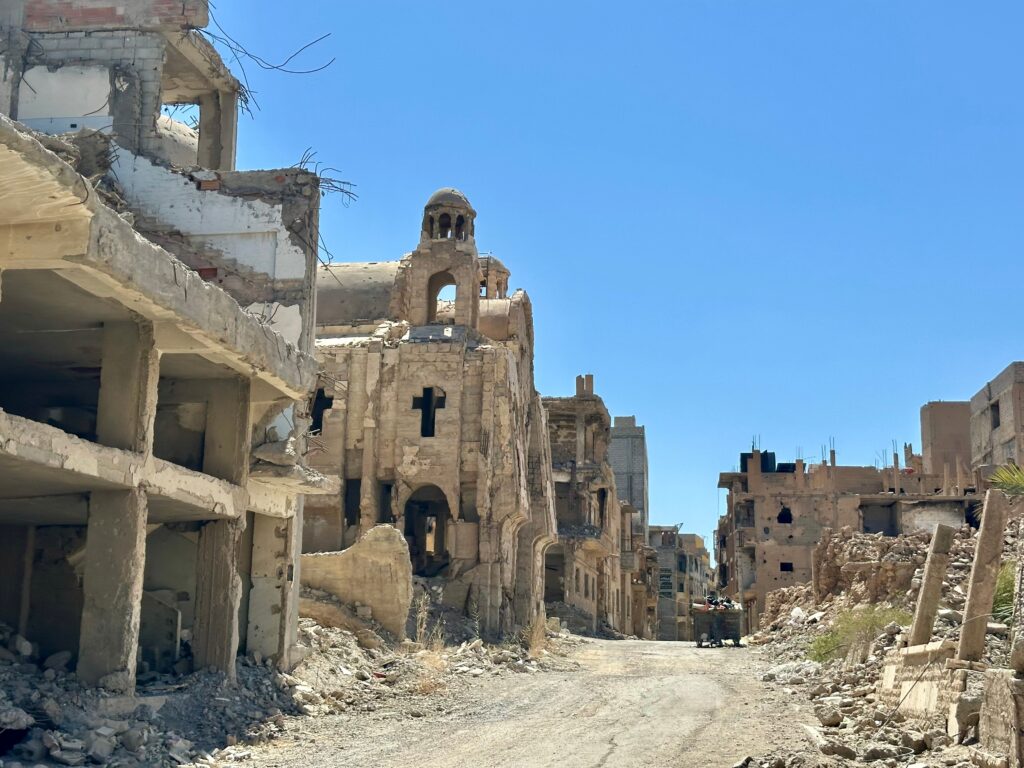
When power is enforced through fear and religious conformity, minorities flee or disappear.
In the context of the Middle East, Israel stands out as the only country where the indigenous Christian population is demonstrably growing in absolute numbers. According to the Central Bureau of Statistics, Israel’s Christian community rose to roughly 180,300 people by Christmas 2024, up from previous years, and accounted for about 1.8 percent of the total population. The data show that the number of Christians increased by about 0.6 percent in 2023 alone. By Christmas Eve 2025, that number edged closer to 185,000, nearly 2 percent of Israel’s population. This growth is modest but consistent, and it contrasts sharply with the demographic trends of Christian communities in the surrounding region.
Most of Israel’s Christians are Arab Christians, who comprise roughly 78–80 percent of the Christian minority and make up nearly 7 percent of Israel’s Arab population. Cities like Nazareth, Haifa, Jerusalem, and Nof HaGalil host the largest concentrations. Births within the Christian community remain robust enough that natural increase contributes to population growth, reflected in marriage and fertility statistics published by the Central Bureau of Statistics.
This pattern is exceptional in the Middle East. In nearly every neighboring country with an indigenous Christian population, communities are shrinking or have nearly vanished. Iraq’s Christian population, for example, collapsed from about 1.3 million before the 2003 invasion to a few hundred thousand today due to war and persecution. Syria’s Christians have also dwindled sharply amid civil war and Islamist violence. In Egypt, the Coptic community, once a larger share of the population, has seen ongoing emigration and pressures that have reduced its numbers relative to the total population. Lebanon, once a majority-Christian Arab country, is now a minority-Christian state with continued emigration of believers. In Gaza and the West Bank, Christian populations have plummeted under Islamist rule and economic collapse. In stark contrast, Israel’s Christians live with legal protections for worship and property, which allows church life to endure and grow where others cannot.
Israel’s demographic trajectory for Christians underscores a broader regional reality: where religious freedom and civil rights are upheld, Christian communities can survive and even expand; where Islamist ideologies dominate, Christians shrink or disappear. This fact is critical to understand when assessing claims about the causes of Christian emigration in the Middle East and is central to any honest discussion of the future of Christianity in the Holy Land.
Gaza’s Christians are not vanishing because Israel exists. They are vanishing because Hamas rules. That is the uncomfortable fact obscured by activists and media figures who prefer slogans to evidence. If the goal is to protect Christian communities in the Middle East, the first step is intellectual honesty. The second is naming the ideology driving them out. Anything less is not advocacy. It is abandonment.


