



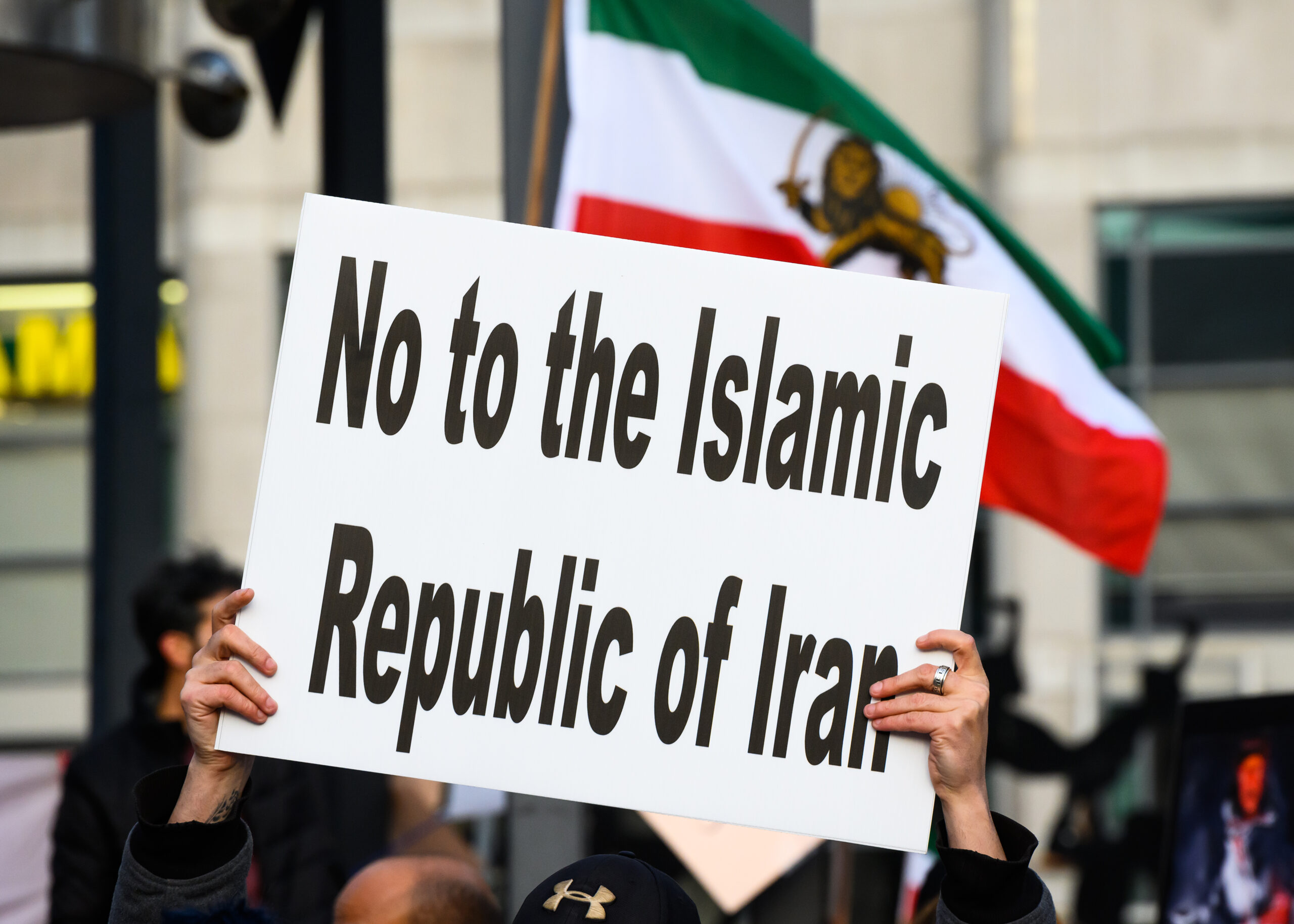
Widespread protests are spreading across Iran, driven by economic collapse and public frustration with the Islamic Republic’s leadership. Demonstrations have now reached more than 170 locations in 25 of Iran’s 31 provinces, according to the U.S.-based Human Rights Activists News Agency. At least 15 people have been killed and more than 580 arrested, the group reported. The unrest comes months after Israel and the United States struck Iranian nuclear sites in June, and as international sanctions have further weakened Tehran’s economy.
Iran’s rial has plummeted to roughly 1.4 million per U.S. dollar, with annual inflation at approximately 40 percent. Prices for meat, rice, and other staples have surged, and the government recently introduced a new pricing tier for subsidized gasoline, the cheapest in the world, signaling the likelihood of further increases every three months.
The protests began among Tehran merchants but quickly expanded to include chants critical of the regime. Videos circulated online, though often brief and shaky, show confrontations between protesters and Iranian security forces, including the Basij, a paramilitary branch of the Revolutionary Guard. In Qom, a grenade explosion killed a man alleged to be carrying it to attack civilians. In Harsin, a Basij member was killed in clashes with demonstrators.
Supreme Leader Ayatollah Ali Khamenei addressed the protests publicly, distinguishing between protesters and “rioters.” “We talk to protesters, the officials must talk to them,” Khamenei said. “But there is no benefit to talking to rioters. Rioters must be put in their place.” He blamed foreign powers, including Israel and the United States, for inciting unrest, though offered no evidence.
The protests highlight growing public anger over Iran’s spending on foreign proxy groups while domestic conditions worsen. A chant increasingly heard across the country is “Not Gaza, not Lebanon, only Iran,” referencing Iran’s support for terrorist organizations such as Hamas in Gaza and Hezbollah in Lebanon. Analysts note that the unrest signals frustration with both economic hardship and the government’s foreign policy priorities.
The protests occur amid heightened U.S.-Iran tensions. President Donald Trump warned on social media that if Iran “violently kills peaceful protesters,” the United States “will come to their rescue,” adding that American forces were “locked and loaded and ready to go.” Iranian officials responded with threats toward U.S. troops in the region. Trump’s warning followed U.S. forces capturing Venezuelan President Nicolás Maduro, a longtime Iranian ally.
Iran’s regional network, known as the “Axis of Resistance,” has weakened in recent years. Israel has decimated Hamas in Gaza, killed Hezbollah leadership in Lebanon, and supported offensives that overthrew Syrian President Bashar Assad in 2024. Houthi rebels in Yemen have also been struck repeatedly by Israeli and U.S. forces. Remaining international partners, including China and Russia, have offered limited military support.
Nuclear concerns remain central. Iran previously enriched uranium to near weapons-grade levels before the June strikes and has limited cooperation with the International Atomic Energy Agency. U.S. intelligence assesses that Tehran has not yet begun a weapons program, but has taken steps enabling rapid development if it chooses. Iran recently stated it no longer enriches uranium at any site, but no significant negotiations have occurred since June.
In the streets, protesters have forced universities, government offices, and businesses to close. Demonstrators in Tehran, Shiraz, and Isfahan chanted “Death to Khamenei,” while state security opened fire on crowds in multiple cities. Analysts note that Iran lacks organized domestic opposition, suggesting the protests are largely spontaneous, but the regime’s security apparatus remains capable of suppressing dissent.
The current unrest underscores the pressure on Tehran both domestically and abroad. With the rial in collapse, public anger mounting, and regional alliances eroding, the Islamic Republic faces its most serious internal challenge in years. At the same time, Israel and the United States monitor developments closely.
