



The United States launched a large-scale military operation in Venezuela early Saturday, capturing President Nicolás Maduro and his wife and removing them from the country, President Donald Trump announced. The operation represents Washington’s most direct military intervention in Latin America since the 1989 invasion of Panama and has triggered sharp international reactions, particularly from Iran, the United Nations, Hamas, and anti-Israel activist groups. In Israel, senior officials publicly welcomed the move, framing it as a blow to a regime long aligned with Iran and Hamas.
Nicolas Maduro and his wife, Cilia Flores, have been indicted in the Southern District of New York. Nicolas Maduro has been charged with Narco-Terrorism Conspiracy, Cocaine Importation Conspiracy, Possession of Machineguns and Destructive Devices, and Conspiracy to Possess…
— Attorney General Pamela Bondi (@AGPamBondi) January 3, 2026
Trump disclosed the operation shortly after 4:30 a.m. Eastern Time in a post on Truth Social. “The United States of America has successfully carried out a large scale strike against Venezuela and its leader, President Nicolas Maduro, who has been, along with his wife, captured and flown out of the country,” he wrote. In a later telephone interview with Fox News, Trump said Maduro was seized from inside the Fuerte Tiuna military complex in Caracas, describing it as a heavily guarded “fortress.” He added that U.S. forces involved in the raid sustained several injuries but no deaths.
STATEMENT FROM PRESIDENT DONALD J. TRUMP pic.twitter.com/nHDqtsqRFh
— Karoline Leavitt (@PressSec) January 3, 2026
According to U.S. officials, the operation followed months of escalating pressure on Maduro, whom Washington accused of running a “narco-state,” overseeing large-scale drug trafficking, and stealing Venezuela’s 2024 presidential election. The opposition claims it won that vote decisively, accusations Maduro denied while asserting that the United States was attempting to seize control of Venezuela’s oil reserves, the largest in the world. During the operation, multiple explosions were reported in Caracas, and Venezuelan officials accused the United States of striking both civilian and military installations.
Están bombardeando Caracas! pic.twitter.com/dH5Dk9A4NS
— Andrés David (@xooxvaez2) January 3, 2026
Under Venezuelan law, Vice President Delcy Rodríguez is next in the line of succession, though it was unclear who was exercising effective authority in the immediate aftermath. Rodríguez accused the United States of kidnapping Maduro and alleged that the operation carried a “Zionist tint,” a claim for which no evidence has been presented. There has been no indication that Israel had any role in planning or executing the American operation.
Delcy Rodríguez ha dicho en un comunicado que el ataque de EE. UU. contra Venezuela tiene «sin duda alguna, tinte sionista». No sé si está culpando a alguien más o qué 🤔
— Héctor B. M. (@uprazhneniye) January 3, 2026
Asimismo, se confirma que está en Venezuela y no en Rusia.
Fuente original:https://t.co/HCx5eEO1B3 pic.twitter.com/DDMpDELJSv
Vice President JD Vance said Washington had offered Maduro “multiple off-ramps” but remained firm on its demands. “The drug trafficking must stop, and the stolen oil must be returned to the United States,” Vance said in a post on X.
Attorney General Pam Bondi stated that Maduro and his wife would face prosecution in the United States, citing existing federal indictments in New York on charges including narco-terrorism conspiracy and cocaine importation.
Israel reacted swiftly and publicly in support of the U.S. action. Foreign Minister Gideon Sa’ar congratulated Trump and described the operation as a decisive moment. “The United States acted as the leader of the free world,” Sa’ar said in a statement. “Israel welcomes the removal of the dictator who led a network of drugs and terror and hopes for the return of democracy to Venezuela and for friendly relations between our countries.” He added that “South America deserves a future free from the axis of terror and drugs.”
Israel commends the United States’ operation, led by President Trump, which acted as the leader of the free world.
— Gideon Sa'ar | גדעון סער (@gidonsaar) January 3, 2026
At this historic moment, Israel stands alongside the freedom-loving Venezuelan people, who have suffered under Maduro’s illegal tyranny.
Israel welcomes the removal…
Prime Minister Benjamin Netanyahu also expressed support, posting on X that Trump had shown “bold and historic leadership on behalf of freedom and justice.” While Netanyahu did not mention Maduro or Venezuela by name, Israeli officials made clear that Jerusalem viewed the operation as a strategic blow to a hostile regime that had aligned itself closely with Israel’s enemies.
Congratulations, President @realDonaldTrump for your bold and historic leadership on behalf of freedom and justice. I salute your decisive resolve and the brilliant action of your brave soldiers.
— Benjamin Netanyahu – בנימין נתניהו (@netanyahu) January 3, 2026
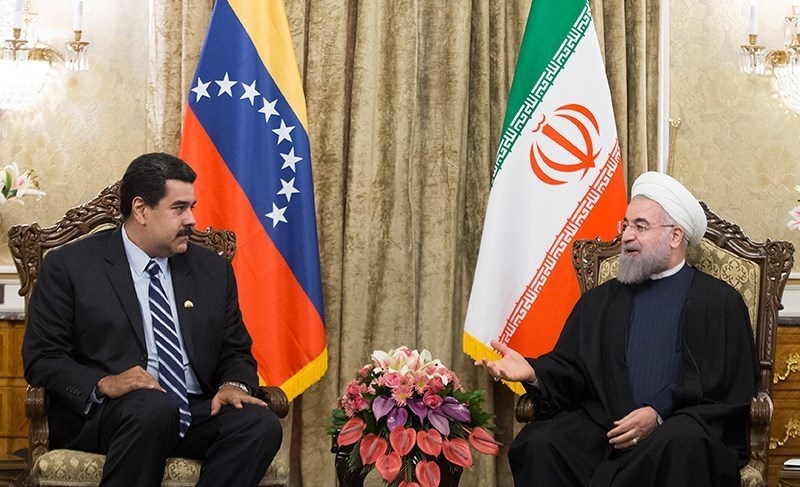
Under Maduro, Venezuela severed diplomatic ties with Israel following Operation Cast Lead in 2008–2009 and emerged as one of the most outspoken international critics of Israel. Since Hamas’s October 7, 2023 terror invasion, Caracas intensified its rhetoric against Israel while deepening cooperation with Iran and Hezbollah. Israeli officials have long accused Maduro’s government of facilitating terror financing and providing diplomatic cover for Iranian-backed organizations in Latin America.
Opposition leader Yair Lapid explicitly linked the events in Venezuela to Israel’s concerns about Iran. “The regime in Iran should pay close attention to what is happening in Venezuela,” Lapid wrote on X, referring to ongoing economic protests inside the Islamic Republic.
The regime in Iran should pay close attention to what is happening in Venezuela
— יאיר לפיד – Yair Lapid (@yairlapid) January 3, 2026
An Israeli security NGO representing more than 550 retired senior officials from the IDF, the Mossad, the Shin Bet, the police, and the Foreign Service issued a similar assessment. According to Israeli media, the group said the U.S. action “is a warning to the regime in Iran” and that the outcome would depend on how the Venezuelan public responds.
Diaspora Affairs Minister Amichai Chikli also drew a direct line between Maduro’s fall and Israel’s broader security environment. “Maduro did not run a country; he ran a criminal and drug empire that directly fueled Hezbollah and Iran,” Chikli said. “President Trump’s decisive steps have once again proven that strong leadership is the only way to subdue dictators.”
Iran was among the first countries to condemn the U.S. operation. The Iranian foreign ministry called it a “flagrant violation” of Venezuelan sovereignty and international law, warning of global consequences. The condemnation came amid heightened tensions following recent U.S. and Israeli strikes on Iranian nuclear sites and Trump’s public warnings that the United States would intervene if Iranian authorities violently suppressed domestic protests.
The United Nations also criticized the operation. A spokesperson for Secretary-General Antonio Guterres said the events constituted a “dangerous precedent” and stressed the need for all states to respect international law and the UN Charter.
Hamas strongly denounced the U.S. action, calling it a “grave violation of international law” and an assault on the sovereignty of an independent state. The terror organization urged the UN Security Council to confront Washington and halt what it described as American aggression. The statement placed Hamas alongside Iran and Venezuela in condemning Trump’s move.
In the United States and abroad, anti-Israel and far-left activist groups organized protests against the operation. Organizations that had played prominent roles in demonstrations following the October 7 massacre accused Washington of pursuing regime change to seize Venezuelan resources. Some protests featured communist imagery and symbols associated with Hamas propaganda, while speakers described the operation as “blood for oil.”
Inside Venezuela, reactions were mixed but included visible public celebrations in some areas, reflecting years of economic collapse and political repression. Under Maduro, Venezuela experienced hyperinflation, widespread shortages of food and medicine, and mass emigration. Despite international criticism and opposition claims that he lost the 2024 election, Maduro remained in power until his capture.
For Israel, the removal of Maduro is viewed not as an isolated Latin American event but as part of a broader confrontation with an Iranian-backed network that spans the Middle East and beyond. Israeli officials see the U.S. operation as weakening a hostile alliance that combined drug trafficking, terror financing, and diplomatic warfare against the Jewish state. Whether the move leads to lasting change in Venezuela remains uncertain, but in Jerusalem, the message was received clearly: a key supporter of Hamas and Iran has been taken off the board, with the full backing of Israel’s closest ally.
