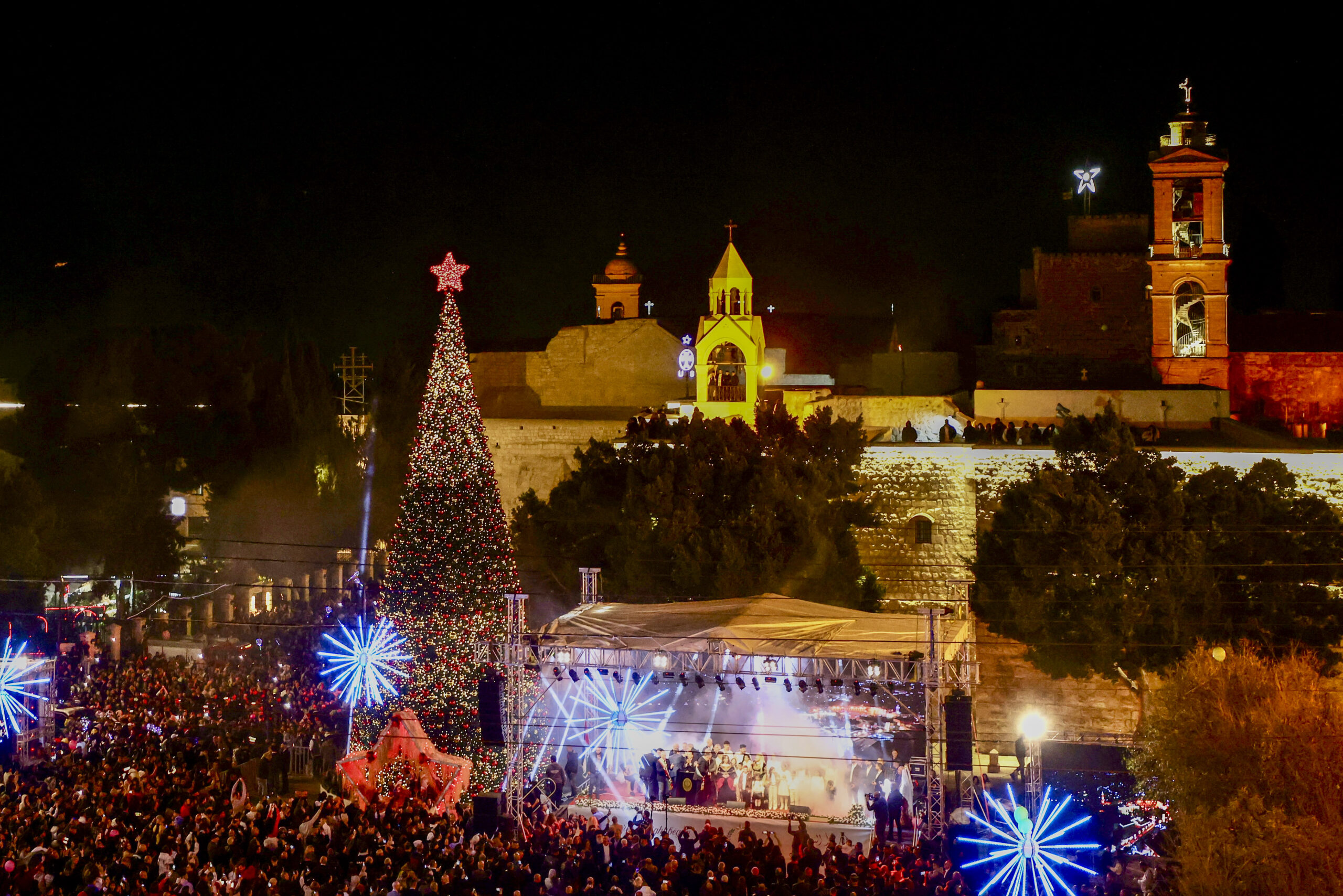
This Christmas season marks something Israel has not seen in far too long: the return of tens of thousands of Christian pilgrims to the places where their faith was born.
After months of war, uncertainty, and isolation, the Ministry of Tourism is preparing for roughly 130,000 visitors in December, including about 40,000 Christians arriving to celebrate Christmas in Israel. That number is more than a statistic. It is a signal that Israel is reopening not just its skies, but its spirit.
For Christians around the world, Christmas in Israel is not a vacation. It is a pilgrimage. Nazareth, Bethlehem, Acre, and the Galilee are not symbolic backdrops. They are living places where faith, history, and modern life meet. The return of pilgrims means those connections are being restored after a painful interruption.
The government understands what is at stake. The Ministry of Tourism has invested significant resources to ensure these celebrations take place with dignity and joy. More than 600,000 shekels have gone into upgrading infrastructure and decorations in Nazareth, transforming the city with lights, public events, and festive displays. Additional funding has supported marketing efforts to let Christians around the world know they are welcome again.
Lights of every tradition glow together in the city of Haifa – a Menorah for Chanukah, a crescent & a Christmas tree, with the Bahá’í shrine shining in the background. A celebration where our holidays light up the night side by side. ✨🇮🇱 pic.twitter.com/tlLxqtsFhK
— Israel ישראל (@Israel) December 15, 2025
Nazareth’s Christmas processions are expected to anchor the season, drawing both international pilgrims and Israeli visitors. In Acre, a Christmas market will fill the historic Knights’ Halls courtyard, bringing life to a city that has long embodied coexistence and layered history.
The most important preparation, however, is not financial. It is relational.
Throughout the year, the Ministry of Tourism maintains close contact with Christian leaders across Israel. Ahead of Christmas, senior ministry officials personally visited church leaders from multiple denominations to offer greetings and support. In a region often defined by tension, these gestures reinforce a simple truth. Israel sees its Christian communities not as relics of the past, but as essential partners in its present and future.
There is a deeper message here for the world. Even after war and trauma, Israel is choosing openness over retreat. It is choosing pilgrimage over paralysis. It is inviting people back to places that remind them why faith endures through history’s hardest chapters.
Christmas returning to Israel is not just about full hotels or revived tourism. It is about restoring a connection that predates modern politics. It is about Christians once again praying in the land where Christianity began. And it is about Israel reaffirming its role as guardian of sacred space for all faiths, even after a year that tested its resilience.