




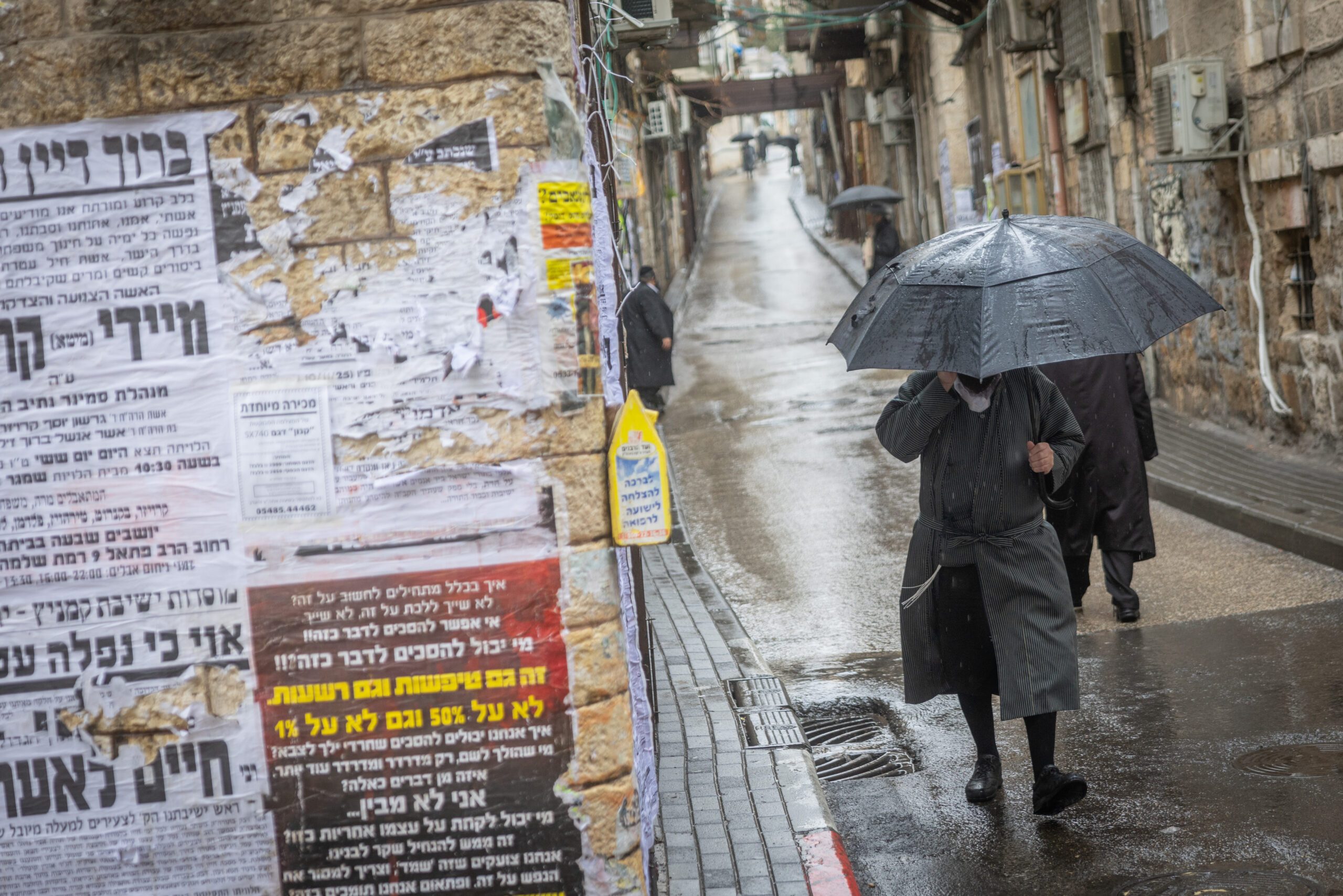
As Hurricane Byron pushed across the Mediterranean and slammed into Israel, the storm delivered a sudden, forceful reminder of how water shapes this land. Coastal cities absorbed torrential overnight rainfall, emergency crews mobilized across the country, and the IDF moved soldiers off remote bases before roads could wash out. Israel was preparing for impact—but also watching the rainfall with a very different emotion than its neighbors. In Iran, where Tehran is entering its sixth consecutive year of drought, the same storm system brought only brief drizzle and growing panic inside a regime already facing public anger and infrastructure collapse.
The contrast was visible in real time. Israel’s networks of rain gauges measured the storm’s progress hour by hour. In north Tel Aviv, 67 millimeters fell by mid-morning Wednesday. Coastal communities south of Haifa recorded nearly 100 millimeters of rainfall. Zikhron Ya‘akov registered 77.5 millimeters, the highest in the country over 24 hours. Herzliya Mayor Yariv Fisher described the pressure on local systems bluntly, saying Israel’s drainage infrastructure “wasn’t built to take in more than 24 millimeters per hour.”
Emergency teams braced for flooding. The Israel Meteorological Service escalated its warnings to orange level and announced heavy rain, thunderstorms, and rising flood danger. Sgt. Yossi Deklo, of Fire and Rescue Services, told Kan that winds were reaching 90 kilometers per hour, with “significant rain expected, the likes of which we have not seen.” The IDF Home Front Command raised readiness, and the army released soldiers from isolated bases a day early to avoid stranding them in the south, where flood risk is highest.
The sea level of the Kinneret (Sea of Galilee), however, remained a central national concern. After two years of sharp decline—more than 2.5 meters annually, an unprecedented drop—experts had warned that Israel faced a potential long-term shortage despite the reverse national carrier pumping desalinated Mediterranean water into the lake. The storm’s rainfall was welcome, even necessary, as the Kinneret hovered 34.5 centimeters below the lower red line.
This dramatic downpour arrived just after Israel began an unprecedented project: pumping desalinated Mediterranean seawater into the Kinneret, the first effort of its kind in the world. Engineers expect flows of up to 5,000 cubic meters per hour during the winter months. After years of intense drought, the Kinneret had dropped toward its lower red line, and this technological reversal became essential.
While Israel watched water pour down its wadis and hillsides, Iran remained trapped in a deepening crisis. Tehran saw its first rain in months on Wednesday, a brief interruption in what meteorologists say is the country’s driest autumn in more than half a century. Government officials admitted the crisis publicly. Dams surrounding the capital are near empty; the Latyan reservoir is under 10 percent capacity. Water service in Tehran’s neighborhoods shuts down for hours at a time. The regime warned that the government might need to relocate out of the capital by the end of December if no significant rain arrives.
State media, aligned with the ruling theocracy, described the plight directly. The Tehran Times reported that Iran faces a water crisis that threatens agriculture, stability, and the food supply for the wider region. The Soufan Center called the shortages a “political and security problem” that leadership fears could ignite unrest. Satellite images show shrinking reservoirs nationwide. Snowpack in the Alborz Mountains, critical for winter recharge, is minimal after a summer of temperatures near 50°C.
Iranian climatologists say precipitation totals have fallen to five percent of normal levels. One senior official, Ahad Vazifeh, warned that even an average winter would still leave Iran with a 20 percent water deficit. With agriculture consuming 90 percent of the national water supply—based on decades-old revolutionary policies encouraging free irrigation and inefficient crop production—the crisis has deep structural roots. International scientists from World Weather Attribution now classify Iran as nearing “water bankruptcy.”
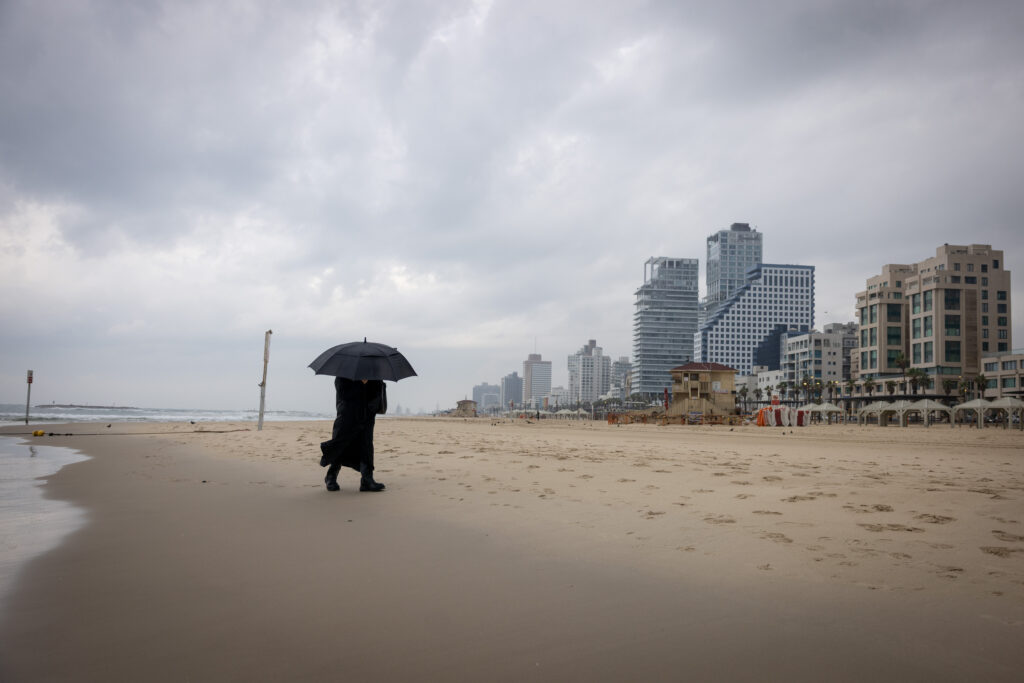
The drought has ignited a theological struggle inside the regime. Ayatollah Mohsen Araki declared that “blatant debauchery on our streets” has invited divine displeasure. Grand Ayatollah Javadi Amoli warned that national “sins take away the grounds for mercy.” Members of parliament blamed the crisis on the government’s failure to enforce compulsory hijab laws. Supporters of President Masoud Pezeshkian pushed back, mocking the claim by pointing to Europe’s green landscapes and asking why secular nations receive steady rainfall.
But this also has deep roots in Jewish sources, which state that the entire world receives its sustenance, spiritual and physical, via the land of Israel. The rain that falls around the world is determined on Tu B’Shevat and in the land of Israel. This is reflected in Israel’s leadership in water technology. We are the means by which Hashem (God, literally ‘The Name’) gives water to the entire world. The basis of rain, of course, is spiritual; it’s God’s connection to the world.
The Bible frames rainfall in this region not as background weather but as a sign of Divine attention. Rain is described as a direct expression of the covenant, tied to the land of Israel in ways that no other territory shares. “I will give the rain of your land in its season, the early rain and the late rain, that you may gather in your grain, wine, and oil” (Deuteronomy 11:14). The Sages taught that rain in the Land of Israel is shefa, a flow of blessing measured with precision, arriving as needed and withheld as a warning.
The language in Deuteronomy links rainfall to specific geography—ha’aretz asher Hashem Elokecha doresh otah, “the land that Hashem your God cares for”—a land watched “from the beginning of the year to the end of the year” (Deuteronomy 11:12). The Sages emphasized that Israel’s climate patterns are unique. Rain arrives from the Mediterranean in controlled cycles, neither too little nor too much, when the people merit it. This concept does not apply universally. The Bible never describes Persia, Babylon, or any other kingdom as receiving rain through covenantal oversight. Those lands depended on rivers. Israel depended on the sky.
Israel depends on rain between November and March when about 70 percent of the average rain falls. Nearly the entire hydrological year hinges on those months. When the skies stay closed, as they did this year, the land feels it immediately. Farmers began worrying about damaged wheat and drying pastures. City planners prepared for rationing. This is reflected in the daily prayers in which the prayer for rain is inserted at the end of the autumnal holiday of Sukkoth and continues until the spring holiday of Passover. This has its roots in the agricultural basis of the religion, and unseasonal rain can damage crops. In synagogues across the country, the prayer for rain, mashiv ha’ruach u’morid ha-geshamim (“He causes the wind to blow and brings down the rain”), took on a sharper tone.
In the Bible, rain in Israel is never merely weather. It is a covenant. “If then, you obey the commandments that I enjoin upon you this day, loving Hashem your God and serving Him with all your heart and soul, I will grant the rain for your land in season, the early rain and the late.” (Deuteronomy 11:13) Rain is the physical expression of God’s presence in the Land and His attention to His people. The Sages taught that the day rain falls is as great as the day Heaven and Earth were created, because it renews the world and reveals Divine judgment and mercy working together in nature.
Jewish tradition also connects rainfall directly to the geulah, the Final Redemption. Midrash Bereishit Rabbah teaches that at the end of days, God will unravel the covenant He made with the nations after the Flood, and the world will see destructive waters return. But for Israel, rain will appear not as chaos but as comfort. The same Midrash highlights that the covenant with Noah was “for the generations of the world,” hinting that its end marks the arrival of the Messiah.
Multiple teachings point in different directions. Some predict abundant rain before redemption. Thirteen years ago, when Israel faced severe drought, Rabbi Dov Kook said: “When the Messiah arrives, the Kinneret will be full.” According to that view, rainfall is not only a blessing but a signpost.
In this week’s storm, the difference between the two nations was stark. Israel’s challenge was abundance—how to keep roads open, rescue stranded residents safely, and use every drop to replenish reservoirs. Iran’s challenge was the absence of rain; vanishing lakes, collapsing dams, and a regime telling its capital city that evacuation might be necessary.
Rainfall over Israel will continue into Thursday, with significant flood risk in the coastal plain, Judean Foothills, and Dead Sea area. Snow has already begun falling on Mount Hermon. The storm is expected to weaken by the weekend, but scattered rain will still cover the north and center. Emergency crews remain on alert. Israel’s water officials are watching the Kinneret level closely, hoping the storm pushes the lake upward after months of historic decline.
Iran, meanwhile, continues to pray for rain. Officials stand before half-empty reservoirs and warn of rationing. Citizens buy home water tanks. Government buildings close during heat waves. Farmers confront fields drying into dust.
The same storm system reached both countries. One received water that may restore its national reservoir. The other received a reminder of how deep its crisis has become. In this region, rain is never just weather. It is a measure of vulnerability, blessing, and consequence — and no nation can escape the meaning written in its own sky.
