




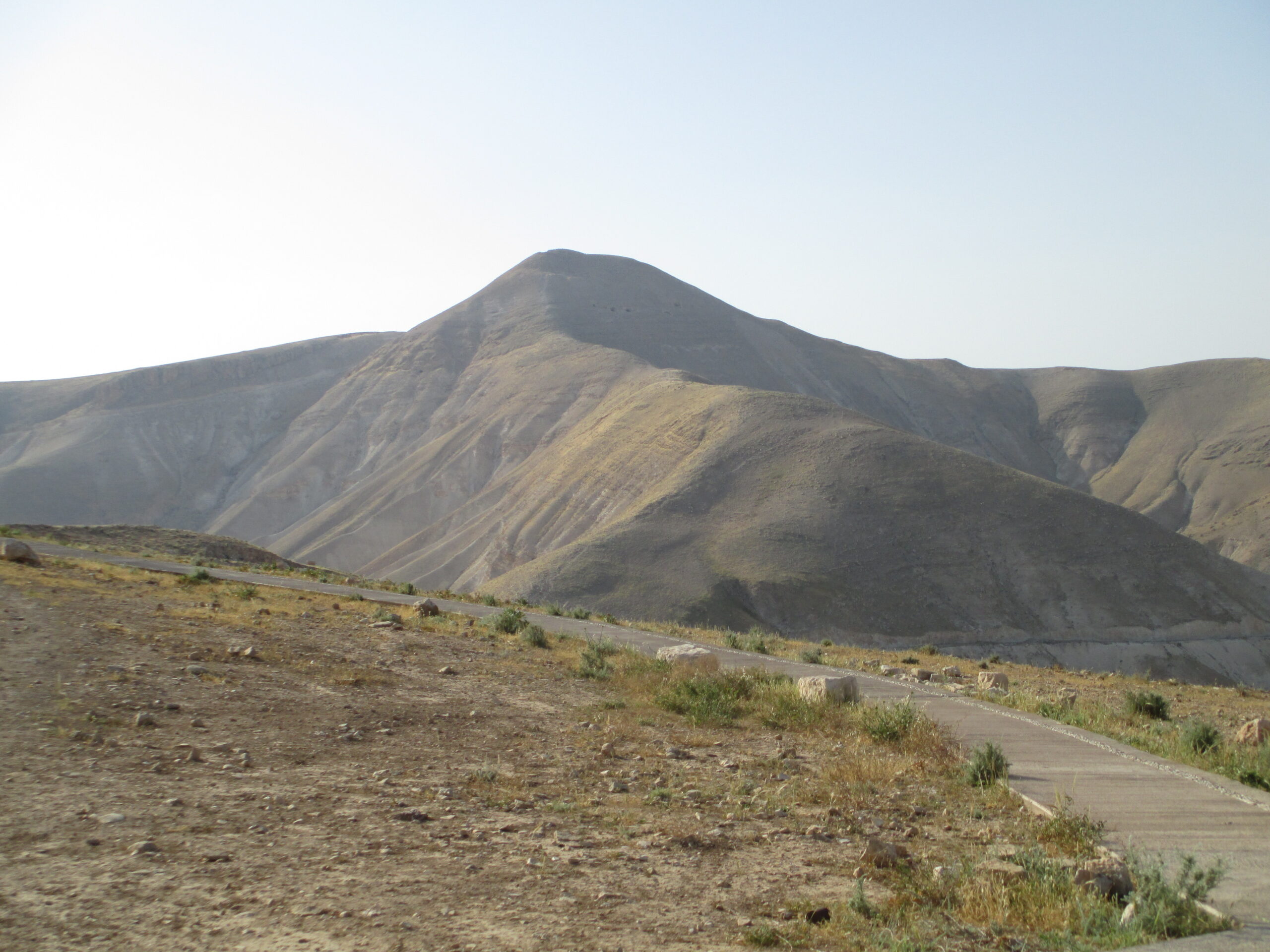
High above the Jordan Valley, where eagles circle the barren cliffs of Mount Sartaba, Israeli archaeologists are pulling back the veil on a fortress that witnessed some of the bloodiest chapters in Jewish history. A newly discovered royal palace at the Alexandrium fortress—a site where Hasmonean princes were imprisoned, and queens were buried—is forcing scholars to rethink the scale and grandeur of this strategic stronghold that guarded the ancient Kingdom of Judea.
The discovery comes at a time when the Palestinian Authority actively destroys Jewish archaeological sites and the international academic community blacklists Israeli researchers working in Judea and Samaria. Every stone uncovered at Alexandrium becomes not just a window into the past but evidence in a battle over who owns the right to tell the story of this land.
Alexandrium was a fortress that dominated the landscape and the imagination. It was an ancient hilltop fortress constructed on a pointy barren hill 650 meters above the Jordan Valley by the Hasmoneans between Scythopolis and Jerusalem. It was likely named after Hasmonean king Alexander Jannæus (104–77 BCE). The newly identified palace on the northwestern slope changes what archaeologists thought they knew about this site. Dr. Dvir Raviv of Bar-Ilan University, who directs the excavation, told The Press Service of Israel that the find “sheds light on the architectural style and the function of the site, which is not mentioned by Josephus, our only historical source for the period.” Among the discoveries are two massive column drums, each 40 centimeters in diameter and 60 centimeters tall, matching the monumental Herodian style seen at Masada and other desert fortresses. These columns did not support a simple garrison. They held up a palace worthy of kings.
Alexandrium was built by the Hasmonean king Alexander Yannai, the warrior-priest who expanded Jewish territory through blood and conquest. Later, Herod the Great—the builder whose ego matched his architectural genius—renovated the fortress into something grander. Josephus described Alexandrium as “a fortress built in great splendor on a high mountain.” The site became a stage for family murders, political intrigue, and the violent power struggles that tore the Hasmonean dynasty apart. Herod imprisoned relatives here. Queens were entombed within its walls. During the Great Revolt against Rome, Jewish rebels may have made their stand on these heights before the fortress fell silent for nearly two millennia.
The Romans destroyed Alexandrium in 57 BCE, years after Pompey conquered Judea. When Raviv and his team began excavations in March with support from the Ministry of Heritage, they started almost from scratch. The site was last dug in the 1980s, but no final report was ever published. The current team relies on ostraca—inscribed pottery sherds—bearing Judaean names, along with scattered notes and photographs left by earlier researchers. One remnant from that earlier dig is a white mosaic floor that once paved the palace on the eastern slope. Now, with the northwestern palace revealed, the fortress complex appears far more extensive than anyone imagined.
Bar-Ilan University is in cooperation with the Staff Officer of Archaeology at the Civil Administration in Judea and Samaria. The site lies in Area C, under Israeli administrative and security jurisdiction. Raviv says the discoveries are only the beginning. “We hope to uncover more,” he told TPS-IL.
But these stones tell a story that makes much of the world uncomfortable. Israeli archaeologists working in Judea and Samaria face an effective blacklist from the international academic community. The politics-driven policies of academic archaeology erase biblical history, while the Palestinian Authority deliberately wipes out evidence of the Jewish connection to the land. The Israeli government responded with an unprecedented $33 million budget to preserve archaeological sites in Area C. In mid-November, the Civil Administration began expropriating land near the ancient biblical capital of Sebastia for archaeological preservation. In February, the Israel Antiquities Authority and leading universities organized the first international conference on Judea and Samaria archaeology, attracting dozens of researchers from many countries despite the academic boycott.
There have been calls to extend the Israel Antiquities Authority’s jurisdiction to Judea and Samaria, replacing the Civil Administration’s Archaeology Staff Officer. Proponents argue the Civil Administration lacks the resources to protect these sites. Critics warn the move could trigger a complete ban on Israeli archaeology from international cooperation.
