




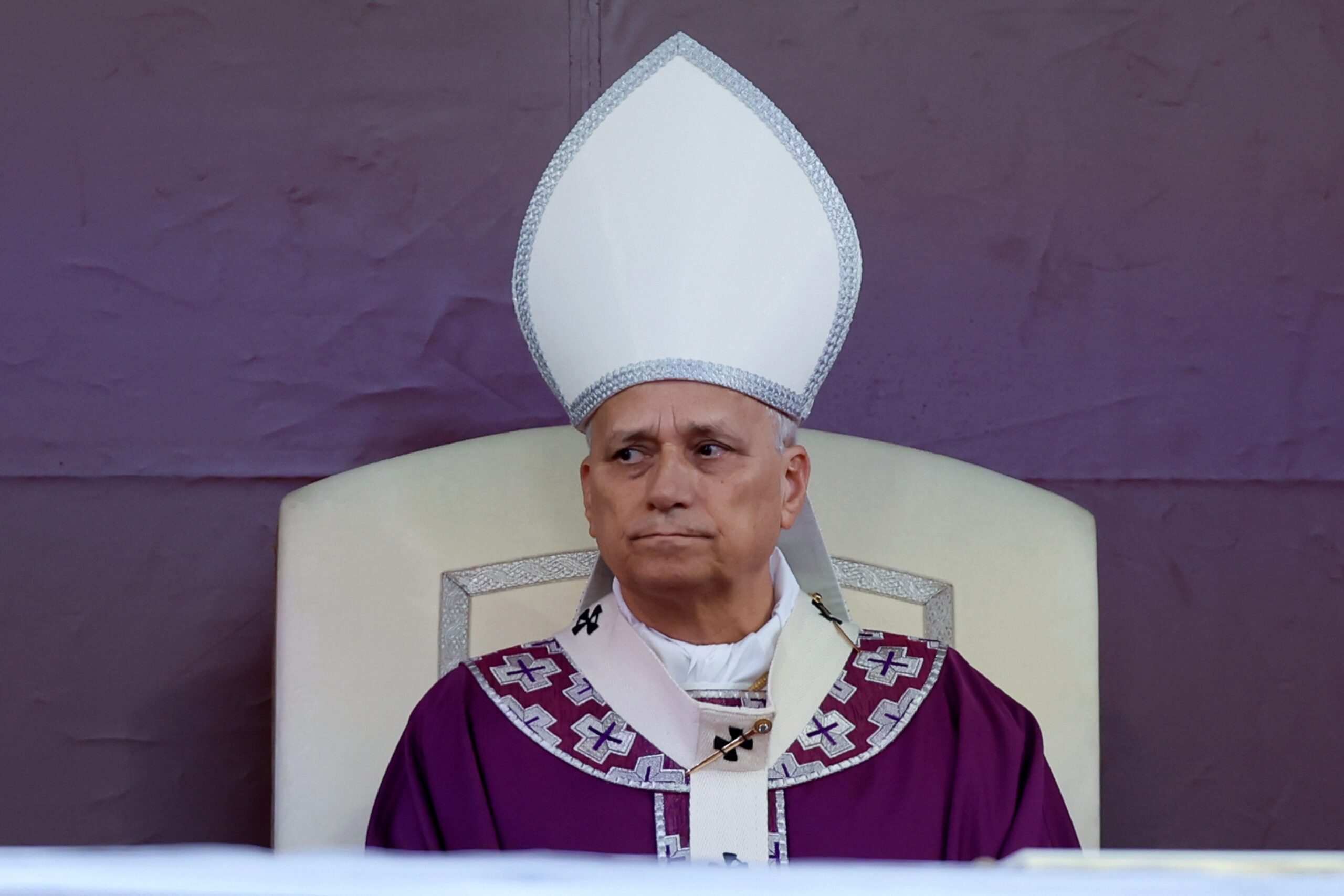
Growing up in Chicago as a White Sox fan, it’s safe to assume that Robert Francis Prevost was very much part of the baseball culture. It’s also safe to assume that he knows the term “swing and miss.” As the Pope, it’s astounding to see him swing and miss, not once but three times, in the context of his brief visit to Lebanon.
Arriving in the war-torn and Hezbollah-dominated country, Pope Leo delivered public remarks ranging on a variety of topics – peace, religious coexistence, the country’s economic crisis, political divisions, and lingering effects of the Israel-Hezbollah war. He even delved into international diplomatic issues that would otherwise be far afield from his theological role as head of the Catholic church, seen by many as a foul ball.
His first strike was not saying anything to ensure the protection and well-being of Christians in Lebanon, long threatened and attacked by Islamists. His best attempt, but definitely a swing and a miss, was to make a passive statement urging native Christians to remain in Lebanon and be part of the country’s pluralistic past.
Leo did not, however, explicitly address the ceasefire between Israel and Hezbollah, Lebanon’s requirement to disarm Hezbollah by the end of 2025, or the sectarian threats and violence of Islamists that created the Christian exodus from the country, where Christians once represented more than half the population. Rather than doing so, he tepidly waited until his airport departure press conference, boldly stating, “The Church has put forward a proposal urging Hezbollah to lay down arms and prioritize dialogue,” adding, “Armed struggle brings no benefit: renounce violence and engage in constructive talks.”
Leo placed himself in the center of a month-old ceasefire that is weeks away from failure. Had it not been for the roar of his jet, Hezbollah’s leaders’ hysterical laughter would have been audible in Rome.
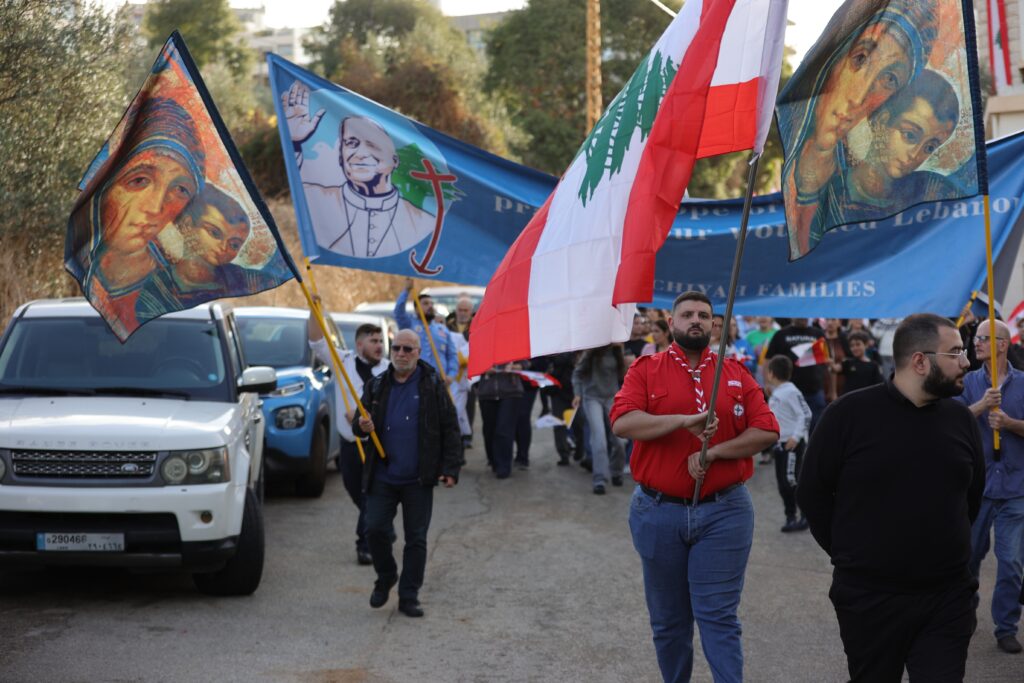
Urging Christians to remain without addressing the threats to them and the obligation to protect the Christian population is analogous to telling an abused wife to remain in her abusive home without ensuring her protection. Essentially, he threw his faithful under the wheels of his own Popemobile.
If the Pope of all people is not going to speak out to truly protect Christians in Lebanon, who will be more righteous than the Pope? The irony is that in the past, Israel has shown more interest in Lebanon’s Christians than many millions of Christians have. One vivid example is that my son’s commanding officer in the IDF is a Lebanese-born Christian whose family was among thousands rescued from certain persecution, if not slaughter, by Hezbollah’s Islamists in 2000.
I’m reminded of my friend, Sami, who once cried to me how Hezbollah ruined his life, and begged Israel to eliminate the Islamists.
Pope Leo’s second strike was his comments en route to Lebanon, calling for a “two-state solution” regarding Israel and the Palestinian Arabs. He was mute on protecting Lebanese Christians but put Israel in the crosshairs, suggesting that creating another Islamist Arab state, narrowing Israel’s borders, and threatening the Jewish state is the “only path” to peace and justice for Israel and Palestinian Arabs.
Speaking to reporters, Leo opined, “We all know that at present Israel still does not accept this solution, but we see it is the only solution that could offer, let us say, an answer to the conflict they continue to live. We are also friends of Israel, and we are trying to act as a mediating voice for both sides, helping to bring about a solution that is fair for everyone.”
Leo’s meeting with Turkey’s Islamist President Erdogan was a missed opportunity. Instead of calling out Erdogan for his support of Hamas terrorists, his slaughter of Kurds, and his conversion of a former cathedral into a mosque, Leo chose to pander, framing Turkey’s role in the Middle East as crucial for ‘coexistence.’ Why, then, did he make Turkey the site of his first international trip? And why remain silent on Erdogan’s dangerous actions, including his efforts to revive the Ottoman caliphate?
Strike three came when Leo failed to confront the reality of Islamist threats. Rather than addressing these challenges head-on, he suggested a political solution that would only embolden Islamic terror—solutions that undermine both Jews and Christians, who are viewed as second-class citizens under Islamic doctrine. Instead of pandering to Islamists in Turkey and Lebanon, Leo should have used his faith as a foundation for offering a true Christian solution for peace, rather than making empty gestures that threaten both Christians and Israelis.
At the risk of someone standing up and asking, ‘Who died and made you Pope?’, if I were Pope, I’d use my platform to teach Muslims what peace means. I’d build on what Leo referenced in his own words: ‘There is no peace without conversion of hearts.’ I’d offer a Christian solution for peace that involves actually changing hearts, as I have proposed for Gaza, rather than simply mumbling pleasant rhetoric that will not bring peace, but would instead push everyone in the Middle East further from it.
In the face of Islamic threats, talk about reconciliation sounds nice, but it does not make persecuted Christians or anyone else safer. Beating around the bush in the shadow of Hezbollah’s empire makes the Islamists laugh their way back to their bunkers as they plot the spread of their evil tentacles.

